17
Pediatricians and child health organizations agree that healthy babies should be placed on
their backs to sleep for naps and at nighttime, to reduce the risk of Sudden Infant Death
Syndrome (SIDS). But babies who are always on their backs can sometimes develop flat
spots on their heads (plagiocephaly). Most cases of positional plagiocephaly can be
prevented (and sometimes corrected) by repositioning your baby to relieve pressure on the
back of the head. Here are some tips and techniques from the experts to keep in mind as
you care for your baby:
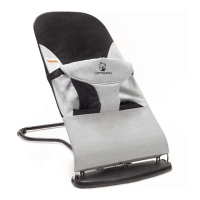
• Change the location of your baby’s sleeper or crib in the room, so she has to look in
dierent directions to see the door, or the window, or interesting things going on around
her.
• When your baby is awake, provide opportunities for adult-supervised “tummy time” play.
Playing on his tummy helps take the pressure o the back of his head, which will help
prevent flat spots from developing. Tummy time play also helps your baby’s head, neck and
shoulder muscles get stronger as part of normal development.
• Try tummy time two or three times a day, for short periods of time, until your baby gets
used to being on her tummy. Once your baby begins to enjoy this position, try longer
periods of time or increase the frequency of tummy time play.
• Help your baby avoid resting his head in the same position all the time by frequently
changing the direction he lies in the crib. For example, have your baby’s feet point toward
one end of the crib for a few days, and then change the position so his feet point toward
the other end of the crib. This will encourage your baby to turn and look in dierent
directions.
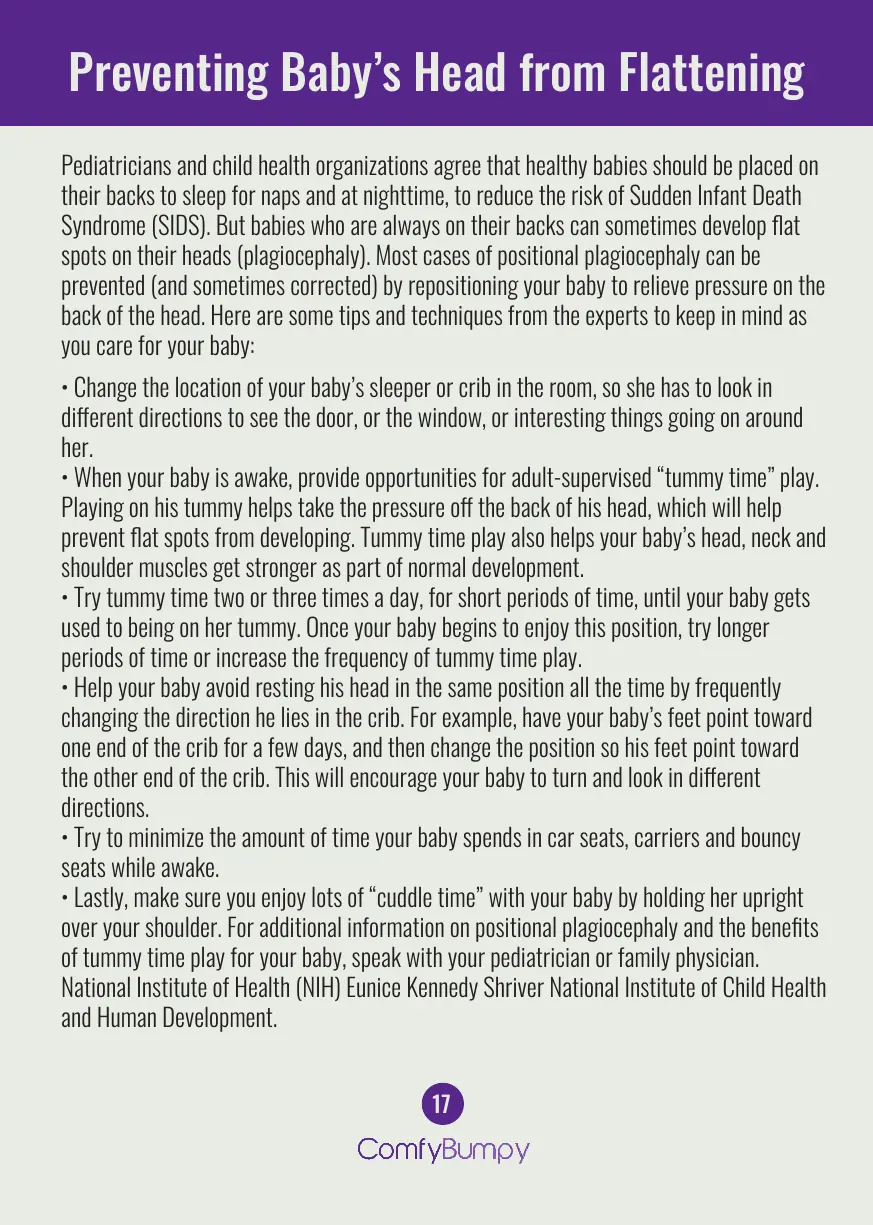
• Try to minimize the amount of time your baby spends in car seats, carriers and bouncy
seats while awake.
• Lastly, make sure you enjoy lots of “cuddle time” with your baby by holding her upright
over your shoulder. For additional information on positional plagiocephaly and the benefits
of tummy time play for your baby, speak with your pediatrician or family physician.
National Institute of Health (NIH) Eunice Kennedy Shriver National Institute of Child Health
and Human Development.
Preventing Baby’s Head from Flattening
1. Lift one side of the crib approximately 20 degrees to roll on hard floors.
Note: We did not create wheels large enough to roll on carpet to avoid any
risks associated with a moving crib. The wheels are meant to move from room
to room if needed.
WARNING: Ensure your baby is not inside the crib when you move the crib.
Mattress Dimensions
31.9” x 18.8” x 1.18” (81 cm x 47.8 cm x 3 cm)
Replacement mattresses can be purchased by contacting ComfyBumpy:
info@comfybumpy.com
Never replace mattress from any company other than ComfyBumpy to ensure
safety.
Urine Sheet
When spills or leaks are likely to happen, put down the urine sheet to avoid
getting the mattress cover dirty.
WARNING Do not leave urine sheet with baby unattended to avoid suocation.
Mattress & Siding: Sponge with mild detergent
Urine Sheet: Machine washable (air dry)


 To Next Page