
 Need help?
Do you have a question about the Cooper & Hunter CH-S09FTXG and is the answer not in the manual?
Explains cooling capacity and ERR energy label index calculation.
Explains heating capacity and COP index rate calculation.
Guidelines for safe operation and user maintenance.
Safety regulations for unit installation and electrical connections.
Specifies the permissible operating temperature limits for the unit.
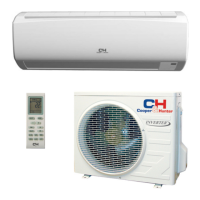
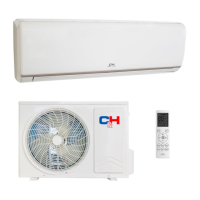
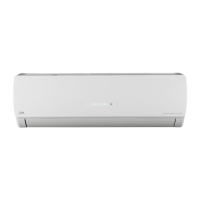
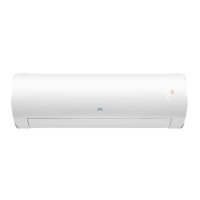
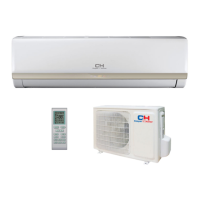
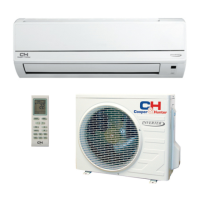
Labels and identifies components of the indoor unit.
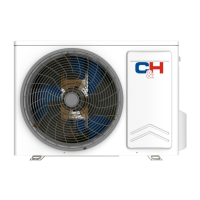
Labels and identifies components of the outdoor unit.
Explains the purpose of each button on the remote controller.
Describes the meaning of icons displayed on the remote control.
How to turn the unit on/off, select modes, and adjust temperature.
Adjusting fan speed and controlling air louver swing direction.
Details on various swing modes and the Health/AIR functions.
Instructions for using Save mode and the X-FAN feature.
How to choose which temperature to display on the unit.
Setting timers, sleep mode, and managing display light.
Explains child lock and temperature unit switchover functions.
Step-by-step instructions for operating the air conditioner.
Procedure for replacing batteries in the remote control.
How to operate the unit without the remote control.
Instructions for cleaning the exterior surface of the indoor unit.
Detailed steps for removing, cleaning, and reinstalling the air filter.
Checklists for unit inspection before and after operational seasons.
Guidelines for proper disposal and recycling of the air conditioner.
Common issues and their solutions for unit operation.
Troubleshooting for various phenomena like odors, noises, and poor effects.
Lists error codes and their corresponding troubleshooting steps.
Diagram showing required clearances for indoor unit installation.
Lists the necessary tools for installing the air conditioner.
Guidelines for choosing suitable locations for indoor and outdoor units.
Safety precautions for connecting the unit to power supply.
Importance and methods for proper grounding of the unit.
Choosing the installation site and mounting the wall frame.
Drilling the piping hole and connecting refrigerant pipes.
Connecting power wires and the drain hose to the indoor unit.
Steps for hanging the unit on the frame and sealing gaps.
Securing the support and mounting the outdoor unit.
Connecting refrigerant pipes and electrical wires to the outdoor unit.
Proper routing of pipes and setting up the drain hose.
Steps for removing air and moisture from refrigerant lines.
Procedures to check for leaks in the refrigerant system.
Items to check after the unit installation is complete.
Steps for performing an initial test run of the air conditioner.
Specifications for connection pipe lengths and maximum height differences.
Guidance on adding refrigerant for longer connection pipes.
Table detailing refrigerant charging rates based on pipe diameter.
Detailed steps for expanding pipes and checking the quality of the expansion.
 General
| Type | Split System |
|---|---|
| Cooling Capacity | 9000 BTU |
| Refrigerant | R410A |
| Weight (Indoor Unit) | 8 kg |
| Energy efficiency class (cooling) | A++ |
| Coefficient of Performance (COP) | 4.0 |
| Operating Temperature (Cooling) | 16°C to 32°C |
| Outdoor Noise Level | 50 dB |
| Power Supply | 220-240V/50Hz |
| Operating Temperature (Heating) | -15°C to 24°C |




 To Next Page