
 Need help?
Do you have a question about the D-Link COVR-X1862 and is the answer not in the manual?
Details OS compatibility, pre-synced nodes, and setup notes for the COVR router.
Download and install the D-Link Wi-Fi app on your Android or iOS device.
Launch the D-Link Wi-Fi app and tap 'Install New Device' to begin.
Scan the setup QR code found on the router or quick install card.
Choose the 'Set up New Network' option within the app to start.
Unplug the power to your modem/gateway, and remove its battery backup if present.
Plug one end of the Ethernet cable into the COVR's Internet port and the other into your modem.
Power on your modem/gateway and wait for it to fully start up.
Plug the COVR device into a power socket and tap NEXT in the app.
Wait for the COVR device's LED to blink orange, then tap NEXT.
Enter your desired Wi-Fi network name and password.
Set a password for accessing the COVR device's admin interface.
Choose to keep your device updated automatically or manage updates manually.
Tap SAVE to apply settings; do not unplug the device until it has rebooted.
Register for cloud services like Google Assistant or Amazon Alexa if desired.
Place the remaining COVR points within range of the main unit.
Power on other COVR points and wait for their LEDs to blink orange.
Verify that the LEDs on all COVR points turn solid white.
Confirm the device is successfully added and tap FINISH to complete the setup.
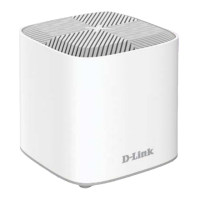
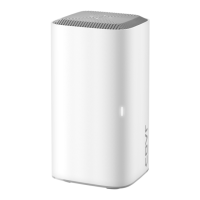
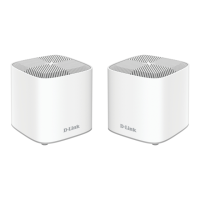
The D-Link COVR-X1862/X1863 is a mesh Wi-Fi system designed to provide seamless and extended wireless coverage throughout your home or office. This system functions by utilizing multiple "COVR Nodes" that work together to create a single, unified Wi-Fi network, eliminating dead zones and ensuring a strong, consistent signal. The primary COVR Node acts as the main router, connecting directly to your Internet Service Provider (ISP) gateway or modem, while additional COVR Nodes extend the network wirelessly or via an Ethernet backhaul. The system is pre-synced out of the box, simplifying the initial setup process for users.
The core function of the COVR-X1862/X1863 system is to establish a robust and expansive Wi-Fi network. It operates in a router mode, meaning the main COVR Node handles network address translation (NAT), DHCP services, and other routing functionalities, similar to a traditional wireless router. The system supports both wireless backhaul, where COVR Nodes communicate with each other over Wi-Fi, and wired/Ethernet backhaul, which allows for a more stable and potentially faster connection between nodes using Ethernet cables. For wired backhaul, it's crucial that any intervening switch supports the IEEE 1905.1 protocol to ensure proper communication and network management across the mesh. When using wired backhaul for remote COVR nodes, you must connect the Ethernet cable to the Ethernet port on the back of the nodes, not the Internet port.
The system is designed for ease of use, with setup and management primarily handled through the D-Link Wi-Fi app, available for both Android OS and Apple iOS devices. This app guides users through the installation process, from connecting the hardware to configuring network settings. The mesh architecture ensures that devices automatically connect to the COVR Node with the strongest signal as you move around your space, providing an uninterrupted Wi-Fi experience.
The COVR-X1862/X1863 offers several features aimed at enhancing user experience and network performance:
While the manual primarily focuses on initial setup, several aspects contribute to the long-term maintenance and reliability of the COVR-X1862/X1863 system:
In summary, the D-Link COVR-X1862/X1863 mesh Wi-Fi system is designed for comprehensive home or office network coverage, featuring an intuitive app-guided setup, flexible backhaul options, and integrated maintenance features like automatic updates to ensure a smooth and secure user experience.
 General
| 2.4 GHz | Yes |
|---|---|
| MIMO type | Multi User MIMO |
| Cabling technology | 10/100/1000Base-T(X) |
| Fit AP mode features | Mesh networking |
| Networking standards | IEEE 802.11a, IEEE 802.11ac, IEEE 802.11ax, IEEE 802.11b, IEEE 802.11g, IEEE 802.11h, IEEE 802.11k, IEEE 802.11n, IEEE 802.11v |
| Spread spectrum method | OFDMA |
| Ethernet LAN data rates | 10, 100, 1000 Mbit/s |
| Maximum data transfer rate | 1800 Mbit/s |
| Maximum data transfer rate (5 GHz) | 1201 Mbit/s |
| Maximum data transfer rate (2.4 GHz) | 574 Mbit/s |
| Security algorithms | WPA, WPA2, WPA3 |
| WAN connection | Ethernet (RJ-45) |
| USB 2.0 ports quantity | - |
| Ethernet LAN (RJ-45) ports | 1 |
| Input current | 1 A |
| AC input voltage | 12 V |
| Power consumption (max) | 8.8 W |
| Placement | Floor, Table |
| Certification | CE, FCC, IC |
| Product color | White |
| LED indicators | Power, Status |
| Antenna type | Internal |
| Antennas quantity | 4 |
| Storage temperature (T-T) | -20 - 65 °C |
| Operating temperature (T-T) | 0 - 40 °C |
| Storage relative humidity (H-H) | 5 - 95 % |
| Operating relative humidity (H-H) | 10 - 95 % |
| Number of products included | 2 pc(s) |
| Harmonized System (HS) code | 85176990 |
 Weight and Dimensions
| Depth | 111.8 mm |
|---|---|
| Width | 104 mm |
| Weight | 263 g |

 To Next Page