EasyManua.ls Logo

Daewoo KOR-6QDB - User Manual

Daewoo KOR-6QDB
25 pages
Print Icon
To Next Page IconTo Next Page
Loading...
Before operating this oven, please read these instructions completely.
OPERATING INSTRUCTIONS
& COOK BOOK
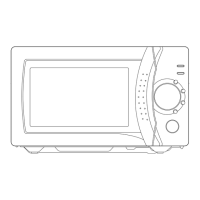
MICROWAVE OVEN
KOR-6QDB

Other manuals for Daewoo KOR-6QDB

Question and Answer IconNeed help?

Do you have a question about the Daewoo KOR-6QDB and is the answer not in the manual?

Summary

PRECAUTIONS TO AVOID POSSIBLE EXPOSURE TO EXCESSIVE MICROWAVE ENERGY

IMPORTANT SAFETY INSTRUCTIONS

General Safety Guidelines

Essential safety guidelines to prevent hazards like fire, burns, and electric shock.

EARTHING INSTRUCTIONS

Earthing Wire Color Coding

Explains wire color coding for proper earthing connection.

INSTALLATION

Ventilation

Guidelines for proper oven ventilation to prevent overheating.

Location and Clearance

Recommends placement on a stable surface away from heat and moisture sources.

Power Supply Requirements

Details power requirements and precautions for safe operation.

Pre-Operation Checks

Instructions to check for damages and temperature before installation.

FEATURES DIAGRAM

Component Identification

Identifies and describes the main external and internal parts of the microwave.

FEATURES DIAGRAM (continued)

Control Panel Functions

Details the functions of the display and various control buttons on the panel.

OPERATION PROCEDURE

Basic Operation Steps

Step-by-step guide for plugging in, placing food, and starting the oven.

Stopping and Restarting

Procedures for stopping the oven and restarting after interruptions.

Display and Error Checks

Information on display indicators and checks if the oven does not operate.

CONTROLS

Setting the Clock

Step-by-step guide to setting the 12 or 24-hour clock.

Time Defrosting

How to defrost food using the time defrost function.

COOKING IN ONE STAGE

Auto Defrost Operation

Guides on using Auto Defrost for thawing and cooking.

COOKING IN TWO STAGE

Defrost-then-Cook Procedure

Instructions for defrosting food before cooking it.

SPEEDY COOK

Quick Reheating

How to reheat food quickly using the Speedy Cook function.

ONE TOUCH COOKING

Beverage Heating

Instructions for heating beverages by cup quantity.

Frozen Pizza Cooking

Guidelines for cooking frozen pizza by weight.

PASTA

Pasta Cooking Instructions

Instructions for cooking pasta by serving size.

DOWN, UP

Adjusting Cooking Time

How to adjust cooking time using the DOWN/UP pads.

AUTO COOK

Selecting Food Categories

Steps to select food categories for automatic cooking.

CHILD SAFETY LOCK

Activating and Canceling Lock

How to set and cancel the child safety lock.

HOW TO STOP THE OVEN WHILE THE OVEN IS OPERATING

Stopping and Restarting Operation

Procedures for stopping and restarting the oven.

TO SET POWER SAVE MODE

Power Save Mode Activation

How to enable and disable the power save mode.

CARE OF YOUR MICROWAVE OVEN

Interior Cleaning

Guidelines for cleaning the oven's interior surfaces.

Exterior and Panel Cleaning

Instructions for cleaning the oven's outside surfaces and control panel.

Steam and Tray Maintenance

Explains steam, and guides for cleaning the glass tray and roller guide.

Glass Tray Usage Rules

Rules for using the glass tray, including not operating without it.

QUESTIONS AND ANSWERS

Common User Inquiries

Addresses frequently asked questions regarding oven operation, safety, and maintenance.

BEFORE YOU CALL FOR SERVICE

Troubleshooting Checklist

Lists common issues and checks before calling for service.

CARE AND CLEANING

Maintenance and Safety Precautions

Emphasizes not tampering with interlocks and avoiding door strain, plus regular cleaning.

SPECIFICATIONS

Power Supply Details

Specifies voltage, frequency, and earthing requirements.

Performance Specifications

Details power consumption, energy output, and frequency.

Physical Dimensions and Weight

Lists the external and internal dimensions and net weight.

Operational Limits

Specifies timer settings and available power selections.

COOKING INSTRUCTIONS

Utensil Safety Guide

Lists suitable and unsuitable utensils for microwave cooking.

USE YOUR MICROWAVE OVEN SAFELY

General Use Precautions

General safety rules for operating the microwave oven.

Food Handling Precautions

Safety guidelines for cooking various foods in the microwave.

Arcing Causes and Solutions

Explains what arcing is and its common causes and correction.

MICROWAVING PRINCIPLES

How Microwaves Cook Food

Explains the scientific principles behind microwave cooking.

CONVERSION CHARTS

Weight and Volume Conversions

Conversion tables for weights, volumes, spoons, and fluids.

COOKING TECHNIQUES

Key Cooking Methods and Tips

Explains techniques like standing time, moisture, density, and piercing.

DEFROSTING GUIDE

Defrosting Procedures and Tips

Step-by-step guide for defrosting food safely, including techniques and checks.

COOKING & REHEATING CHART

Meat, Poultry, and Fish Cooking Guide

Provides cooking times and instructions for various meats, poultry, and fish.

Reheating Guide for Various Foods

Offers reheating times and instructions for baby food, milk, and meals.

VEGETABLE CHART

Fresh Vegetable Cooking Guide

Instructions for cooking fresh vegetables, including water and time.

Frozen Vegetable Cooking Guide

Instructions for cooking frozen vegetables with water and time.

RECIPES

Soup Recipes

Recipes for Tomato & Orange Soup and French Onion Soup.

Vegetable and Chicken Recipes

Recipes for Stir Fried Vegetables and Honeyed Chicken.

Jacket Potato and Sauce Recipes

Recipes for Blue Cheese & Chive Jackets and White Sauce.

Jam and Cake Recipes

Recipes for Strawberry Jam and Plain Microwave Cake.

Egg and Mince Recipes

Recipes for Omelettes, Scrambled Eggs, and Savory Mince.

Summary

PRECAUTIONS TO AVOID POSSIBLE EXPOSURE TO EXCESSIVE MICROWAVE ENERGY

IMPORTANT SAFETY INSTRUCTIONS

General Safety Guidelines

Essential safety guidelines to prevent hazards like fire, burns, and electric shock.

EARTHING INSTRUCTIONS

Earthing Wire Color Coding

Explains wire color coding for proper earthing connection.

INSTALLATION

Ventilation

Guidelines for proper oven ventilation to prevent overheating.

Location and Clearance

Recommends placement on a stable surface away from heat and moisture sources.

Power Supply Requirements

Details power requirements and precautions for safe operation.

Pre-Operation Checks

Instructions to check for damages and temperature before installation.

FEATURES DIAGRAM

Component Identification

Identifies and describes the main external and internal parts of the microwave.

FEATURES DIAGRAM (continued)

Control Panel Functions

Details the functions of the display and various control buttons on the panel.

OPERATION PROCEDURE

Basic Operation Steps

Step-by-step guide for plugging in, placing food, and starting the oven.

Stopping and Restarting

Procedures for stopping the oven and restarting after interruptions.

Display and Error Checks

Information on display indicators and checks if the oven does not operate.

CONTROLS

Setting the Clock

Step-by-step guide to setting the 12 or 24-hour clock.

Time Defrosting

How to defrost food using the time defrost function.

COOKING IN ONE STAGE

Auto Defrost Operation

Guides on using Auto Defrost for thawing and cooking.

COOKING IN TWO STAGE

Defrost-then-Cook Procedure

Instructions for defrosting food before cooking it.

SPEEDY COOK

Quick Reheating

How to reheat food quickly using the Speedy Cook function.

ONE TOUCH COOKING

Beverage Heating

Instructions for heating beverages by cup quantity.

Frozen Pizza Cooking

Guidelines for cooking frozen pizza by weight.

PASTA

Pasta Cooking Instructions

Instructions for cooking pasta by serving size.

DOWN, UP

Adjusting Cooking Time

How to adjust cooking time using the DOWN/UP pads.

AUTO COOK

Selecting Food Categories

Steps to select food categories for automatic cooking.

CHILD SAFETY LOCK

Activating and Canceling Lock

How to set and cancel the child safety lock.

HOW TO STOP THE OVEN WHILE THE OVEN IS OPERATING

Stopping and Restarting Operation

Procedures for stopping and restarting the oven.

TO SET POWER SAVE MODE

Power Save Mode Activation

How to enable and disable the power save mode.

CARE OF YOUR MICROWAVE OVEN

Interior Cleaning

Guidelines for cleaning the oven's interior surfaces.

Exterior and Panel Cleaning

Instructions for cleaning the oven's outside surfaces and control panel.

Steam and Tray Maintenance

Explains steam, and guides for cleaning the glass tray and roller guide.

Glass Tray Usage Rules

Rules for using the glass tray, including not operating without it.

QUESTIONS AND ANSWERS

Common User Inquiries

Addresses frequently asked questions regarding oven operation, safety, and maintenance.

BEFORE YOU CALL FOR SERVICE

Troubleshooting Checklist

Lists common issues and checks before calling for service.

CARE AND CLEANING

Maintenance and Safety Precautions

Emphasizes not tampering with interlocks and avoiding door strain, plus regular cleaning.

SPECIFICATIONS

Power Supply Details

Specifies voltage, frequency, and earthing requirements.

Performance Specifications

Details power consumption, energy output, and frequency.

Physical Dimensions and Weight

Lists the external and internal dimensions and net weight.

Operational Limits

Specifies timer settings and available power selections.

COOKING INSTRUCTIONS

Utensil Safety Guide

Lists suitable and unsuitable utensils for microwave cooking.

USE YOUR MICROWAVE OVEN SAFELY

General Use Precautions

General safety rules for operating the microwave oven.

Food Handling Precautions

Safety guidelines for cooking various foods in the microwave.

Arcing Causes and Solutions

Explains what arcing is and its common causes and correction.

MICROWAVING PRINCIPLES

How Microwaves Cook Food

Explains the scientific principles behind microwave cooking.

CONVERSION CHARTS

Weight and Volume Conversions

Conversion tables for weights, volumes, spoons, and fluids.

COOKING TECHNIQUES

Key Cooking Methods and Tips

Explains techniques like standing time, moisture, density, and piercing.

DEFROSTING GUIDE

Defrosting Procedures and Tips

Step-by-step guide for defrosting food safely, including techniques and checks.

COOKING & REHEATING CHART

Meat, Poultry, and Fish Cooking Guide

Provides cooking times and instructions for various meats, poultry, and fish.

Reheating Guide for Various Foods

Offers reheating times and instructions for baby food, milk, and meals.

VEGETABLE CHART

Fresh Vegetable Cooking Guide

Instructions for cooking fresh vegetables, including water and time.

Frozen Vegetable Cooking Guide

Instructions for cooking frozen vegetables with water and time.

RECIPES

Soup Recipes

Recipes for Tomato & Orange Soup and French Onion Soup.

Vegetable and Chicken Recipes

Recipes for Stir Fried Vegetables and Honeyed Chicken.

Jacket Potato and Sauce Recipes

Recipes for Blue Cheese & Chive Jackets and White Sauce.

Jam and Cake Recipes

Recipes for Strawberry Jam and Plain Microwave Cake.

Egg and Mince Recipes

Recipes for Omelettes, Scrambled Eggs, and Savory Mince.

Overview

This document provides comprehensive operating instructions and a cookbook for the Daewoo KOR-6QDB Microwave Oven. It covers essential safety precautions, installation guidelines, detailed control descriptions, cooking techniques, and maintenance advice to ensure safe and efficient use of the appliance.

Function Description

The Daewoo KOR-6QDB is a microwave oven designed for domestic use, utilizing radiofrequency energy to heat and cook food. It operates as a Group 2 ISM equipment, meaning it intentionally generates and uses electromagnetic radiation for material treatment. The core principle of its operation involves a magnetron converting electricity into microwaves, which then pass through cooking containers and are absorbed by water molecules in the food. This absorption causes the water molecules to vibrate, generating heat through friction, which in turn cooks the food. Microwaves penetrate to a depth of 1.5-2 inches (4-5cm), and heat spreads through the food by conduction, similar to a traditional oven, cooking from the outside inwards. Foods high in fat and sugar particles tend to cook more quickly as microwaves are also attracted to these components.

The oven features a user-friendly control panel with various functions to facilitate different cooking needs. It includes a digital display that shows cooking time, power level, and current time. The "Power" pad allows users to select from ten different power levels, ranging from 100% (P-HI) down to 10% (P-10), with an additional 0% (P-00) setting. This flexibility enables precise control over the cooking process, accommodating a wide range of recipes and food types that may require slower cooking, such as cheese, milk, or meats.

The "Time Set" pads (10Min/1hour, 1Min/10min, 10Sec/1min) enable users to set specific cooking durations, up to a maximum of 59 minutes and 90 seconds. This granular control is crucial for achieving desired cooking results.

For convenience, the oven incorporates several one-touch cooking features. The "SPEEDY COOK" function allows for quick reheating at full power for 30-second increments, extendable up to 5 minutes by repeated touches. This is ideal for quickly warming up pre-cooked items. The "ONE TOUCH COOKING" feature provides pre-programmed settings for specific quantities of popular foods like beverages and frozen pizza. For instance, touching the "Beverage" pad once heats one cup, twice for two cups, and three times for three cups. Similarly, the "Frozen Pizza" pad can be touched once for a 200g pizza or twice for a 400g pizza.

The "AUTO COOK" menu offers a selection of pre-set programs for common dishes, including bread, soup, baked potato, fresh vegetables, and frozen vegetables. Users can select the desired food category by repeatedly touching the "AUTO COOK" pad, and the oven will automatically determine the appropriate cooking time and power level based on the selected quantity.

The "DEFROST" function is designed for time-based defrosting, automatically cycling between defrost and stand times to ensure even thawing. The "UP" and "DOWN" pads allow for adjustments to cooking or one-touch cooking times in multiples of 10 seconds or 1 minute, providing flexibility during operation.

A "Clock" function is available to display the current time, with options for both 12-hour and 24-hour formats. The "START/SPEEDY COOK" pad initiates the cooking process and also serves to activate the speedy cook function. The "STOP/CLEAR" pad is used to halt oven operation or to delete programmed cooking data.

The oven also includes a "CHILD SAFETY LOCK" feature, which prevents unintended operation by small children. This lock is activated and deactivated by pressing and holding the "STOP/CLEAR" pad for 3 seconds. Additionally, a "POWER SAVE MODE" can be activated to turn off the display, conserving energy.

Usage Features

The Daewoo KOR-6QDB microwave oven is designed for ease of use and versatility in food preparation. Before operation, users are instructed to plug the power supply cord into a 230-240V AC 50Hz outlet. Food should be placed in a suitable container on the glass tray, which must always be in position along with the roller guide during cooking. The oven door must be firmly closed for operation to begin.

The oven automatically cooks on full power unless a lower power level is selected using the "Power" pad. The wattage output chart in the manual clearly outlines the power level displayed for each touch of the "Power" pad, correlating it with the approximate percentage of power. This allows users to understand and control the intensity of microwave energy.

For single-stage cooking, users select the desired power level, set the cooking time using the "Time Set" pads, close the door, and press "START." The oven can be programmed for up to 59 minutes and 90 seconds. The manual emphasizes that using lower power levels is recommended for foods like cheese, milk, and slow-cooking meats to prevent overcooking.

Two-stage cooking is also supported, allowing for automatic defrosting followed by cooking. This is particularly useful for frozen foods. The process involves selecting the "DEFROST" function, setting the defrosting time, then selecting the "Power" function, setting the cooking time, closing the door, and pressing "START." During defrosting, the oven will prompt the user to turn over, break apart, or redistribute the food to ensure even thawing.

The "SPEEDY COOK" feature offers instant reheating for 30 seconds at 100% power, which can be extended up to 5 minutes in 30-second increments by repeatedly pressing the "SPEEDY COOK" pad. This is a convenient option for quick warm-ups.

"ONE TOUCH COOKING" simplifies the preparation of specific quantities of common items. For example, the "Beverage" pad can be pressed once for 1 cup, twice for 2 cups, or three times for 3 cups. Similarly, the "Frozen Pizza" pad offers settings for 200g and 400g pizzas. The oven automatically calculates and displays the cooking time after a brief delay.

The "AUTO COOK" menu further enhances convenience by providing pre-programmed settings for various food categories and quantities, such as bread (4 pieces), soup (350g), baked potato (3 pieces), fresh vegetables (200g), and frozen vegetables (200g). Users simply select the category and quantity, close the door, and press "START."

During operation, the oven door can be opened at any time, which will instantly switch off the microwave energy while retaining the time setting. Cooking resumes once the door is closed and the "START" pad is pressed. The "STOP/CLEAR" pad can be used to pause or cancel any cooking program.

The manual also provides detailed cooking techniques, including advice on standing time, moisture content, food density, use of cling film, food shape, spacing, starting temperature, liquids, turning and stirring, arranging food, quantity, piercing, and covering. These techniques are crucial for optimizing microwave cooking results and ensuring food is cooked thoroughly and evenly. For instance, dense foods like meat and jacket potatoes require standing time after cooking to allow heat to finish conducting to the center. Liquids should always be stirred before and during heating to prevent eruptive boiling.

A comprehensive "DEFROSTING GUIDE" offers tips for optimal defrosting, such as not defrosting covered meat, starting with whole poultry breast-side-down, and checking food after one-third of the defrost time. It also advises on techniques like turning over, rearranging, shielding thin areas with aluminum foil, and removing thawed portions to prevent cooking.

The "COOKING & REHEATING CHART" and "VEGETABLE CHART" provide specific cooking times and instructions for various types of meat, poultry, fish, baby food, lasagna, casseroles, mashed potatoes, baked beans, ravioli, and fresh/frozen vegetables. These charts serve as valuable guides for users to achieve consistent and satisfactory cooking results.

Maintenance Features

Maintaining the Daewoo KOR-6QDB microwave oven is straightforward, focusing on cleanliness and proper handling to ensure longevity and safe operation. The manual emphasizes several key maintenance practices:

General Cleaning:

  • Turn off before cleaning: Always switch off the oven before attempting any cleaning to prevent accidental operation.
  • Interior cleaning: The inside of the oven should be kept clean. Food spatters or spilled liquids adhering to the oven walls should be wiped with a damp cloth. For stubborn dirt, a mild detergent can be used. Harsh detergents or abrasives are not recommended as they can damage the oven's interior surfaces.
  • Exterior cleaning: The outside surface of the oven should be cleaned with soap and water, rinsed, and dried with a soft cloth. Care must be taken to prevent water from seeping into the ventilation openings, which could damage internal operating parts.
  • Control Panel: If the control panel becomes wet, it should be cleaned with a soft, dry cloth. Harsh detergents or abrasives should never be used on the control panel.
  • Steam accumulation: If steam accumulates inside or around the oven door, it should be wiped with a soft cloth. This is a normal occurrence under high humidity conditions and does not indicate a malfunction.
  • Waveguide Cover: The waveguide cover must be kept clean at all times. Grease or fat left in the cavity can overheat, smoke, or even catch fire during subsequent use.

Removable Components:

  • Glass Tray: The glass cooking tray should be removed occasionally for cleaning. It can be washed in warm, sudsy water or in a dishwasher. It is crucial that the oven is never operated without the glass tray in place, and only the original glass tray should be used. If the tray is hot, it should be allowed to cool before cleaning or placing it in water. Direct cooking on the glass tray is not recommended, except for popcorn.
  • Roller Guide: The roller guide and the oven cavity floor should be cleaned regularly to prevent excessive noise. The bottom surface of the oven can be wiped with mild detergent water or window cleaner and then dried. The roller guide itself can be washed in mild sudsy water. The roller guide must always be used in conjunction with the glass tray for cooking.

Door and Seals:

  • Door and Sealing Surfaces: It is critical not to defeat or tamper with the safety interlocks. No object should be placed between the oven front face and the door, and residue should not be allowed to accumulate on the sealing surfaces. The sealing area should be wiped frequently with a mild detergent, rinsed, and dried. Abrasive powders or pads should never be used.
  • Damage Inspection: Users are advised to inspect the oven after unpacking for any damage, such as a misaligned door, broken door, or dents in the cavity. If any such damage is visible, the oven should not be installed, and the dealer should be notified immediately.
  • Door Integrity: The manual explicitly states that the oven must not be operated if the door or door seals are damaged, or if the door is bent, or if hinges are loose or broken. Any repairs to these components must be carried out by a competent person. Subjecting an opened door to strain or weight (e.g., a child hanging on it) can cause the oven to fall forward, leading to injury and damage.

Troubleshooting and Service:

  • Before Calling for Service: The manual provides a checklist for common issues to help users prevent unnecessary service calls. This includes checking if the power cord is securely plugged in, the door is firmly closed, the cooking time is set, and if there's a blown circuit fuse or tripped main circuit breaker. For sparking in the cavity, users should check for metal utensils, metal trim, or foil touching the oven walls, and ensure foil is properly molded to food.
  • Professional Service: If problems persist after checking the troubleshooting points, users are advised to contact a service station. It is explicitly stated: "DO NOT ATTEMPT TO SERVICE THE OVEN YOURSELF!" Only a properly competent technician should adjust or repair the oven.
  • Operating Temperature: The oven should not be operated if it is colder than room temperature, which might occur during cold weather delivery. It should be allowed to reach room temperature before use.

By following these maintenance guidelines, users can ensure the safe, efficient, and long-lasting performance of their Daewoo KOR-6QDB microwave oven.

Daewoo KOR-6QDB Specifications

General IconGeneral
TypeCountertop
Control TypeMechanical
TurntableYes
ColorWhite
Capacity20 liters
Power Output800 watts

Related product manuals