3
OK!
OK!
AA AAA
A
CC
C
C
OK!
OK!
OK!
OK!
NOT
RECOMMENDED
AA
AA
AA
AA
AA
B B B
B
A B C AA
10" 10" 18" 20"
12" 12" 18" 24"
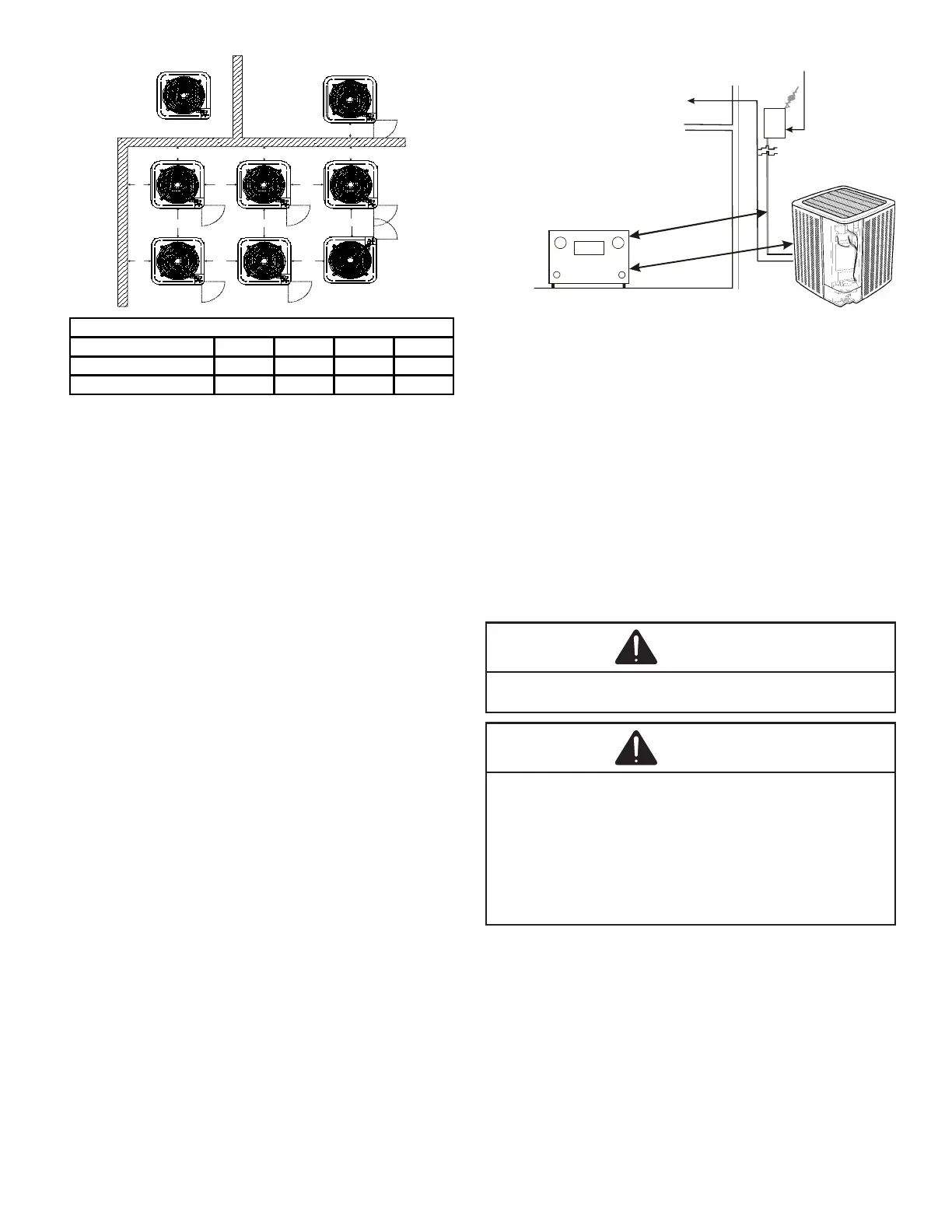
Minimum Airflow Clearance
This unit can be located at ground oor level or on at roofs.
At ground oor level, the unit must be on a solid, level foun-
dation that will not shift or settle. To reduce the possibility
of sound transmission, the foundation slab should not be in
contact with or be an integral part of the building foundation.
Care should be taken to ensure the unit is installed away
from noise sensitive locations such as bedrooms, windows
and outdoor living areas. Ensure the foundation is sucient
to support the unit. A concrete slab raised above ground level
provides a suitable base.
If it is necessary to install this unit on a roof structure, ensure
the roof structure can support the weight and that proper
consideration is given to the weather-tight integrity of the roof.
Since the unit can vibrate during operation, sound vibration
transmission should be considered when installing the unit.
Vibration absorbing pads or springs can be installed between
the heat pump unit legs or frame and the roof mounting as-
sembly to reduce noise vibration.
The unit should be well grounded so that potential eects of
electrical noise from the inverter to surrounding equipment
can be minimized.
When selecting an installation location, keep sucient dis-
tance from the heat pump unit and wiring to radios, personal
computers, stereos, etc., as shown in the following gure.
Keep communication wiring 2” away from high voltage power
cable to avoid communication error due to noise.
Circuit
Breaker
(In.)
Radio, TV
6
0
”
o
r
m
o
r
e
To Indoor Unit and Thermostat
6
0
”
o
r
m
o
r
e
While these items will not cover every conceivable situation,
they should serve as a useful guide.
Read these Safety considerations for Installation carefully be-
fore installing a outdoor unit. After completing the installation,
make sure that the unit operates properly during the system
start-up operation. Instruct the customer on how to operate
and maintain the unit. Inform customers that they should store
this Installation Manual for future reference. Always use a
licensed installer or contractor to install this product. Improper
installation can result in water or refrigerant leakage, electrical
shock, re, or explosion.
WARNING
TO AVOID POSSIBLE INJURY, EXPLOSION OR DEATH, PRACTICE
SAFE HANDLING OF REFRIGERANTS.
WARNING
TO AVOID POSSIBLE EXPLOSION, USE ONLY RETURNABLE (NOT
DISPOSABLE) SERVICE CYLINDERS WHEN REMOVING REFRIGER-
ANT FROM A SYSTEM.
• ENSURE THE CYLINDER IS FREE OF DAMAGE WHICH COULD
LEAD TO A LEAK OR EXPLOSION.
• ENSURE THE HYDROSTATIC TEST DATE DOES NOT EXCEED 5
YEARS.
PSIG. WHEN IN DOUBT, DO NOT USE CYLINDER.



 To Next Page