Need help?
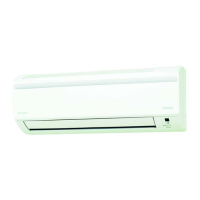
Do you have a question about the Daikin FTL28UV16W1 and is the answer not in the manual?
Definitions of WARNING/CAUTION and general safety advice.
Detailed instructions to prevent injury, fire, and damage.
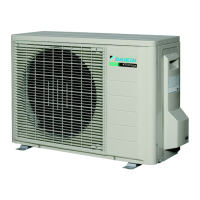
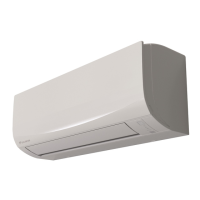
Identifies components of the indoor and outdoor units.
Instructions for inserting batteries into the remote controller.
Steps for attaching accessory filters to the indoor unit.
Instructions to turn on the circuit breaker before operation.
Tips for energy efficiency and battery maintenance.
How to start, stop, and select modes (DRY, COOL, FAN).
How to adjust temperature and information on default settings.
How to adjust fan speed and airflow direction.
How to use the SMELL PROOF function to prevent odors.
How to adjust vertical (flaps) and horizontal (louvres) airflow.
How to enable and disable the child lock feature on the remote.
Details on Coanda (upward airflow) and Power Chill (quick cooling) modes.
Information on Econo mode for energy saving.
How to set ON and OFF timers for automatic operation.
How to use the Good Sleep function for gradual temperature adjustment.
Instructions for cleaning the indoor unit's front panel.
How to remove, wash, and reattach the main air filters.
How to clean and replace accessory filters.
Details on accessory filter types, maintenance, and replacement.
Steps for storing the air conditioner for extended periods.
Explains common scenarios that appear as problems but are normal operations.
Addresses issues with the remote controller and odors from the indoor unit.
Checks to perform before requesting repairs for non-operation or cooling issues.
Guidance on handling sudden stops and abnormal operations.
Lists critical symptoms requiring immediate service center attention.
Information on proper disposal of the unit and batteries.
How to access and interpret error codes displayed on the remote controller.
Critical warnings and cautions for installation procedures.
Detailed warnings about refrigerant leaks, electrical work, and piping.
Criteria for choosing an optimal location for the indoor unit.
Criteria for choosing an optimal location for the outdoor unit.
Required clearances around the outdoor unit for proper installation.
Steps for securely installing the mounting plate for the indoor unit.
Instructions for drilling the wall hole for pipes and installing the embedded pipe.
Steps for piping, wiring, and hanging the indoor unit onto the mounting plate.
Guidance on connecting the drain hose for proper drainage.
Instructions for connecting power supply and inter-unit wires.
Detailed steps for connecting the drain hose and extension.
How to correctly bind and seal insulation pipes for refrigerant lines.
Importance of sealing gaps to prevent condensation and issues.
Diagram showing clearances and piping for indoor unit installation.
Diagram showing clearances and piping for outdoor unit installation.
Specifications for piping length, height, and additional refrigerant requirements.
Tips for installing/removing the indoor unit, front panel, and front grille.
How to set different addresses for multiple indoor units.
Refers to location selection and installation diagrams for the outdoor unit.
Detailed steps for flaring pipe ends and connecting refrigerant pipes.
Cautions on pipe handling, bending, and insulation selection.
Steps for purging air and checking for refrigerant leaks.
Instructions for connecting power supply and inter-unit wires.
How to connect the drain socket and hose for the outdoor unit.
Steps for conducting trial operation to check system functionality.
A checklist of items to verify during the trial operation.
Procedure for pump down operation before relocation or disposal.
Guidelines for proper disposal of electrical and electronic waste.
Recommended actions and prohibitions for air conditioner disposal.
 General
| Cooling Capacity | 2.8 kW |
|---|---|
| Refrigerant | R32 |
| Indoor Unit Weight | 9 kg |
| Type | Split AC |
| Power Supply | 230V, 50Hz |

 To Next Page