EasyManua.ls Logo

dallara GP2 2008 - User Manual

dallara GP2 2008
20 pages
Print Icon
To Next Page IconTo Next Page
Loading...
GP2
2008
USER MANUAL
Release 1.0
(
7/01/08
)
Question and Answer IconNeed help?

Do you have a question about the dallara GP2 2008 and is the answer not in the manual?

Overview

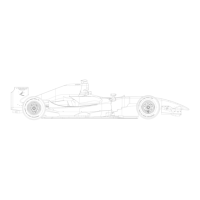
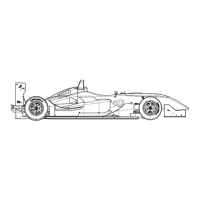
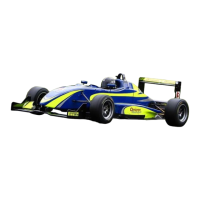
The Dallara GP2 2008 is a high-performance racing car, designed for the GP2 series, a single-seater feeder category for Formula 1. This user manual provides comprehensive details on the car's specifications, setup, and maintenance, crucial for its operation in a demanding racing environment.

General Description and Specifications

The car weighs 595 kg (without driver). Its chassis is a carbon and ZYLON™ sandwich with an aluminum/NOMEX™ honeycomb structure, complemented by carbon prepreg with NOMEX honeycomb for the bodywork. Composites are supplied by Dallara with DELTA TECH materials.

Suspension:

  • Front Suspension: Push-rod with torsion bars and twin dampers.
  • Rear Suspension: Push-rod twin dampers.
  • Springs: Front spring Dallara torsion bars - 2" ID REAR.
  • Dampers: Koni 2612-010-961 (Front, 2-way adjustable for bump and rebound) and Koni 2822-728&729-475 (Rear, 4-way adjustable for bump and rebound).

Steering:

  • Steering Wheel: Magneti Marelli design.
  • Steering Release System: SPA design.
  • Pinion Primitive Diameter: 11.75 mm.
  • Static Steering Ratio: 14.0 steering wheel/wheel.

Brake System:

  • Calipers and Master Cylinders: Brembo.
  • Discs & Pads: Hitco.

Other Key Components:

  • Gearbox: Mecachrome six ratios plus reverse gear.
  • Fuel Cell: Premier – FT5.
  • Extinguisher System: Lifeline (electrically operated).
  • Coolers/Exchanger: Dallara (water and oil).
  • Rims: O.Z. 13" x 11.75" (front) and 13" x 13.75" (rear).
  • Battery: ODISSEY PC545 (Red Top 20).
  • Seat Belt: TRW-SABELT.
  • Engine Type: Mecachrome V8 – 4000 cc.

Dimensions

  • Front Track: 1478 mm
  • Rear Track: 1415 mm
  • Wheelbase: 3120 mm
  • Overall Length: 4867 mm (from nosetip to rear edge of rear endplate)
  • Overall Width: 1805.8 mm
  • Overall Height: 1047 mm (from tub bottom face to telecamera upper surface)

Usage Features

Set-Up: The manual provides a "Suggested Setup" for a complete car with all liquids, driver, and 30 liters of fuel. This includes settings for:

  • Height: Front 24 mm, Rear 32 mm.
  • Springs: Front rate 1200, Rear rate 900. Preload settings are also specified.
  • Dampers: Bump stop type (Koni rubber), bump stop length (10 mm), and free work space.
  • Anti-Roll Bar (A.R.B.): Front 25x2.5, Rear Ø18x4.5, with specific external attachment points.
  • Camber: Front -2.3°, Rear -0.8°.
  • Toe: Front 15" out, Rear 0.15" in.
  • Caster: Standard.
  • Differential: Ramps brake 20°, Ramps power 80°, Plates (Std. Hewland), Preload 0 Nm.

Setup Adjustment: Detailed adjustments are provided for various parameters, indicating the change in degrees or millimeters per turn or shim:

  • Pushrod Adjuster: Ride height change, camber change per turn, and thread size.
  • Toe Adjuster (per wheel): Toe change per turn and thread step.
  • Camber Shim: Toe change per 1mm shim.
  • Castor Adjuster: Castor change per turn, thread step & size, and associated ride height, camber, and toe changes.
  • Spring Platform: Thread step and height change per turn.
  • Ratios: Wheel/Damper Ratio, Wheel/Torsion Spring Ratio, Wheel/Drop Link Ratio.
  • Roll Centre Height: Specified from the ground.
  • Camber Spacers: Available in various thicknesses for front (1.0, 1.5, 2.0 mm) and rear (0.2, 0.4, 0.5, 0.6, 0.8, 1.0, 1.2, 1.5, 2.0 mm).

Front Anti-Roll Bar (FARB) Stiffness: Three different T-shaped anti-roll bars are available: Ø18mm thickness 4.5mm, Ø25mm thickness 2.5mm, and Ø30mm thickness 5mm. The manual provides tables for component stiffness and stiffness at ground for various droplink positions (D1 and D2) and blade positions (1 to 5, where 1=full soft, 5=full hard). The concept of "AntiSymmetric Model Stiffness" is introduced, which is 2 * component stiffness, and the ARB stiffness at ground is defined as AntiSymmetric Model Stiffness / MRarb^2.

Steering Column Positions: The steering column can be adjusted to Forward, Intermediate, and Rearward positions, allowing for driver comfort and optimal control.

Castor Regulation:

  • Built-in Castor: 5.80° when the car is flat and front upright inclination is 0.00°.
  • Apparent Castor: 0.00° under the same conditions.
  • Pitch Angle Effect: Changes in front-to-rear ride height affect castor angles. For example, a 20mm front and 40mm rear ride height (wheelbase 3120mm) results in a pitch angle of 0.367°, reducing both apparent and total castor angles.
  • Maximum Castor: 6.7° (+2 lengthen turns = 2.12 mm, Push Rod = +5 mm lengthen) with 3.00mm clearance.
  • Minimum Castor: 3.0° (-6 shorten turns = 6.36 mm, Push Rod = +5 mm lengthen, Steer Rack Displacement = 28 mm, Camber Max. = -4.80°) with 60mm clearance.

Maintenance Features

General Agreement and Warranty: Dallara emphasizes that motor racing is not covered by warranty due to its inherent dangers. However, the car is designed not to show structural component failure for approximately 10,000 km under normal operating conditions, provided necessary maintenance and checks are performed, and the car has not been involved in previous accidents. Dallara is not responsible for incorrect chassis repairs performed outside its authorized centers.

Chassis Checks:

  • Structural Failure: Chassis should be checked for structural failure not later than two years after delivery and after each major accident.
  • Annual Check: After the first check or any major accident, it is mandatory to check the chassis annually at a Dallara-authorized center.

Mileage of Critical Components: A life-mileage program is provided for periodic maintenance, replacement, refurbishment, and dimensional/crack checks. Users are advised to contact Dallara immediately if premature wear or problems are discovered.

Suspension Components (5000-8000 km):

  • Suspension w/bones and pushrods: 5000 km
  • Anti Roll Bars and anti roll bar adjustable blades: 5000 km
  • Suspension ball joints: 4000 km
  • Front and rear rocker axial and radial needle bearings: 4000 km
  • Front torsion bars: 5000 km
  • Rocker caps: 8000 km
  • Front hubs: 8000 km
  • Rear hubs: 8000 km
  • Rocker ball joints: 2500 km
  • Front suspension studs: 8000 km
  • Upright: 8000 km

Steering Components (5000-8000 km):

  • Steering column and tie rods: 5000 km
  • Steering rack and pinion: 8000 km

Tub and Bodywork Components (3000-10000 km):

  • Brake pedal: 5000 km
  • Chassis to Engine installation studs: 10000 km
  • Underwing stays: 3000 km

Wheels, Transmission, and Starter Motor Components (3000-5000 km):

  • Brake disc bell (unless fretting occurs): 3000 km
  • Wheel rims: 5000 km
  • Wheel bearings: 5000 km

Systems (10000 km):

  • Wiring Loom: 10000 km
  • Water Radiators & Oil coolers (unless fins getting damaged): 10000 km

Wing Assemblies (10000 km):

  • Front and Rear wing assemblies (including support plates between nosebox and front wing, and between lower rear mainplane and rear crashbox): 10000 km

Crack Checks: Routinely perform crack checks on structural parts and after every accident. Specific components to check include:

  • Rims
  • Seat harness brackets
  • Brake disc bells
  • Wishbones, Toe links, Track rods and Pushrods
  • Uprights (visual after every event, with die liquids every 2 events or after shunts)
  • Suspension brackets, steering arms and rockers
  • Anti roll bars and anti roll bar adjustable blades, and torsion springs.

Safety Wheel Tethers: Front and rear wheel retention cables on the chassis side MUST always be assembled with the bobbins on the end loops. The manual includes images illustrating the correct assembly for both front and rear tethers.

Front and Rear Rocker Maintenance: The manual details procedures for maintaining the front and rear rockers.

Uprights Rebuilding: Instructions are provided for rebuilding the uprights, including the front wheel bearing.

Front and Rear Hub Assembly: Procedures for assembling both front and rear hubs are outlined.

Dampers: Details on damper dimensions and setting up are included.

Aerodynamics: The manual covers definitions, components like the front mainplane, front flap, front endplate, rear lower mainplane, rear upper biplane, and rear endplate. It also references a "2008 Aero Manual" for more detailed information, including:

  • Introduction
  • Rear wing package
  • Aerodynamic data
  • Front wing flap adjustment and wicker sensitivity
  • Rear top wing in VERY LOW DOWNFORCE configuration
  • Rear top wing in LOW DOWNFORCE configuration
  • Rear top wing in MID DOWNFORCE configuration
  • Rear top wing in HIGH DOWNFORCE configuration
  • Balanced front and rear wings configurations
  • Roll angle sensitivity
  • Constant balance rear top assembly and front flap angles adjustments
  • Effect of skirt wear

Brake System: Detailed information on Brembo calipers and Brembo carbon-carbon brakes is provided.

Throttle System: Includes information on the throttle pedal hydraulic damper, its adjustment (rebound/throttle-off and bump/throttle-on damping stiffness), and oil filling instructions.

Oil System and Fuel System: The manual specifies that foam is no longer allowed in the fuel system and provides collector pot mounting procedures.

Fire Extinguisher System: A layout of the fire extinguisher system is included.

Safety and Utility Notices: Important notices regarding stud installation and removal, fire system, steering, wishbones, and suspension are provided.

Safety Issues: Specific sections cover cockpit opening and seat fixing and removal.

Transponder Location: The location for the transponder is specified.

SWG & Conversion Table: Includes sheet metal thickness and a unit conversion table.

Basic Instructions for the Use of OZ Cast Mag. Wheels: Provides essential guidelines for the proper use and care of the OZ cast magnesium wheels.

dallara GP2 2008 Specifications

General IconGeneral
Branddallara
ModelGP2 2008
CategoryAutomobile
LanguageEnglish

Related product manuals