EasyManua.ls Logo

Danby DWC036A1BSSDB-6 - User Manual

Danby DWC036A1BSSDB-6
7 pages
Print Icon
To Next Page IconTo Next Page
Loading...
DANBY PRODUCTS LIMITED, ONTARIO, CANADA N1H 6Z9
DANBY PRODUCTS INC., FINDLAY, OHIO, USA 45840
OWNER’S MANUAL
MANUEL DU PROPRIÉTAIRE
MANUAL DEL PROPIETARIO
www.Danby.com
*
*
2022.04.08
MODEL • MODÈLE • MODELO
DWC036A1BSSDB-6
WINE COOLER
Owner’s Manual...............................1 - 8
REFROIDISSEUR DE VIN
Manuel du propriétaire...................9 - 16
ENFRIADOR DE VINO
Manual del propietario.................17 - 24
Question and Answer IconNeed help?

Do you have a question about the Danby DWC036A1BSSDB-6 and is the answer not in the manual?

Summary

Important Safety Information

Safety Requirements

Essential safety precautions and guidelines for operating the appliance safely, covering risks like fire, electrical shock, and child entrapment.

Grounding Instructions

Instructions on proper grounding of the appliance to prevent electrical shock, including outlet requirements and warnings against improper use.

Installation Instructions

Location Guidelines

Recommendations for placing the appliance in a suitable location, considering factors like floor strength, sunlight, heat sources, and ventilation.

Appliance Features

Overview of the main features of the wine cooler, including thermostat, tempered glass door, door gaskets, shelves, and interior light.

Operating Instructions Overview

Introduction to the operating instructions section, covering initial setup and controls for the appliance.

Operating Instructions

Temperature Control

Guidance on adjusting the temperature using the control knob, explaining the dial indicators and factors affecting internal temperature.

Leveling Instructions

Step-by-step instructions on how to adjust the appliance's leveling leg to ensure it is stable and properly positioned.

Storage Instructions

Recommendations for optimally storing wine bottles within the appliance, specifying capacity and placement on shelves.

Shelf Instructions

Guidance on how to remove and replace shelves for cleaning or arrangement, including a note about air circulation.

Operating Instructions

Door Reversal Instructions

Detailed steps for reversing the door swing direction of the appliance, including necessary component removal and reinstallation.

Care & Maintenance

Cleaning Procedures

Instructions for cleaning the interior and exterior of the appliance, including recommended cleaning agents and areas to pay attention to.

Power Failure Handling

Guidance on how to manage appliance temperature and operation during power outages and after power is restored.

Defrost Function

Explanation of the automatic defrost function, how it operates, and the process for handling defrost water.

Vacation Storage

Recommendations for leaving the appliance unattended for short or long vacations, including shutdown and preparation steps.

Moving and Transportation

Guidelines for safely moving the appliance, including emptying, securing, and handling during transportation to prevent damage.

Disposal

Information on the proper disposal of the appliance, advising to treat it as electrical waste and contact local agencies.

Troubleshooting

No Power Issues

Identifies potential causes for the appliance not receiving power, such as blown fuses or improperly inserted plugs.

Internal Temperature Not Cold Enough

Lists common reasons for insufficient cooling, including door seals, vent obstructions, recent loading, heat sources, and ambient conditions.

Appliance Runs Continuously

Explains why the appliance might run constantly, covering door usage, vent obstructions, load issues, heat sources, and potential system failures.

Condensation on Cabinet or Door

Addresses the causes of condensation, primarily related to improper door closure or high ambient temperature and humidity.

Summary

Important Safety Information

Safety Requirements

Essential safety precautions and guidelines for operating the appliance safely, covering risks like fire, electrical shock, and child entrapment.

Grounding Instructions

Instructions on proper grounding of the appliance to prevent electrical shock, including outlet requirements and warnings against improper use.

Installation Instructions

Location Guidelines

Recommendations for placing the appliance in a suitable location, considering factors like floor strength, sunlight, heat sources, and ventilation.

Appliance Features

Overview of the main features of the wine cooler, including thermostat, tempered glass door, door gaskets, shelves, and interior light.

Operating Instructions Overview

Introduction to the operating instructions section, covering initial setup and controls for the appliance.

Operating Instructions

Temperature Control

Guidance on adjusting the temperature using the control knob, explaining the dial indicators and factors affecting internal temperature.

Leveling Instructions

Step-by-step instructions on how to adjust the appliance's leveling leg to ensure it is stable and properly positioned.

Storage Instructions

Recommendations for optimally storing wine bottles within the appliance, specifying capacity and placement on shelves.

Shelf Instructions

Guidance on how to remove and replace shelves for cleaning or arrangement, including a note about air circulation.

Operating Instructions

Door Reversal Instructions

Detailed steps for reversing the door swing direction of the appliance, including necessary component removal and reinstallation.

Care & Maintenance

Cleaning Procedures

Instructions for cleaning the interior and exterior of the appliance, including recommended cleaning agents and areas to pay attention to.

Power Failure Handling

Guidance on how to manage appliance temperature and operation during power outages and after power is restored.

Defrost Function

Explanation of the automatic defrost function, how it operates, and the process for handling defrost water.

Vacation Storage

Recommendations for leaving the appliance unattended for short or long vacations, including shutdown and preparation steps.

Moving and Transportation

Guidelines for safely moving the appliance, including emptying, securing, and handling during transportation to prevent damage.

Disposal

Information on the proper disposal of the appliance, advising to treat it as electrical waste and contact local agencies.

Troubleshooting

No Power Issues

Identifies potential causes for the appliance not receiving power, such as blown fuses or improperly inserted plugs.

Internal Temperature Not Cold Enough

Lists common reasons for insufficient cooling, including door seals, vent obstructions, recent loading, heat sources, and ambient conditions.

Appliance Runs Continuously

Explains why the appliance might run constantly, covering door usage, vent obstructions, load issues, heat sources, and potential system failures.

Condensation on Cabinet or Door

Addresses the causes of condensation, primarily related to improper door closure or high ambient temperature and humidity.

Overview

This document is an owner's manual for a Danby Wine Cooler, specifically model DWC036A1BSSDB-6. It provides comprehensive instructions for installation, operation, maintenance, and troubleshooting, ensuring proper and safe use of the appliance.

Function Description:

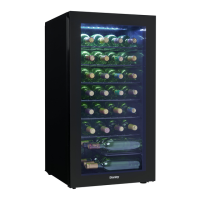
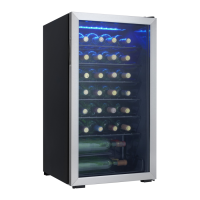
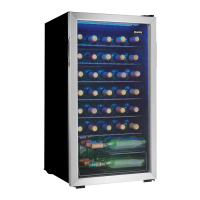
The Danby Wine Cooler is designed for household use to store wine bottles at controlled temperatures. It functions as a dedicated wine storage unit, maintaining optimal conditions for wine preservation. The appliance is not intended for outdoor installation or in environments that are not temperature-controlled, such as garages or porches. Its primary function is to cool and store up to 36 standard 750 ml wine bottles, protecting them from temperature fluctuations, UV light, and excessive humidity.

Important Technical Specifications:

  • Model: DWC036A1BSSDB-6
  • Capacity: Holds up to 36 wine bottles (750 ml size).
  • Dimensions: 44.5 cm (17.5 inches) wide, 84 cm (33.1 inches) high, 51 cm (20.1 inches) deep.
  • Refrigerant: Uses a flammable refrigerant. Users are warned against puncturing refrigerant tubing.
  • Power Supply: Designed for specific voltage and frequency as indicated on the serial rating plate. Requires a properly grounded 3-prong wall outlet.
  • Defrost System: Equipped with an automatic defrost function. Defrost water is channeled to a drip tray above the compressor, where it evaporates due to heat transfer.
  • Temperature Control: Features an externally mounted rear wall thermostat with a graduated blue dial. Thicker, darker blue indicates colder temperatures, while thinner, lighter blue indicates warmer temperatures. The "O" position turns the appliance off.
  • Shelving: Includes plastic-coated, odor-resistant, rustproof, and removable shelves. The top six shelves can hold five bottles each, and the two lower shelves can hold three bottles each.
  • Door: Features a tempered glass door for UV protection and easy interior viewing. It also has magnetic door gaskets for tight sealing, which helps retain cooling power and humidity levels.
  • Leveling: Equipped with an adjustable leveling leg to ensure the appliance is stable and level.

Usage Features:

  • Installation: Requires two people for moving. Before plugging in, the appliance should stand upright for approximately 6 hours to allow the cooling system to settle. It needs 12.7 cm (5 inches) of space between the back, sides, and top and all adjacent walls for proper ventilation. It is designed for free-standing installation and should not be built into a cabinet or counter.
  • Temperature Setting: The thermostat dial allows users to control the internal temperature. Setting the knob just past the middle point of the graduated blue line is recommended for adequate cooling.
  • Interior Light: An interior light illuminates the compartment when turned on, controlled by a switch on the ceiling of the appliance, on the right side of the interior light housing.
  • Shelf Management: Shelves are removable for cleaning and can be reinserted by ensuring they rest securely on support brackets and pushing inward until they lock. Users are advised not to cover shelves with materials that obstruct air circulation.
  • Door Reversal: The manual provides detailed instructions for reversing the door swing, allowing for flexible placement. This process involves removing and reattaching hinges and feet, and requires the appliance to remain upright for 6 hours after the process if it was placed on its back or side.
  • Child Safety: Caution is advised to supervise children to prevent them from playing with the appliance. For old appliances, the door or lid should be removed, and shelves left in place to prevent child entrapment. Locks should not be added to the door or lid.

Maintenance Features:

  • Cleaning: The appliance should be unplugged before cleaning. The interior can be cleaned with a soft cloth and a solution of baking soda (one tablespoon per quart of water) or mild detergent. Removable shelves should be washed in a mild detergent solution. The exterior should be cleaned with a soft, damp cloth and mild detergent. The door seals should be cleaned with soapy water, rinsed, and dried. Ammonia or alcohol-based cleaners, abrasive cleaners, or sharp objects should not be used.
  • Defrosting: The automatic defrost function eliminates the need for manual defrosting.
  • Power Failure: Most power failures are short and should not significantly affect the internal temperature if the door is kept closed. For longer outages, steps should be taken to protect contents. A waiting period of 3 to 5 minutes is recommended before restarting the appliance after an interruption.
  • Vacation Mode:
    • Short Vacations (less than three weeks): Leave the appliance operating.
    • Long Vacations (several months): Remove all items, turn off the appliance, clean and dry the interior thoroughly. To prevent odors and mold, leave the door slightly ajar, blocking it open if necessary.
  • Moving: Before moving, ensure the appliance is empty, secure the door with tape, turn the adjustable leg up to the base, and protect the exterior with a blanket. The appliance should remain upright during transport. If it is placed on its back or side, it must stand upright for 6 hours before being plugged in at the new location to prevent damage to internal components.
  • Disposal: The appliance should not be treated as regular household waste. It must be taken to an appropriate waste collection point for recycling electrical components, following local waste removal agency or government office guidelines.

Safety Information:

The manual emphasizes several safety requirements, including warnings about flammable refrigerants, the importance of factory-authorized service, proper disposal, and handling instructions. It also highlights the need for proper grounding to prevent electrical shock and advises against using extension cords or ungrounded adapters. Ventilation openings must be kept clear, and mechanical devices or other means not recommended by the manufacturer should not be used to accelerate defrosting. Electrical appliances not recommended by the manufacturer should not be used inside the food storage compartments.

Danby DWC036A1BSSDB-6 Specifications

General IconGeneral
BrandDanby
ModelDWC036A1BSSDB-6
CategoryKitchen Appliances
LanguageEnglish

Related product manuals