25
5 – WHEEL REDUCTION GEARS
Each track is driven by a reduction gear coupled to a hydrostatic
motor, fitted with an internal “negative” type multiple-disk brake. With
the engine off, the brake is always on (parking). For inspection, filling
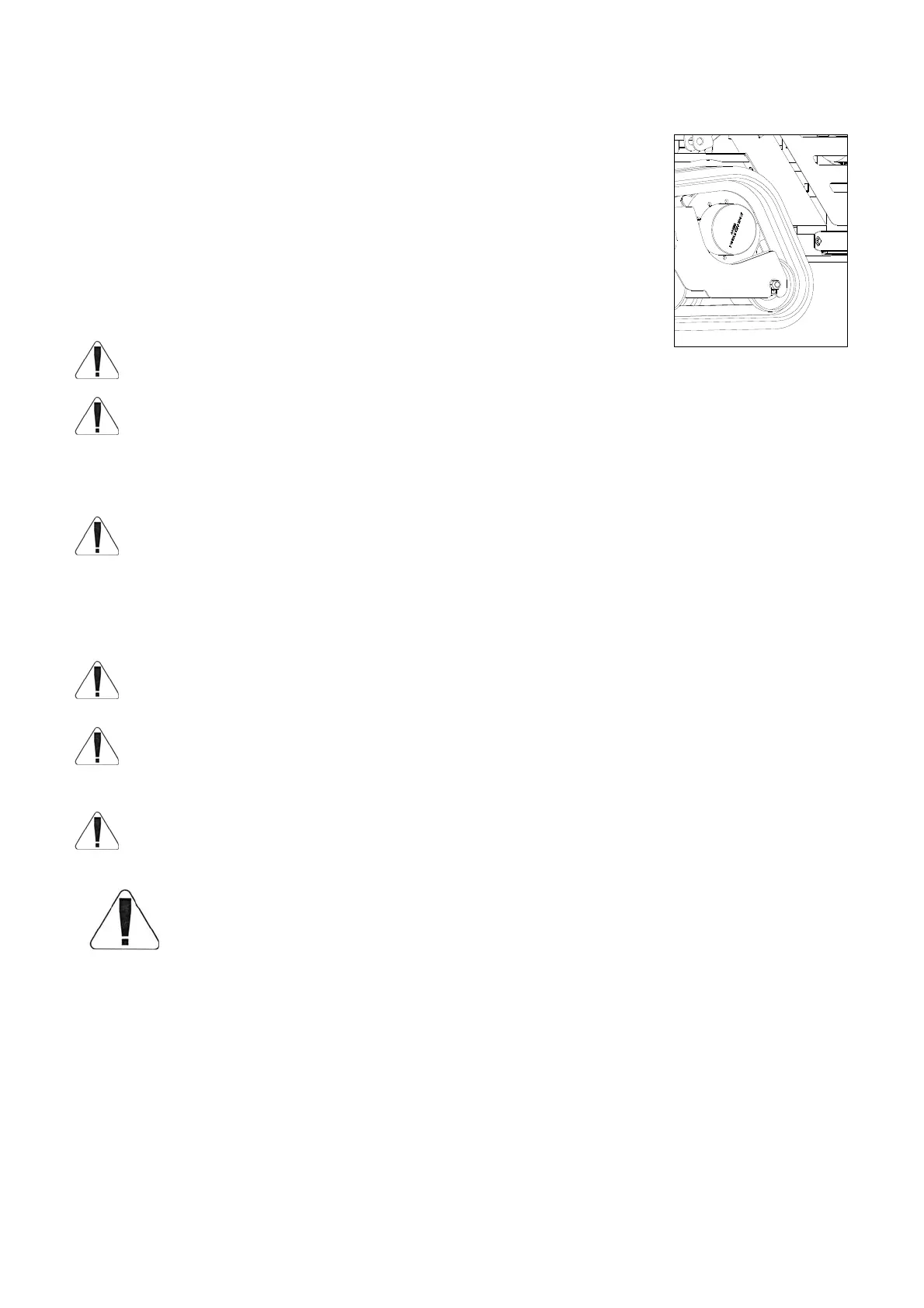
and oil change in the wheel reduction gears, follow the instructions
indicated and specified below:
Periodically check (see maintenance table) for leaks, and that with
the machine off and the reduction gears positioned as previously
illustrated, the oil is at the required level. If necessary, top up.
When a top-up of more than 10% of the total quantity is
required, it may be an indication of reduction gear leaks.
The first oil change must be carried out after the first 100 hours of operation.
Subsequent changes after 1000 hours or at least once a year.
Capacity of each reduction gear: 0,3 l
For the type of lubricant, refer to the lubrification table.
Emptying of the reduction gear must be carried out immediately after operation with
the oil still hot to prevent depositing of impurities. Be extremely careful during
emptying, since the hot oil may cause serious burns. Protect the hands. Clean the
plug with liquid detergent, taking maximum care over cleanliness during the filling phase.
Cleanliness is an essential component for good functioning of the machine, and the
hydrostatic system in particular.
If on checking, the oil level in the reduction gear is found to be low, in the absence of
external leaks, the gaskets inside the reduction gear must be overhauled. This must
be carried out by an authorised service centre.
When checking the level and topping-up, filling, emptying, the machine must stand
level and horizontal, and with the engine off. Place a container of adequate capacity
under the drain plug to collect the oil.
Do not dispose of the oil in the environment. Disposal must always be through
authorised companies.
WARNING!!!
MAINTENANCE AND REPAIR ACTIVITIES MUST ALWAYS BE MADE BY
ADEQUATELY TRAINED PERSONELL.


 To Next Page
 Loading...