order for the soft
sounds to
be recorded or broadcast
above the noise
floor and
for the loud
sounds to
stay below an unacceptable distortion level.
If
we
want
to restore this lost
dynamic range in listening
to a
recording or
broadcast,
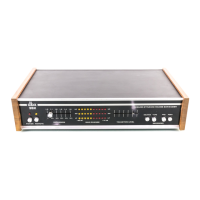
an expander is required. The dbx 4BX does just that
—
it enables a lis-
tener
to recover substantial portions of the dynamic range missing on existing
conventional recordings and during conventional broadcasts. It works
by in-
creasing
the volume of high-level passages and decreasing the volume
of
low-
level
ones, the
opposite of the
compression and gain riding
used to constrict the
program
in the first
place.
Since it splits the audio signal into
three bands and
processes
each separately, the 4BX can
expand
compressed material without the
usual artifacts
—
audible clues
—
that tell the listener that processing is taking
place.
By flexibly expanding the dynamic range of a compressed program
—
not
to mention re-creating and/or
augmenting the impact of
its transients
—
the con-
trasts between
loud and soft are restored and those of the original performance
more closely approximated.
AH of which brings back much of the excitement
and
involvement of listening to music live.
In lowering
the characteristic
noise
levels of tapes, records, and broadcasts
and
restoring
the "punch"
of loud moments
and the whisper of quiet ones, a
4BX can give new life
to old
record
and tape collections and can make FM broad-
casts worth
listening to closely. And used carefully with a dbx tape-noise-reduc-
tion
system (such
as
the 222 or
224),
a 4BX lets
you
make copies
of records, FM
broadcasts, and other tapes that actually sound better than the originals. With
all
of these capabilities, it probably will become one of
the
most valued components
in your home music system.


 To Next Page