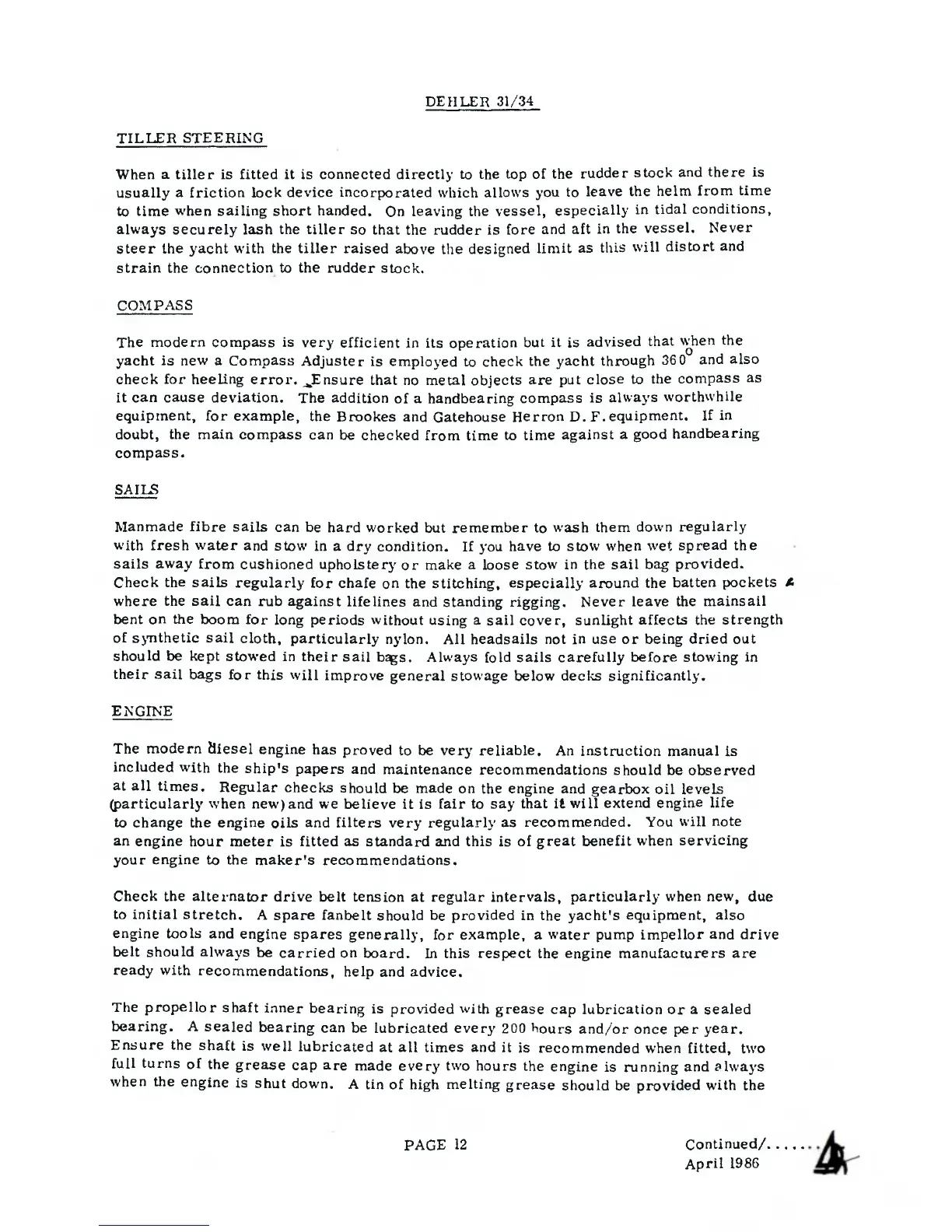
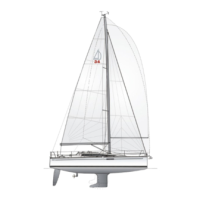
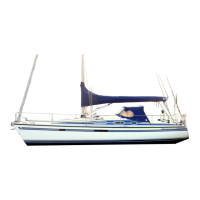
DEHLER 31/34
TILLER STEERING
When a tiller is fitted it is connected directly to the top of the rudder stock and there is
usually a friction lock device incorporated which allows you to leave the helm from time
to time when sailing short handed. On leaving the vessel, especially in tidal conditions,
always securely lash the tiller so that the rudder is fore and aft in the vessel. Never
steer the yacht with the tiller raised above the designed limit as this will distort and
strain the connection to the rudder stock.
COMPASS
The modern compass is very efficient in its operation but it is advised that when the
yacht is new a Compass Adjuster is employed to check the yacht through 360 and also
check for heeling error. Ensure that no metal objects are put close to the compass as
it can cause deviation. The addition of a handbearing compass is always worthwhile
equipment, for example, the Brookes and Gatehouse Herron D. F. equipment. If in
doubt, the main compass can be checked from time to time against a good handbearing
compass.
SAILS
Manmade fibre sails can be hard worked but remember to wash them down regularly
with fresh water and stow in a dry condition. If you have to stow when wet spread the
sails away from cushioned upholstery or make a loose stow in the sail bag provided.
Check the sails regularly for chafe on the stitching, especially around the batten pockets £
where the sail can rub against lifelines and standing rigging. Never leave the mainsail
bent on the boom for long periods without using a sail cover, sunlight affects the strength
of synthetic sail cloth, particularly nylon. All headsails not in use or being dried out
should be kept stowed in their sail bags. Always fold sails carefully before stowing in
their sail bags for this will improve general stowage below decks significantly.
ENGINE
The modern liesel engine has proved to be very reliable. An instruction manual Is
included with the ship's papers and maintenance recommendations should be observed
at all times. Regular checks should be made on the engine and gearbox oil levels
(particularly when new)and we believe it is fair to say that it will extend engine life
to change the engine oils and filters very regularly as recommended. You will note
an engine hour meter is fitted as standard and this is of great benefit when servicing
your engine to the maker's recommendations.
Check the alternator drive belt tension at regular intervals, particularly when new, due
to initial stretch. A spare fanbelt should be provided in the yacht's equipment, also
engine tools and engine spares generally, for example, a water pump impellor and drive
belt should always be carried on board. In this respect the engine, manufacturers are
ready with recommendations, help and advice.
The propellor shaft inner bearing is provided with grease cap lubrication or a sealed
bearing. A sealed bearing can be lubricated every 200 hours and/or once per year.
Ensure the shaft is well lubricated at all times and it is recommended when fitted, two
full turns of the grease cap are made every two hours the engine is running and always
when the engine is shut down. A tin of high melting grease should be provided with the
PAGE 12
Continued!
April 1986


 To Next Page