2
larly when sailing on a long off-shore race. The chances are in long races the wind
direction invariably changes giving you the advantage of carrying a spinnaker all the
way. This is a judgement you can only make on the day of the race
)
coupled to an
assessment of the weather pattern, charts, tidal flow and E.T.A. to the next mark
on the course. Please forgive me for perhaps stating commonly known much accepted
facts and getting myself involved with racing tactics, a complex subject, well explained
by many people who are far more competent than I. The point I am attempting to
stress is the importance of complete concentration particularly under reaching con-
ditions when the crew can at times sit back and switch off. There can be no doubt
about it, when reaching (and indeed running) under really heavy weather conditions
the genoah3s very definite advantages over a spinnaker allowing you, for example
)
to steer a much steadier and straighter course to the next mark. It is deceptive, you
always appear to be travelling faster when a yacht is well heeled and making a lot of
fuss through the water. This Is not so, check your speed.
TO WINDWARD
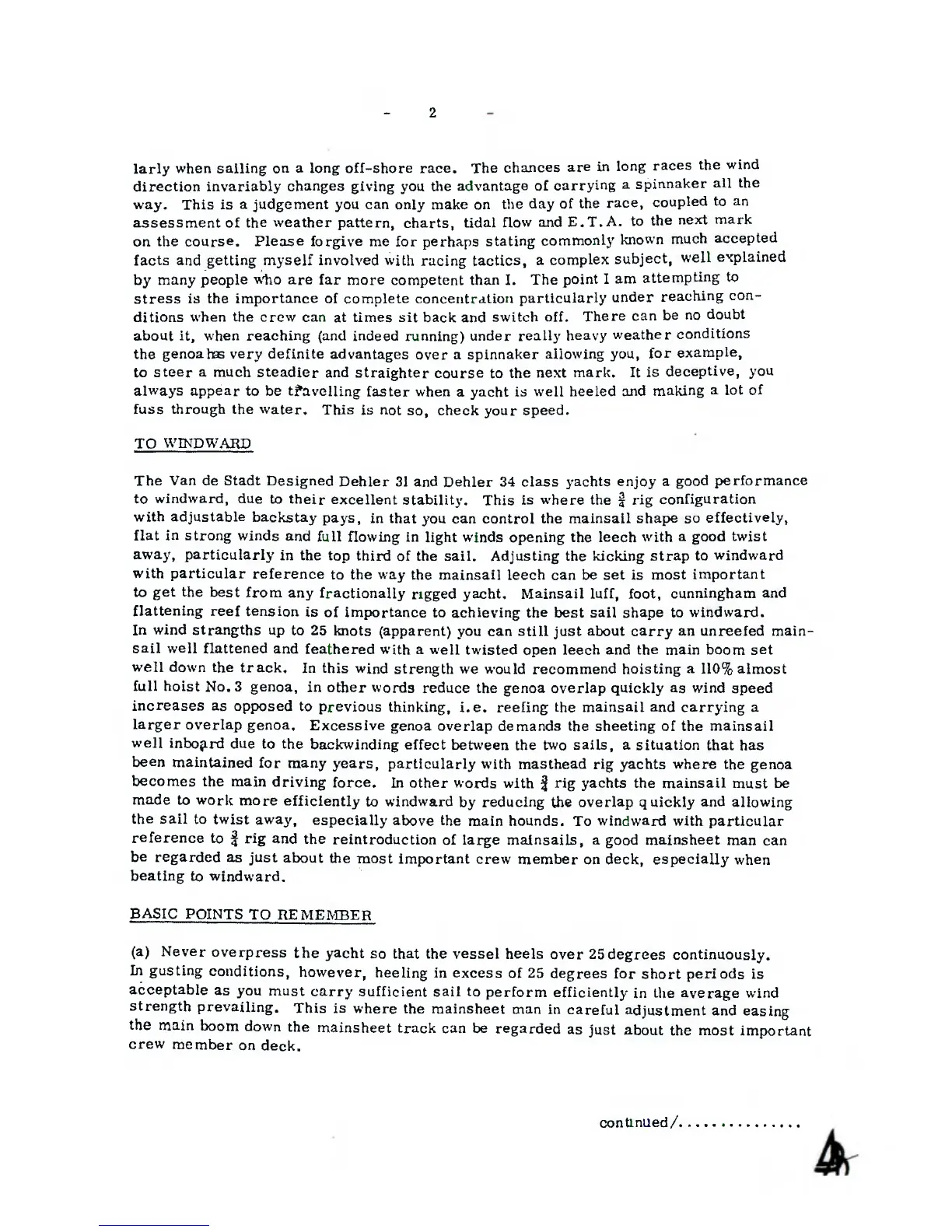
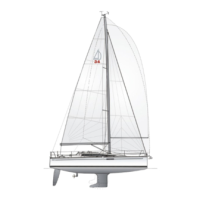
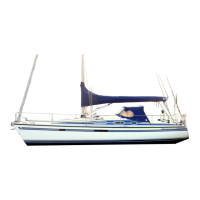
The Van de Stadt Designed Dehier 31 and Dehier 34 class yachts enjoy a good performance
to windward, due to their excellent stability. This is where the rig configuration
with adjustable backstay pays, in that you can control the mainsail shape so effectively,
flat in strong winds and full flowing in light winds opening the leech with a good twist
away, particularly in the top third of the sail. Adjusting the kicking strap to windward
with particular reference to the way the mainsail leech can be set is most important
to get the best from any fractionally rigged yacht. Mainsail luff, foot, cunningham and
flattening reef tension is of importance to achieving the best sail shape to windward.
In wind strangths up to 25 knots (apparent) you can still just about carry an unreefed main-
sail well flattened and feathered with a well twisted open leech and the main boom set
well down the track. in this wind strength we would recommend hoisting a 110% almost
full hoist No. 3 genoa, in other words reduce the genoa overlap quickly as wind speed
increases as opposed to previous thinking, i.e. reefing the mainsail and carrying a
larger overlap genoa. Excessive genoa overlap demands the sheeting of the mainsail
well inboird due to the backwinding effect between the two sails, a situation that has
been maintained for many years, particularly with masthead rig yachts where the genoa
becomes the main driving force. In other words with J rig yachts the mainsail must be
made to work more efficiently to windward by reducing the overlap quickly and allowing
the sail to twist away, especially above the main hounds. To windward with particular
reference to J rig and the reintroduction of large mainsails, a good mainsheet man can
be regarded as just about the most Important crew member on deck, especially when
beating to windward.
BASIC POINTS TO REMEMBER
(a) Never overpress the yacht so that the vessel heels over 25 degrees continuously.
In gusting conditions, however, heeling in excess of 25 degrees for short periods is
acceptable as you must carry sufficient sail to perform efficiently in the average wind
strength prevailing. This is where the mainsheet man in careful adjustment and easing
the main boom down the mainsheet track can be regarded as just about the most important
crew member on deck.
continued
/
-~r


 To Next Page