
 Need help?
Do you have a question about the Dell HBA355i and is the answer not in the manual?
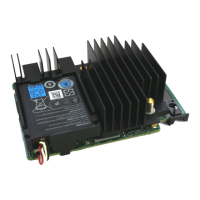
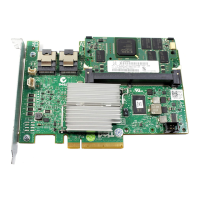
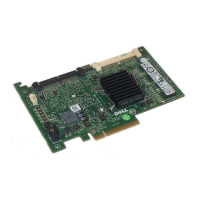
Overview of the Dell HBA355i adapter and its role as a boot and data controller.
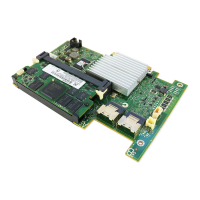
Overview of the Dell HBA355e adapter and its role as a data controller for external devices.
Comprehensive technical specifications for both HBA355i and HBA355e cards.
Critical safety precautions to follow before, during, and after system servicing.
Step-by-step guide to safely remove the Dell HBA355i adapter from the system.
Detailed instructions for installing the Dell HBA355i adapter into the system.
Guide for removing the Dell HBA355i front card from its carrier.
Instructions for installing the Dell HBA355i front card into the system.
Steps for safely removing the Dell HBA355e adapter from the system.
Instructions for installing the Dell HBA355e adapter into the system.
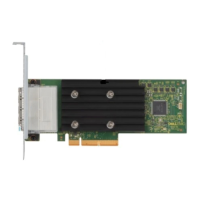
The Dell Technologies Host Bus Adapter (HBA) 355i and HBA355e are non-RAID solution cards designed for use as both boot and data controllers. The HBA355e specifically functions as a data controller, connecting to external JBODs and tape drives.
These HBAs are PCIe Gen 4 x8 host interface cards, providing dual SAS/SATA Gen 3 device interfaces. They support both SAS and SATA drives. The HBA355i features x16 SAS lanes for a target device and can support up to 16 drives without an expander. The HBA355e also has x16 lanes, designed for connection to external target devices such as enclosures (ME484, MD1420, and MD1400) and various tape drives (LTO6/7/8).
The HBA355e supports external enclosures MD1420 and MD1400. For single-path configurations, a maximum of eight enclosures are supported, while dual-path configurations support up to four. A maximum of two enclosures can be supported per port when using a daisy chain topology. MD1400 and MD1420 enclosures can be connected to the same controller simultaneously. However, mixing MD and ME enclosures, or mixing tape drives with MD or ME enclosures on the same controller, is not supported. Loopback connections of enclosures are not supported, nor is mixing single-path and dual-path configurations on the same controller. Interleaving of ports for multipath configuration is not supported, and using Port 1 and Port 2 in a dual-path configuration on the same enclosure is not supported.
For ME484 enclosure support, the HBA355e follows similar topology rules. A maximum of two enclosures are supported in single- or dual-path configurations, but both single-path and dual-path configurations on the same Dell HBA355e card are not supported. When using two enclosures together, they must be either MD14xx or ME484; mixing these types, or mixing tape drives with MDxx or ME484 enclosures on the same controller, is not supported. Only one enclosure is supported per port, and loopback connections, interleaving of ports for multipath configuration, and using Port 1 and Port 2 for dual-path on the same enclosure are not supported.
The HBA355e also supports tape drives, with a maximum of four external LT06/7/8 tape drives. Each port supports a maximum of one tape drive. Multipath configurations are not supported for tape drives, and mixing tape drives with ME (ME484) or MD (MD1420 or MD1400) enclosures on the same controller is not supported.
The HBAs are managed through several applications, including the Human Interface Infrastructure (HII) Configuration Utility, Dell OpenManage Storage Management, the Integrated Dell Remote Access Controller (iDRAC), Lifecycle Controller (LC), and a command-line interface (CLI). These tools facilitate RAID system management, disk group creation, and online maintenance.
The HII configuration utility, integrated into the System BIOS, is used for configuring physical disks independently of the operating system. Dell OpenManage Storage Management allows for controller and enclosure functions for supported RAID or Non-RAID controllers and enclosures through a graphical or command-line interface. The iDRAC and LC applications enable monitoring of RAID and network controllers without an installed operating system. The CLI provides a means to set up, configure, and manage the HBAs using command-line commands.
For multipath systems, the HBA355e controllers can access physical drives via multiple paths, offering redundancy and load balancing. However, the controller itself does not manage these paths; this is handled by the multipath layer in the host operating system. Each separate path to a drive is treated as an independent drive, and a single drive may appear as multiple drives in the operating system. Path management software is necessary to map these multiple paths to a single drive.
Multipathing can be configured using HII, Windows, iDRAC, Linux, and VMware. In HII, the HBA355e controller does not map multiple paths together; users must check physical disk properties to determine if a drive has multiple paths. For Windows Server 2016 and 2019, Multipath I/O (MPIO) can be enabled via Server Manager, allowing for the addition of support for SAS devices. MPIO policies can be set, and path activity can be monitored. iDRAC 9 maps paths together, presenting each physical drive once on the Storage Configuration page; users can check for redundant paths under Storage > Enclosures > Advanced properties. For Linux, standard administration documentation and Multipath-l commands are used. VMware ESXi provides Native Multipathing Plug-In (NMP) for automatic path mapping and drive management.
The HBAs support Non-RAID drives, meaning connected drives are individual disks that cannot be combined into a RAID volume.
The HBAs incorporate Hardware Root of Trust (RoT), which authenticates all firmware components before execution, ensuring only authenticated firmware runs. RoT establishes a chain of trust by executing initial firmware code from an immutable internal boot ROM (IBR), which then authenticates and builds a chain of trust with subsequent software.
Event management for HBA controllers is supported through iDRAC and OMSS, providing information on system events.
The Dell HBA355i and HBA355e controllers are equipped with status LEDs to indicate their operational state.
Installation and removal procedures for the cards involve standard safety precautions, including powering off the system, disconnecting peripherals, and using antistatic measures. Specific steps are provided for removing and installing both the HBA355i adapter and its front card, as well as the HBA355e adapter. When replacing hot-swappable PSUs or faulty storage controller/FC/NIC cards, the new components automatically update to the same firmware and configuration as the replaced ones upon the next server boot.
 General
| Ports | 8 internal SAS/SATA ports |
|---|---|
| Data Transfer Rate | Up to 12Gbps per port |
| Controller | Broadcom SAS3508 |
| Compatibility | Dell PowerEdge servers |
| Form Factor | Low Profile |
| Connector | SFF-8643 |
| Operating System Support | Windows Server, Linux, VMware |
| RAID Support | No RAID support (HBA) |

 To Next Page