This document is an Antenna Installation Guide for Dell OptiPlex systems, providing instructions for installing external antennas on various OptiPlex form factors. It covers the necessary steps to connect and secure the antenna cables to the chassis, as well as recommendations for antenna placement to optimize signal reception.
Function Description:
The Dell OptiPlex Antenna Installation Guide details the process of attaching external antennas to Dell OptiPlex Tower, Small Form Factor, and Micro systems. These external antennas are designed to enhance wireless connectivity, such as Wi-Fi and Bluetooth, for the respective OptiPlex devices. The guide ensures proper installation to maintain optimal signal strength and network performance. The installation involves aligning and connecting antenna cables to SMA connectors on the chassis, securing these connections, and then covering them with an SMA cover. The guide also provides recommendations for the physical placement of the antenna to achieve the best possible wireless signal.
Important Technical Specifications:
While the document does not list specific technical specifications for the antenna itself (e.g., gain, frequency bands), it focuses on the mechanical and procedural aspects of its installation. Key technical aspects implied or directly mentioned include:
- Connector Type: The antennas connect to the OptiPlex chassis via SMA (SubMiniature version A) connectors. This is a common coaxial RF connector type used for frequencies up to 18 GHz, typically found in Wi-Fi antenna systems.
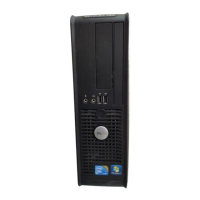
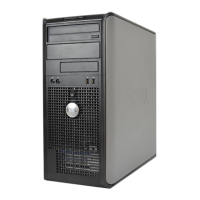
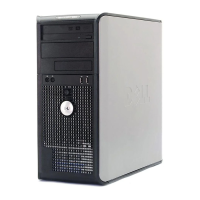
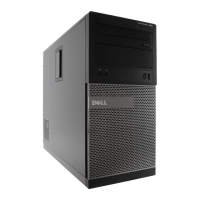
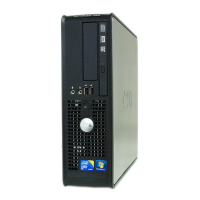
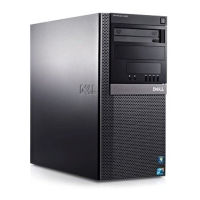
- Chassis Compatibility: The guide explicitly differentiates installation procedures for OptiPlex Tower, OptiPlex Small Form Factor, and OptiPlex Micro systems, indicating that while the general process is similar, the physical orientation or access points on the chassis might vary.
- Cable Management: The installation process includes sliding an SMA cover over the antenna cables and securing it with a captive screw, suggesting a design that aims for neat cable management and protection of the connectors.
- Tools Required: The only tool explicitly mentioned is a Philips screwdriver #2, indicating a straightforward mechanical installation process.
Usage Features:
The primary usage feature of the antenna, once installed, is to provide or improve wireless connectivity for the OptiPlex system.
- Enhanced Wireless Performance: External antennas generally offer better signal reception and transmission compared to internal antennas, especially in environments with obstacles or longer distances from the wireless access point. This translates to more stable and faster Wi-Fi and Bluetooth connections.
- Flexible Placement: The guide includes a section on "Antenna Placement," illustrating that the external antenna can be positioned in various locations (e.g., on a desk, mounted on a wall) to optimize signal quality. This flexibility allows users to experiment with different positions to find the best reception for their specific environment.
- Compatibility Across Form Factors: The guide's coverage of Tower, Small Form Factor, and Micro OptiPlex systems highlights the antenna's versatility across different desktop form factors, ensuring a consistent approach to wireless enhancement for various Dell OptiPlex models.
- User-Installable: The detailed, step-by-step instructions, along with the minimal tool requirement, indicate that the antenna is designed for end-user installation, empowering users to upgrade or maintain their system's wireless capabilities without professional assistance.
Maintenance Features:
The document primarily focuses on installation rather than ongoing maintenance, but some aspects can be inferred:
- Simple Installation/Removal: The guide provides clear steps for connecting and securing the antenna, implying that removal (e.g., for troubleshooting, replacement, or system relocation) would follow a reverse, equally straightforward process. Chapter 7, "SMA antenna," explicitly refers to searching for OptiPlex Service Manuals for removal and installation procedures, suggesting that detailed maintenance steps are available elsewhere.
- Durable Connection: The instruction to "tighten the bolts to secure the antenna cables" and "tighten the captive screw to secure the SMA cover" suggests a design intended for a robust and stable connection, minimizing the need for frequent re-tightening or adjustments.
- Protective Cover: The SMA cover serves to protect the antenna connections from dust, physical damage, and accidental disconnections, contributing to the longevity and reliability of the wireless setup.
- Troubleshooting Guidance: While not a direct maintenance feature of the antenna itself, the guide's emphasis on proper installation helps prevent common issues related to poor wireless performance, thereby reducing the need for troubleshooting. For more complex issues, the document directs users to Dell's support resources.
- Documentation for Support: The inclusion of "Getting help" and "Contacting Dell" sections ensures that users have clear pathways to obtain support for any issues encountered during installation or subsequent use, which is a crucial aspect of product maintainability and user satisfaction.

 Need help?







 To Next Page

 General