Need help?
Do you have a question about the Dewenwils HOSL05C and is the answer not in the manual?
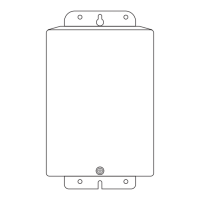
Install mounting brackets on the transformer back, ensuring correct orientation, then secure to the wall.
Secure transformer to wall at least 1ft above ground with screws and anchors, ensuring compartments face down.
Connect high voltage wires using electrical tape, then place in the compartment. Ensure proper insulation.
Connect low voltage lines with wiring caps, place in compartment. Connect ground wire to terminal if applicable.
Install the metal cover securely. Turn on the main circuit to complete the installation process.
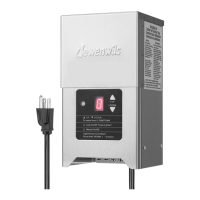
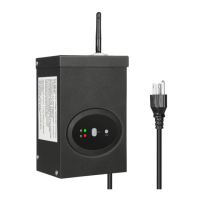
This document provides an instruction manual for a Low Voltage Transformer, SKU: HOSL05C, manufactured by Jewenwils. The device is designed to convert higher voltage household electricity to a lower voltage suitable for landscape lighting systems.
The Jewenwils Low Voltage Transformer serves as a crucial component in outdoor lighting setups, stepping down the standard 120VAC household current to a safe low voltage (12/13/14VAC) for landscape lights. This conversion is essential for the safe and efficient operation of low voltage lighting fixtures, which are commonly used in gardens, pathways, and other outdoor areas. The transformer acts as the central power unit, distributing the appropriate voltage to multiple lighting fixtures connected to it. It is designed to handle a total fixture load, ensuring that the connected lights operate within safe and optimal parameters. The transformer includes a circuit breaker, which is a vital safety feature designed to protect the lighting system and the transformer itself from damage due to electrical faults such as overloads or short circuits. This breaker automatically disconnects power in the event of an issue, preventing potential hazards and equipment damage. The device features distinct compartments for high voltage and low voltage wiring, ensuring proper separation and safety during installation and operation. The high voltage compartment is where the transformer connects to the main household electrical supply, while the low voltage compartment is where the output lines for the landscape lighting are connected.
The transformer is designed for wall-mounted installation, requiring it to be fixed at least 1 foot above the ground with the wiring compartments facing downwards to ensure proper drainage and protection from the elements. Installation involves several steps, starting with turning off the main circuit for safety. Users must remove a metal cover to access the mounting brackets, screws, and anchors provided. The mounting brackets are then attached to the back of the transformer, and the unit is secured to the wall using the screws and anchors.
For electrical connections, the high voltage wiring involves connecting the transformer's black and white wires to the live and neutral wires of the household electrical supply, respectively, using electrical tape. These connections are then placed within the high voltage wiring compartment. For the low voltage output, the included wiring caps are used to connect the transformer's output lines to the load input lines of the lighting system. These connections are then placed in the low voltage wiring compartment. A crucial note is provided regarding ground wires: if the load has a ground wire, it must be connected to the transformer's ground terminal. Additionally, users are warned not to remove the terminal block of any unused output line ports, as this could lead to a short circuit. Once all connections are made and secured, the main circuit can be turned back on to power the lighting system.
The transformer's output voltage offers flexibility, providing options for 12, 13, or 14VAC, which can be selected based on the specific requirements of the connected lighting fixtures and the desired brightness or cable run length. This allows for customization of the lighting setup to achieve optimal performance and aesthetics.
The primary maintenance feature of this transformer is its integrated circuit breaker. This breaker serves as a critical diagnostic and protective tool. In the event of a circuit break, which can be caused by various issues such as incorrectly connected low voltage wires, overloads, short circuits (bare wires touching), improperly installed fixtures, or an excessive lamp load exceeding the specified limit, the breaker will trip, immediately disconnecting power to the lighting system. This automatic shutdown prevents damage to the transformer and the lighting fixtures, and more importantly, ensures safety.
When a circuit break occurs, the manual instructs users to first disconnect the transformer from the power source. This is a crucial safety step before any troubleshooting or repairs are attempted. Users are then advised to identify and resolve the underlying cause of the circuit break. Common causes are explicitly listed to aid in diagnosis:
After the problem has been identified and resolved, the circuit breaker can be reset by flipping it. This allows the transformer to resume normal operation. The design emphasizes user intervention for troubleshooting and repair, promoting a hands-on approach to maintaining the lighting system. The clear separation of high and low voltage wiring compartments also facilitates safer access for inspection and maintenance tasks, as it helps prevent accidental contact with higher voltage components. The robust design and safety features aim to provide a reliable and maintainable power source for outdoor lighting, with clear guidelines for addressing common operational issues.
 Power
Power| input voltage | 120VAC, 60Hz |
|---|---|
| output voltage | 12/13/14VAC |
| max power rating | 300W |

 To Next Page