16
EN
When the battery is empty, the machine is switched off by means of a protective circuit: The inserted
tool no longer rotates.
PROBLEM SOLUTION
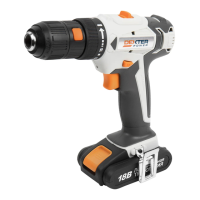
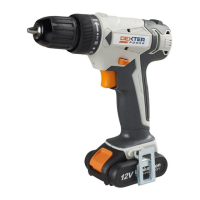
1. WHY DOES THE DRILL NOT TURN ON WHEN YOU PRESS THE SWITCH?
The forward/reverse rotation control, which is on top of the trigger, is positioned in the lock function.
Unlock the forward/reverse rotation control by putting it into the required rotation position. Push the
trigger and the drill will start to rotate.
2. THE DRILL STOPS BEFORE THE SCREW IS COMPLETELY TIGHTENED. WHY?
Verify the torque position of the torque adjusting ring, you can nd the torque-adjusting ring between
the chuck and the drill body. Position 1 is the lowest torque (screw driving force) and position 18
is the highest torque (screw driving force). Position is for drill operation. Regulate the torque
adjusting ring to a higher position to reach the best result.
3. REASONS FOR DIFFERENT BATTERY PACK WORKING TIMES
Charging time problems, as following: having not used a battery pack for a long time will reduce the
battery pack working time. This can be corrected after several charge and discharge operations by
charging & working with your drill. Heavy working conditions such as large screws into hard wood
will use up the battery pack energy faster than lighter working conditions. Do not re-charge your
battery pack below 0ºC and above 45ºC as this will affect performance.
MAINTENANCE
Your tool requires no additional lubrication or maintenance.
There are no user serviceable parts in your power tool. Never use water or chemical cleaners to
clean your power tool. Wipe clean with a dry cloth. Always store your power tool in a dry place.
Keep the motor ventilation slots clean. Keep all working controls free of dust. Occasionally you may
see sparks through the ventilation slots. This is normal and will not damage your power tool.
For battery tools
The ambient temperature range for tool and battery use and storage is 0°C-45°C.
The recommended ambient temperature range for the charging system during charging is 0°C-40°C.
ENVIRONMENTAL PROTECTION
Waste electrical products must not be disposed of with household waste. Please recycle
where facilities exist. Check with your local authorities or retailer for recycling advice.
DISPOSAL OF AN EXHAUSTED BATTERY PACK
To preserve natural resources, please recycle or dispose of the battery pack properly. This
battery pack contains Li-ion batteries. Consult your local waste authority for information
regarding available recycling and/or disposal options. Discharge your battery pack by
operating your drill, then remove the battery pack from the drill housing and cover the battery pack
connections with heavy-duty adhesive tape to prevent short circuit and energy discharge. Do not
attempt to open or remove any of the components.



 To Next Page