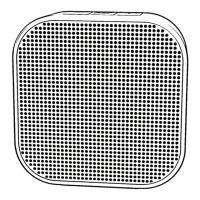
13
Safety & Regulatory
Important Safety Instructions
1) Read these instructions. Keep these instructions. Heed all warnings.
2) Do not use Dio Node near water or where it might be exposed to
dripping or splashing. Keep away from all sources of liquid. Do not
expose to moisture, dampness, or wet weather, such as rain, snow, or
fog. Do not place any object filled with liquid, such as vases, on top of it.
3) Clean only with a dry cloth. Unplug from power before cleaning.
4) Do not block any ventilation openings. Install in accordance with
manufacturer’s instructions.
5) Do not install near any heat sources such as radiators, heat registers,
stoves, or other apparatus (including amplifiers) that produce heat.
6) Protect the power cord from being walked on or pinched,
particularly at the power adapter, convenience receptacles, and the
point where it exits from Dio Node.
7) Only use attachments/accessories specified by Dio.
8) During operation, speaker vibration could cause Dio Node to move.
Ensure that Dio Node does not fall from its mounting surface. Do not
hang the product by its power cable.
9) Unplug Dio Node during lightning storms or when unused for long
periods of time.
10) Refer all servicing to qualified service personnel. Servicing is
required when Dio Node or the power adapter has been damaged in
any way, such as by liquid spill, rain or moisture exposure, or dropping.
11) Power Dio Node with the included power adapter. Ensure the power
cable is fully inserted into the power adapter before you plug the
adapter into a power outlet.
12) Dio Node has no on/off switch. Dio Node may appear to be off and
disconnected from its power source when it is actually still connected
and in standby. To disconnect it from power, unplug the power
adapter. Make sure the adapter is always easily accessible. When
connecting or disconnecting it, always hold the adapter by its sides. Do
not unplug by pulling the power cable. Keep fingers away from the
metal part of the plug.
13) Dio Node is for indoor use only. Using Dio Node in rooms or climates
with high humidity or high temperatures may damage it.
14) Dio Node may be damaged by improper storage or handling. Be
careful not to drop it when it is being transported.
Regulatory and Legal Information
NOTE: This product has been tested and found to
comply with the limits for a Class B digital device,
pursuant to Part 15 of the FCC Rules. These limits are
designed to provide reasonable protection against harmful
interference in a residential installation. This product generates,
uses, and can radiate radio frequency energy and, if not
installed and used in accordance with the instructions, may
cause harmful interference to radio communications. However,
there is no guarantee that interference will not occur in a
particular installation. If this product does cause harmful
interference to radio or television reception, which can be
determined by turning the equipment off and on, the user is
encouraged to try to correct the interference by one of more of
the following measures:
▶Reorient or relocate the receiving antenna.
▶Increase the separation between the equipment and receiver.
▶Connect the equipment into an outlet on a circuit different
from that to which the receiver is connected.
▶Consult the dealer or an experienced radio/TV technician for
help.
This device complies with FCC and ISED Canada radiation
exposure limits set forth for an uncontrolled environment. This
device should be operated with a minimum separation distance
of 20cm (8 inches) between the equipment and a person’s body.
The transmitter must not be co-located or operating in
conjunction with any other antenna or transmitter.
This device complies with Part 15 of the FCC Rules and with ISED
Canada license-exempt RSS standard(s). Operation is subject to
the following two conditions: (1) This device may not cause
harmful interference, and (2) This device must accept any
interference received, including interference that may cause
undesired operation.


 To Next Page
 Loading...