This document is an Operation and Maintenance Manual for the Doosan Infracore Portable Power HP1600WCU-T4i (E97) compressor model. It provides comprehensive instructions and technical data for routine operation and scheduled maintenance tasks.
Function Description:
The Doosan HP1600WCU-T4i (E97) is a portable air compressor designed for above-ground operation, used for compressing normal ambient air. It is equipped with an engine and an airend to generate compressed air for various applications. The compressor is designed for safe and reliable operation, with specific guidelines for its use and limitations. It is not intended for direct or indirect human consumption of compressed air, operation outside specified ambient temperature ranges, in areas with hazardous levels of flammable gases or vapors, with non-approved components, or with missing or disabled guards, controls, or switches. Storage or transportation of materials inside or on the enclosure is also prohibited.
Important Technical Specifications:
- Model: HP1600WCU-T4i
- Compressor:
- Air Delivery: 1600 cfm (45.3 m³/min)
- Rated Operating Pressure: 80-150 psi (5.5-10.3 bar)
- Safety Valve Setting: 200 psi (13.8 bar)
- Engine (Cummins QSX15):
- Manufacturer: Cummins
- Model: QSX15
- Rated Power at Full Load Speed: 580 hp (433 kW)
- Full Load Speed: 1800 rpm
- Idle Speed: 1200 rpm
- Idle Speed (warm-up): 1500 rpm
- Electrical System: 24VDC
- Fluid Capacities (U.S. Gallons/liters):
- Compressor Oil: 55 (208)
- Engine Oil (including filter): 12 (46)
- Engine Coolant: 24.6 (93)
- Fuel Tank: 198 (749)
- Ambient Temperature Range:
- With Standard Features: 10°F to 120°F (-12°C to 49°C)
- With Required Options: -10°F to 120°F (-23°C to 49°C)
- With Aftercooler or IQ System: Max. 115°F (46°C)
- Out-Of-Level Operating Limit: 10° Angle in any direction
- Measurements/Weights (HSRG):
- Overall Length: 24.5 feet (7.43 meters)
- Overall Height: 8.3 feet (2.53 meters)
- Overall Width: 7.51 feet (2.3 meters)
- Operating Weight (with fuel): 19,980 lb (9063 kg)
- Shipping Weight (less fuel): 18,261 lb (8283 kg)
- Running Gear:
- Tire Size: ST 215/75R17.5H
- Tire Inflation Pressure: 125 psi (8.62 bar)
- Maximum Towing Speed: 65 mph (105 km/hr)
Usage Features:
The compressor features a control panel with various gauges and switches for monitoring and operation:
- Gauge Panel: Includes Air Pressure Gauge, Engine Tachometer, Compressor Temperature Gauge, Engine Coolant Temperature Gauge, Voltmeter, Fuel Level Gauge, and Engine Oil Pressure Gauge.
- Control Panel: Features an Hourmeter, ViewPort display (for operating parameters and diagnostic codes), High Exhaust System Temperature (HEST) Lamp, Aftertreatment Diesel Particulate Filter (DPF) Lamp, Regeneration Disabled Lamp, Wait to Start Lamp, Joystick (for navigation), Main Control Switch (OFF, ON, RUN, START positions), Service Air Button, and Regeneration Control Switch (Normal, Regeneration Disable, Regeneration Initiate positions).
- ViewPort Display: Provides digital gauges for key operating parameters, allows selection of display screens, and offers access to information resources like Parts Manual, Operation and Maintenance Manual, CAN device interfaces, and System Log. It also displays fault codes for engine or equipment issues.
- Starting: The engine is equipped with 115VAC electric heaters for preheating engine coolant, lube oil, and battery heating pads, controlled by a thermostat and pressure switch. It also features automatic Ether starting fluid injection for cold starts. A Battery Disconnect Switch is provided for long-term storage.
- Operation: The compressor operates in loaded and unloaded states, with engine speed varying to match air demand and maintain rated pressure.
- Shut Down: Requires closing service valves and allowing the compressor to run at idle for 3-5 minutes for cool-down to prevent turbocharger damage. An Emergency Stop button is available for urgent shutdowns.
- IQ System (Optional): A self-contained system providing cooler, cleaner air with high-efficiency filtration and a patented condensate disposal system that injects liquid condensate into the engine exhaust for vaporization. When equipped with the low ambient feature, movable louvers automatically adjust airflow through the aftercooler to maintain compressed air temperature above freezing (typically 45°F/7°C).
Maintenance Features:
The manual outlines a detailed maintenance schedule with specific intervals for various components:
- Daily Checks: Compressor Oil Level, Engine Oil Level, Radiator Coolant Level, Gauges/Lamps, Air Cleaner Service Indicators, Fuel Tank (fill at end of day), Fuel/Water Separator Drain, Oil Leaks, Fuel Leaks, Coolant Leaks, Radiator Filler Cap, Emergency Stop.
- Weekly Checks: Lubricator (fill), Air Cleaner Precleaner Dumps, Fan/Alternator Belts, Battery Connections/Electrolyte.
- Monthly (250 hrs) Checks: Hoses (Oil, Air, Intake, etc.), Automatic Shutdown System, Air Cleaner System, Compressor Oil Cooler Exterior, Engine Rad/Oil Cooler Exterior, Engine Charge Air Cooler Exterior, Aftercooler Exterior.
- 3 Months (500 hrs) Checks: Safety Valve, Fasteners, Guards.
- 6 Months (1000 hrs) Checks: Compressor Oil, Engine Oil Filter, Engine Coolant Cond. Element, Compressor Oil Filter Element, Fuel Filter Element (high pressure), Fuel Tank Vent Filter Element, Engine Oil Change, Fuel/Water Separator Element.
- 12 Months (2000 hrs) Checks: Air Cleaner Elements, Oil Separator Element, Separator Tank Exterior, Engine Coolant, Engine Crankcase Breather Element, Water Pump Grease, Shutdown Switch Settings, Scavenge Orifice & Related Parts, Scavenge Line, Feed Pump Strainer Cleaning, After Treatment Injection Nozzle Check.
- Longer Interval Checks: Brake linkage (C), Brakes (C), Lights (running, brake, & turn) (CBT), Pintle Eye Bolts (CBT), Tire Pressure and Condition (C), Wheel Lug Nuts (C), Running gear linkage (G), Running gear bolts (C), Wheels (Bearings, Seals, etc.) (C, G), Valve Clearance Check (C) at 2, 4, and 6-year intervals.
- Specific Maintenance Procedures:
- Scavenge Line: Ensure it is clear of obstructions to prevent oil carryover.
- Compressor Oil Filter: Removal, inspection for varnishes/shellacs (indicating oil deterioration), and reassembly.
- Compressor Oil Separator Element: Removal, inspection, and reassembly, with specific instructions for using a Davit Arm Assembly for cover removal.
- Heat Exchangers (Compressor Oil Cooler, Engine Radiator): Cleaning to maintain efficiency by removing grease, oil, and dirt.
- Air Filter Elements: Regular replacement or when indicated by the control panel. Inspection for damage.
- Ventilation: Ensure air inlets and outlets are clear.
- Cooling Fan Drive: Check fan mounting bolts and fan belt for wear and tension.
- Fuel System: Daily filling to minimize condensation, draining sediment/condensate.
- Fuel Filter Water Separator: Regular element replacement.
- Charge Air Cooler Pipework: Regular inspection for leaks, damage, and cleanliness.
- Hoses: Periodic inspection for cracks, leaks, and damage.
- Electrical System: Check security of devices, sensors, terminals, and wiring. Disconnect battery cables before service.
- Battery: Keep terminals clean and coated, ensure restraint is tight.
- Pressure System: Regularly inspect external surfaces for damage, corrosion, and tightness.
- Tire Pressure: Maintain correct pressure as per General Data.
- Running Gear/Wheels: Check wheel nut torque and bolts securing running gear.
- Running Gear Wheel Bearings: Grease according to specifications (Lithium Complex, NLGI No.2).
- Lubrication: Always check oil levels before service. Use Doosan Tier 4 Premium Engine Oil for Tier 4 engines. Compressor oil changes require draining the separator tank, piping, and cooler. Use Portable Power formulated compressor oil for extended airend warranty.
- Pressure Regulation: Instructions for adjusting the Dual Pressure Regulation system (High and Low pressure settings) if proper adjustment is lost.
- IQ System Maintenance: Daily verification of filter restriction, weekly cleaning of Y-strainer screens and orifices, and yearly replacement of filter elements.
The manual emphasizes safety precautions, including wearing personal protective equipment, relieving pressure before maintenance, avoiding hot surfaces, and ensuring proper ventilation. It also includes a Noise Emission section with a Maintenance Log for tracking compliance with U.S. EPA Noise Control Regulations.

 Need help?
 General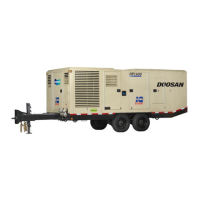




 To Next Page