EasyManua.ls Logo

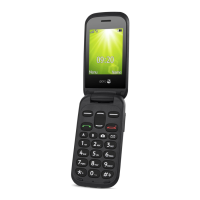
Doro 2400 - User Manual

Doro 2400
2 pages
Print Icon
To Next Page IconTo Next Page
Loading...
www.doro.com
Insert the SIM cards and the SD card.
Remove the baery if it is already installed.
A. Insert the rst SIM card by gently sliding it
into the SIM1 card slot.
B. Insert the second SIM card by gently sliding
it into the SIM2 card slot.
Note! If you are using only one SIM card, we
recommend using SIM1.
C.

Locate the SD card holder. The
device works with or without a SD card
GB
A
C
B
B
SIM
SIM
Enter text
Press a numerical key repeatedly unl the
desired character is shown. Wait a few
seconds before entering the next character.
Press
*
for a list of special characters.
Select the desired character with /
and press
OK
to enter it.
Use
+
/
-
or
/ to move the cursor
within the text.
Press
#
to cycle upper case, lower case and
numerals.
Press and hold
#
to change wring
language.

In some languages you can use the input
method which uses a diconary to suggest
words.
1. Press
Menu
â

â

â

.
2. Select
On
to enable, or

to disable.
3. Press
OK
to conrm.

The default language is determined by the SIM
card.
4. PHONEBOOK
The Phonebook can store 100 entries with 3
phone numbers in each entry.
Add contact
1. Press
Menu
â
Phonebook
â
-New contact-
â
Add
.
2. Enter a

for the contact, see Enter
text. Delete with

.
3. Use / to select

,

or

, and enter the phone
number(s) including the area code.
4. When done, press

.

In the event of a trauma, it is crical to have
this informaon as early as possible to increase
the chances of survival. Add ICE contact to
improve your own safety. First responders
can access addional informaon such as
medicaon and next of kin from your phone in
case of an emergency. All elds are oponal,
but the more informaon provided the beer.
Doro 2400
Quick Start GuideQuick Start Guide
1. Earpiece
2. Display
3. Le selecon buon
4. Call buon
5. Speed dials
6. Voicemail
7. Internaonal prex/
symbols
8. Microphone
9. Silent /
Input method
10. Camera shortcut/
Take a picture
11. Message shortcut
12. End call /

13. Right selecon
buon
14. Scroll buons
15. Phone indicators
16. Flash/torch
17. Camera
18. Loudspeaker
19. Assistance buon
20. Headset socket
21. Charging socket
22. Volume control
23. Charging cradle
connectors
1. GET STARTED


Be careful not to damage your ngernails when
you remove the baery cover. Do not bend or
twist the baery cover excessively as it may be
damaged.
Note! Make sure that the card’s contacts are
facing downwards and that the cut o corner
is as shown. Take care not to scratch or bend
the contacts on the cards. This device accepts
micro SIM cards (3FF) and microSD card.

Insert the baery by sliding it into the baery
compartment with the contacts facing
downwards to the right. Replace the baery
cover.

CAUTION
Only use baeries, charger and accessories
that have been approved for use with
this parcular model. Connecng other
accessories may be dangerous and may
invalidate the phone’s type approval and
guarantee.
When the baery is running low, is
displayed and a warning signal is heard.
Connect the mains adapter to the wall
socket and to the charging socket
y
.
It is recommended to remove the
protecve plasc lm from the display to
enhance the visibility.
2. GET TO KNOW YOUR PHONE

1. Press and hold the red buon on the
phone to turn it on/o. Conrm with
Yes
to
power o.
2. If the SIM card is valid but protected with a
PIN code (Personal Idencaon Number),
PIN
is displayed. Enter the PIN code and
press
OK
. Delete with

.
Note! If PIN and PUK codes were not provided
with your SIM card, please contact your
service provider.

shows the number of PIN aempts
le. When no more aempts remain,
PIN

is displayed. The SIM card must now
be unlocked with the PUK code (Personal
Unblocking Key).
1. Enter the PUK code and conrm with
OK
.
2. Enter a new PIN code and conrm with
OK
.
3. Re-enter the new PIN code and conrm
with
OK
.
Start-up wizard
When starng the telephone for the rst me,
you can use the start-up wizard to set some
basic sengs.
You can run the start-up wizard later if
you want.

The arrow (â) indicates next acon in step-by-
step instrucons. To conrm an acon, press
OK
. To select an item, scroll or highlight the
item using / and then press
OK
.
3. CALLS

1. Enter the phone number including the area
code. Delete with

.
2. Press to dial. Press
Abort
to cancel
the call.
3. Press to end the call.
Note! For internaonal calls, always use
+
before the country code for best operaon.
Press
*
twice for the internaonal prex
+
.

1. Press

to open the phonebook.
2. Use / to scroll through the
phonebook, or quick search by pressing the
key corresponding to the rst leer of the
name.
3. Press

â

alternavely, press
to dial the selected entry, or press
Back
to return to standby.

1. Open the ip and press to answer, or
press

to switch o the ring signal and
then
Reject/
close the ip to reject the call
(busy signal).
Alternately, press to reject the call
directly.
2. Press /close the ip to end the call.

Use
+
/
-
or / to adjust the sound
volume during a call. The volume level is
indicated on the display.

Silent is a xed prole with keypad tone,
message tone and ring tone disabled, while
vibraon, tasks and alarm are unchanged.
Press and hold
#
to acvate and to
deacvate silent.

During a call the so keys ( ) give access to
addional funcons.

Use
A
B
,
0
and
2
9
to speed dial an entry
from standby.
Press and hold the corresponding buon to
dial.

1. Press
Menu
â

â
Phonebook
â

.
2. Select
A
â
Add
and select an entry from
the phonebook.
3. Press
OK
to conrm.
4. Repeat to add speed dial entries for buons
B
,
0
,
2
9
.

As long as the phone is switched on, it is always
possible to place an SOS call by entering the
main local emergency number for your present
locaon followed by .

Received, missed, and dialled calls are saved in
a combined call log. 20 calls of each type can
be stored in the log. For mulple calls related
to the same number, only the most recent call
is saved.
1. Press .
2. Use / to scroll through the call log.
=

=

=

3. Press to dial, or

.
1. Press
Menu
â
Phonebook
â
ICE
.
2. Use / to scroll the list of entries.
3. Press
Edit
to add or edit informaon in each
entry. Delete with

.
4. Press

when done.

Press
Menu
â
ICE
.
5. ASSISTANCE BUTTON
The assistance buon allows easy access to
contact your predened help numbers should
you need help. Make sure that the assistance
funcon is acvated before use.

1. When help is needed, press and hold the
assistance buon for 3 seconds, or press it
twice within 1 second.
The assistance call begins aer a delay of
5 seconds. In this me you can prevent a
possible false alarm by pressing .
2. An assistance text message (SMS) is sent
to all recipients.The rst recipient in the list
is dialled. If the call is not answered within
25 seconds, the next number is dialled.
Dialling is repeated 3 mes or unl the call is
answered, or unl is pressed.
CAUTION
When an assistance call is acvated the phone
is pre-set to handsfree mode. Do not hold
the device near your ear when the handsfree
mode is in use, because the volume may be
extremely loud.

Press
Menu
â

â
Assistance
.
6. MESSAGES

1. Press shortcut buon , or press
Menu
â

â
Create new
â
SMS.
2. Write your message, see Enter text, then
press
To
.
3. Select a recipient from
Phonebook
.
Alternavely, select

to add
recipient manually and press
Done
.
4. Select
Add
to add more recipients.
You can modify the recipients by selecng
one and press

â
Edit
/

/

.
5. When done, press
Send
.

Both you and the recipient must have sub-
scripons that support picture message. The
sengs for picture message are supplied by
your service provider and can be sent to you
automacally via text message.
1. Press shortcut buon ,
or press
Menu
â

â
Create new
â
MMS
.
2. Write your message, see Enter text.
3. Press

â


to select a le.
Take picture
to use the camera to take a
picture.
Note! To keep best picture quality, send only
one picture per message.
You can also
Add sound
,

and

MMS
using the

menu.
4. Press

â
Add subject
and enter your
subject, then press
Done
.
5. Press

â
To
and select recipient
from
Phonebook
.
Alternavely, select

to add
recipient manually and press
Done
.
6. Press
Add
to add more recipients.
7. Press
Send
to send.

Press
Menu
â

â

.
7. 
1. Press shortcut buon .
Alternavely press
Menu
â

2. Press to take the photo.
3. Press

or press
Back
to take a new
photo (if you do not make any selecon the
picture is saved).

Press
Menu
â

â

.
English
Note!
All illustraons are for illustrave
purposes only and may not accurately depict
the actual device. The items supplied with your
phone might vary depending on the soware
and accessories available in your region or
oered by your service provider. You can
obtain addional accessories from your local
Doro dealer. The supplied accessories provide
the best performance with your phone.
21
17
22
1
2
3
7
4
5
6
8
13
12
11
9
15
10
14
20
18
19
16
23
Question and Answer IconNeed help?

Do you have a question about the Doro 2400 and is the answer not in the manual?

Summary

Get Started

SIM Card, Memory Card and Battery Installation

Instructions for inserting SIM cards, an optional SD card, and the battery into the device.

Charging the Phone

Steps to connect the mains adapter and charge the phone battery.

Get To Know Your Phone

Powering On and Off

How to turn the phone on or off and manage PIN/PUK codes.

Start-up Wizard

Guides users through initial basic settings upon first use.

Entering Text

Methods for inputting characters, symbols, and using predictive text.

Making and Receiving Calls

Making a Call

Instructions for dialing a phone number and ending a call.

Calling from Phonebook

How to access and dial contacts stored in the phonebook.

Receiving a Call

Steps to answer or reject an incoming call.

Adjusting Volume

How to adjust the sound volume during a call.

Silent Mode

Activating and deactivating the silent profile for the phone.

Speed Dialing

Using predefined buttons for quick dialing of frequently used contacts.

Adding Speed Dial Numbers

Assigning contacts to speed dial buttons A-B, 0-9.

SOS Calls

How to make an emergency call from the phone.

Phonebook Management

Adding Contacts

Instructions for adding new contacts with phone numbers.

ICE Contacts

Setting up emergency contact information for first responders.

Assistance Button

Making an Assistance Call

How to activate the assistance button for help and receive SMS alerts.

Assistance Settings

Configuring the assistance function and help numbers.

Messaging

Sending Text Messages (SMS)

Steps to create, write, and send SMS messages.

Sending Picture Messages (MMS)

How to create and send MMS messages with pictures and subjects.

Message Settings

Accessing message settings for SMS and MMS.

Camera Functions

Taking Photos

How to use the camera shortcut or menu to capture photos.

Camera Settings

Accessing camera settings for photo capture.

Overview

This document describes the Doro 2400 Quick Start Guide, a user manual for a mobile phone.

Function Description

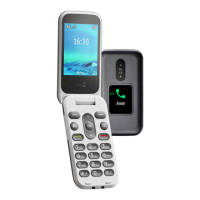
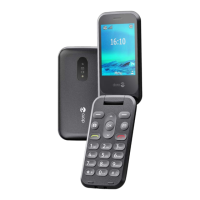
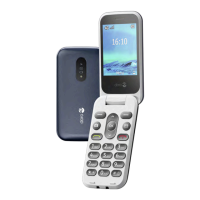
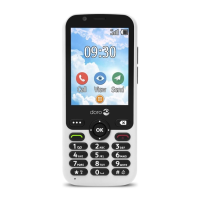
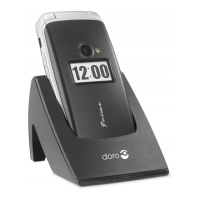
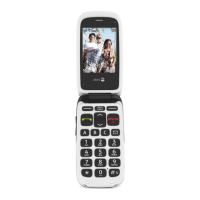
The Doro 2400 is a mobile phone designed for ease of use, particularly for seniors. It features a clamshell design, a large display, and tactile buttons. The phone supports basic call functions, text messaging, and includes a camera. It also has an assistance button for emergencies and a dedicated ICE (In Case of Emergency) information section. The device is designed to be user-friendly with clear menus and simplified operations.

Usage Features

1. Get Started To begin, the battery cover needs to be removed by sliding it down. The battery is then inserted by matching the contacts, and the cover is replaced. The SIM card and SD card are inserted by gently sliding them into their respective slots. The phone is turned on by pressing and holding the red hang-up button.

2. Get to Know Your Phone The phone has a main display and a keypad with clearly labeled buttons. It includes dedicated buttons for the camera, messages, and an assistance button. The navigation keys allow users to scroll through menus, and the green call button is used to make calls and confirm selections. The red hang-up button ends calls and powers the phone on/off.

3. Calls To make a call, the user enters the phone number and presses the green call button. To end a call, the red hang-up button is pressed. To answer a call, the green call button is pressed. To reject a call, the red hang-up button is pressed. The phone also supports call options like speakerphone and mute during a call.

4. Phonebook The phonebook allows users to store contact information. To add a new contact, the user navigates to the phonebook menu, selects "New contact," enters the name and number, and saves it.

5. Assistance Button The assistance button is a key safety feature. When pressed, it can automatically dial pre-defined numbers or send an SMS to alert contacts in an emergency. The user can configure up to five numbers for the assistance call and message.

6. Messages The Doro 2400 supports sending and receiving text messages. To create a new message, the user navigates to the messages menu, selects "Create new SMS," enters the text, and chooses a recipient from the phonebook or by entering a number. Received messages can be read, replied to, or deleted.

7. Camera (Take Photos) The phone includes a camera for taking photos. To access the camera, the user navigates to the camera menu or presses the dedicated camera button. Photos can be viewed in the gallery and deleted.

8. Bluetooth® The phone supports Bluetooth for connecting to other compatible devices such as headsets or other phones. Bluetooth can be activated or deactivated through the settings menu.

9. Sound & Display Users can adjust the ringtone setup, including volume and melody, through the sound settings. The display settings allow users to customize text size and display brightness.

10. Additional Functions The phone includes an alarm function. Users can set multiple alarms with different times and melodies. The phone also has a snooze function for alarms.

11. Safety Instructions The manual provides important safety information regarding battery use, network services, and medical units. It advises users to turn off the phone in restricted areas like hospitals and aircraft. It also includes warnings about exposure to loud sounds and the proper disposal of the device.

12. Troubleshooting This section provides solutions to common issues such as the phone not turning on, battery not charging, poor call quality, and SIM card errors. It offers steps to resolve these problems, often involving checking connections or restarting the device.

13. Care and Maintenance The phone should be handled with care to prevent damage. It should be kept dry and clean, and protected from extreme temperatures. The manual advises against attempting to repair the device oneself and recommends contacting the service provider for assistance.

14. Technical Data This section provides detailed technical specifications of the phone, including network bands, dimensions, weight, battery, and operating environment.

15. Specific Absorption Rate (SAR) Information on SAR values is provided, indicating the maximum exposure levels for radio waves. The Doro 2400 complies with international safety guidelines for exposure to radio waves.

16. Declaration of Conformity The Doro 2400 complies with the essential requirements and other relevant provisions of Directive 2014/53/EU. The full text of the EU declaration of conformity is available online.

17. Copyright and Other Notices This section outlines copyright information, trademarks, and disclaimers. It states that the content of the document is provided "as is" without warranties.

18. Hearing Aid Compatibility The Doro 2400 is designed to be compatible with hearing aids.

19. Disposal Information on the proper disposal of the device and battery is provided, emphasizing environmental responsibility and recycling.

20. Warranty The manual includes details about the warranty period and conditions for the device.

Doro 2400 Specifications

General IconGeneral
Network TechnologyGSM
EDGENo
SIMMini-SIM
PhonebookYes
Call recordsYes
CameraVGA
LoudspeakerYes
3.5mm jackYes
WLANNo
GPSNo
RadioFM radio
GamesYes
JavaNo
ColorsBlack, White
2G bandsGSM 900 / 1800
Display TypeTFT
Display Size2.4 inches
Display Resolution240 x 320 pixels (~167 ppi density)
Alert typesVibration
MessagingSMS
BatteryRemovable Li-Ion battery

Related product manuals