18
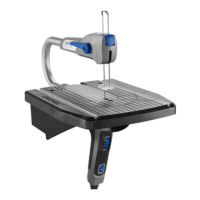
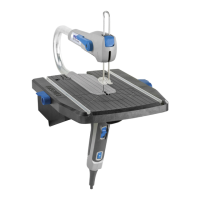
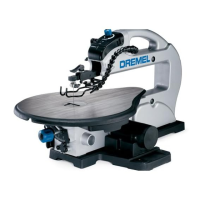
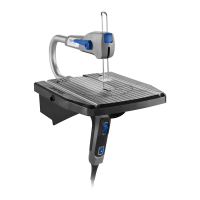
Scroll Saw/Moto-Saw Tips
• Three things will have great effect on the
cut when using a scroll type saw:
1. The material being cut.
2. Blade speed (strokes per minute blade).
3. Cutting speed (how fast material is
pushed into blade).
• There is not ONE blade that is the best for
every given job.
• A coarse blade should be used for thicker
material and a finer blade for thinner
material. The thinner the blade, the
sharper the turn it can execute.
• There should always be 3 to 4 teeth in
contact with the work at all times.
• Cutting hard material like metal and
material that can melt, like acrylic, will
generally require slower speed on the tool
and a lower feed rate.
• The best starting point on any cut is at a
point or corner because you can control
the intersection of the cut and make it as
smooth as it needs to be.
• Certain actions will require practice – like
cutting a corner or a 180° turn.
• Saws that scroll can present a challenge
when attempting a straight cut. With some
practice, it’s easy to do. Practice
compensating for the grain by turning the
material slightly to stay on a straight line.
Once the degree of compensation is
determined for any material, being able to
then cut a straight line will only be a matter
of blade selection, speed, and feed rate.
• If a blade seems to be cutting slowly or
seems to wander with little means of
control, chances are the blade is becoming
dull. There’s no substitute for a sharp
blade. Wood and metal will both dull a
blade quickly. If a lot of cutting is being
completed, change your blade as often as
necessary.
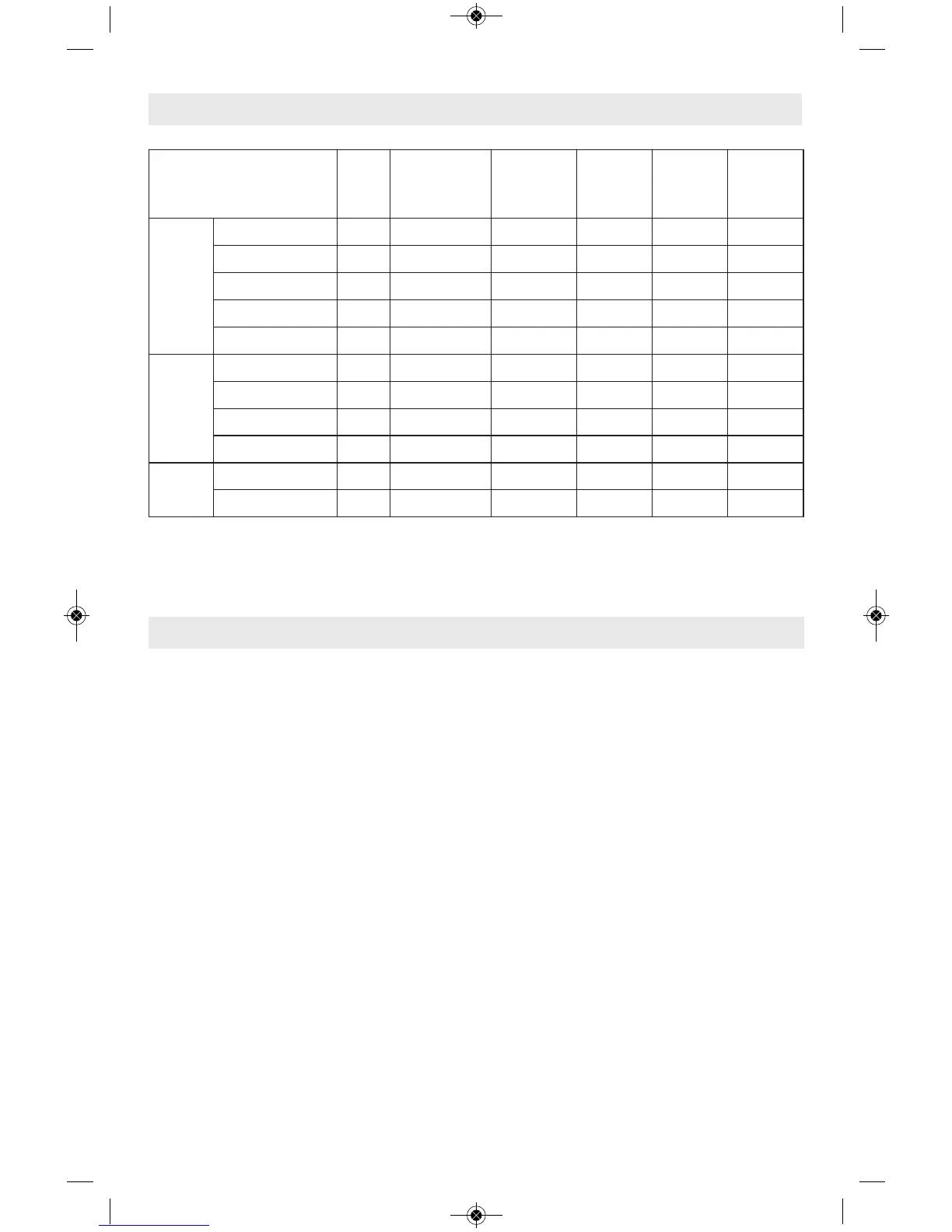
Material
Tool
Speed
Recommended
Thickness
MS51 Wood
& Plastic
Blade
MS52 Fine
Wood
Blade
MS53
Metal
Blade
MS50 Side
Cutting
Blade
Wood
Plywood 6 .75” x x x
Pine 6 .75” x x x
Poplar 6 .75” x x x
Balsa 6 1.75” x x x
Laminate Flooring 6 .5” x x x
Metal
HVAC 6 20-ga. x
TIN 6 20-ga. x
AL sheet 6 20-ga. x
Gal. Sheet Metal 6 20-ga. x
Plastic
Plexiglass 4 .2” x x x
PVC Pipe 4 .75” x x x
Speed Settings


 To Next Page