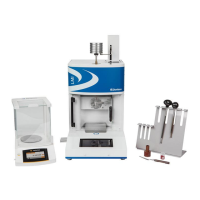
From lab to production,
providing a window into the process
Obligation Of The Operator To Exercise Due Care
The LMFI was designed and constructed taking into consideration a hazard analysis having carefully
adhering to the harmonized safety standards as well as further technical specifications. Thus, the
LMFI conforms to the state of the art technology and ensures a maximum of safety.
In practical operation, this safety can, however, be achieved only if all necessary measures are taken.
The obligation of the plant operator to exercise due care includes planning these measures and
supervising their execution.
Especially, the operator has to ensure that
The LMFI will be used only in accordance with the intended purpose.
The LMFI will be operated in a flawless, functionally efficient condition and that, in particular,
the functional efficiency of the safety devices will be checked at regular intervals.
No modifications will be made to the component except by a Dynisco service person.
The necessary personal protective equipment for the operation, maintenance, and service will
be available and used by any personnel performing these functions.
The operating instructions are always available completely and fully legible at the installation
location of the LMFI. It must be guaranteed that all persons who work with the LMFI can consult
the operating instructions at any time.
Only sufficiently qualified and authorized personnel will operate, maintain, and repair the LMFI.
All safety and warning labels, attached to the LMFI, must not be removed and must remain fully
legible.
Additional instructions, in accordance with facility, local, state and federal industrial safety
regulations and their corresponding, related ordinances for the use of work materials, will have
to be made available as a supplement to the operating instructions.
Introduction
A flow rate test is a measure of a polymer’s mass flow rate (grams extruded in 10 minutes) using a particular orifice
under specified conditions of temperature and load. Machines that determine flow rate are generally called Melt
Indexers. Test methods by ISO, DIN, ASTM and others specify heat chamber and piston tip diameter such that the
shear stress on the polymer is the same in all machines for a given load. In addition, material specification
guidelines (by ISO, DIN, ASTM, GM etc) may exist which give further constraints on how a particular type of
material may be run.
The tests performed are those described by ASTM D1238 and ISO 1133-1, 1133-2. This manual in no way
supersedes either of these documents. The precision and accuracy of the test has been determined by ASTM
method D1238. Contributing to both precision and accuracy are operator variances such as; packing technique,
cleaning, cutting, weighing etc. With moisture sensitive polymers, dryness can also play a major role, and time can
be a factor with thermally unstable polymers, so procedures must be identical. Dynisco Polymer Test Systems has
found that charging a consistent mass of material into the barrel (±0.1 grams) is the most critical factor in getting
precise data.
Several methods have been developed for running flow rate tests under D1238, with Methods A (mass of material
over time) and B (volume of material over time) being the basic of all methods. Method A is simply the collection of
extrudate over time, while Methods B, C and D are the measurement of time for the flow of a fixed volume of
polymer. All but Method A require an encoder to measure distance traveled to determine volume of material
extruded during the test.
P/N:974179 Rev: 0918 ECO: 49667
www.dynisco.com


 To Next Page
 Loading...