EasyManua.ls Logo

Eaton Vickers 25V Series - User Manual

Eaton Vickers 25V Series
11 pages
Print Icon
To Next Page IconTo Next Page
Loading...
I-3157-SReprinted 6/1/96
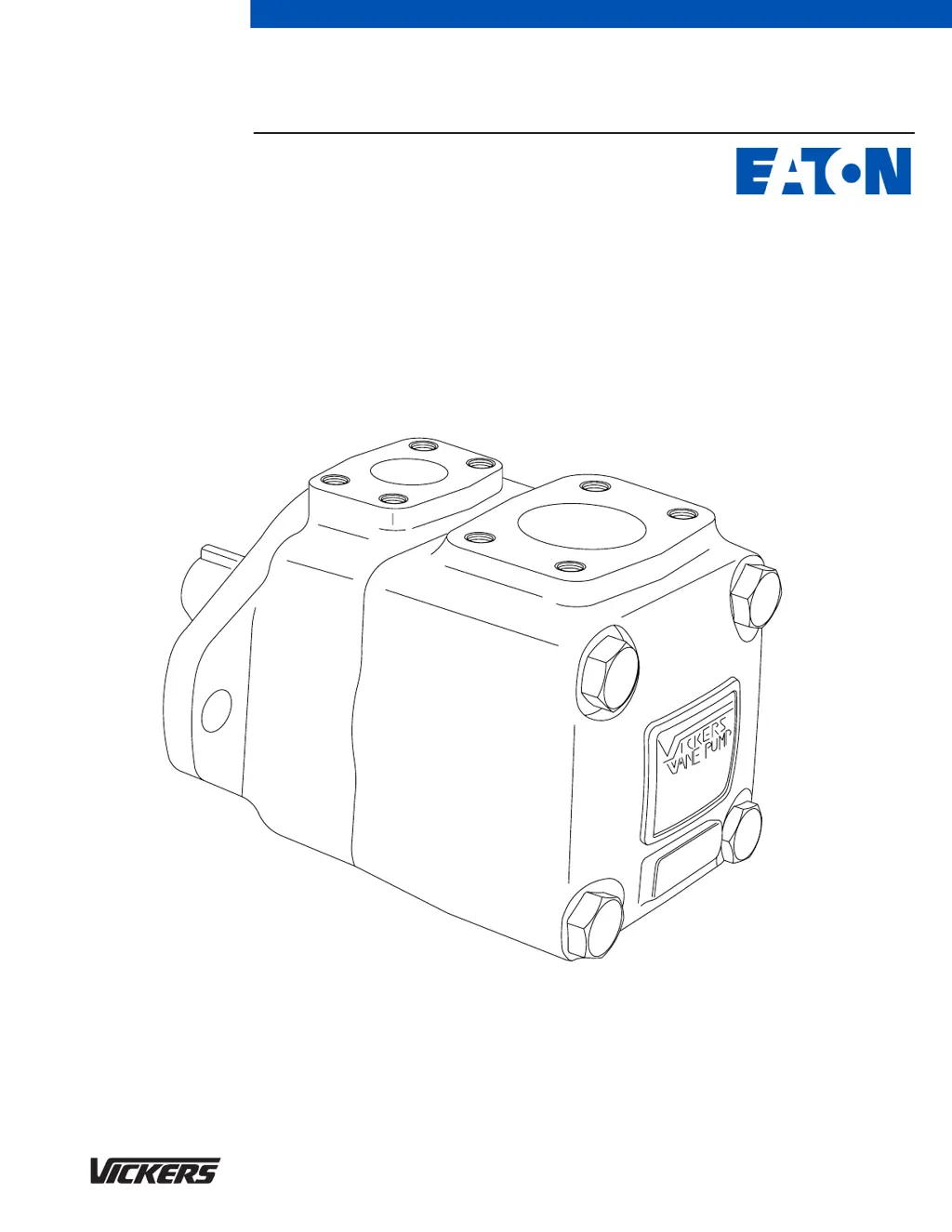
Quiet Intra-Vane Single Pumps
25V(T)-35V(T)-45V(T) Series
20 Design 282/283 Series
Service Data
Vickers
®
Vane Pumps

Questions and Answers

  • M
    Michael PorterAug 13, 2025
    What to do if my Eaton Vickers 25V Water Pump system is not developing pressure?
    • A
      Amy GillAug 13, 2025
      If your Eaton Water Pump is not developing pressure, it could be due to several reasons. The relief valve might be open, in which case it should be repaired or replaced. There could be a loss of fluid internally, indicating slippage, which requires evaluation and repair. Ensure the cartridge kit is assembled correctly and for the proper rotation; reassemble it if necessary. Check that the pump inlet and outlet lines are correctly connected, and replumb them if reversed. Finally, inspect the drive mechanism for any disconnections or breaks and repair them.
  • M
    Martin ChurchAug 20, 2025
    Why is my Eaton Vickers 25V overheating?
    • J
      Jessica MichaelAug 21, 2025
      If your Eaton Water Pump is overheating, it could be due to internal leakage, which would require a complete overhaul. Another possible cause is a malfunctioning heat exchanger, which needs to be located, repaired, or replaced.
  • B
    Brandy FowlerAug 28, 2025
    How to fix fluid loss in my Eaton Water Pump?
    • C
      Connor GrahamAug 28, 2025
      If you're experiencing a loss of fluid in your Eaton Water Pump system, it could be due to ruptured hydraulic lines or leaking/missing seals. Locate and repair any ruptured lines or leaking/missing seals to resolve the issue.
  • A
    Amanda GrayNov 4, 2025
    Why is my Eaton Vickers 25V Water Pump making excessive noise?
    • B
      Benjamin SchmidtNov 4, 2025
      If your Eaton Water Pump is making excessive noise, several factors could be the cause. It might be due to a low oil level in the reservoir, so ensure you fill it to the correct level with the recommended fluid. Air in the system could also be the reason; try opening the reservoir cap and operating the system until the air is purged, and bleed the hydraulic lines at the highest point downstream while the system is under pressure. Check the inlet line and fittings for any air leaks that could be causing a vacuum condition. Ensure the correct type of oil is used, as oil that is too thick can also cause noise; warming up the pump in cold weather might help. Damaged or missing pump seals at mating surfaces can also be a culprit, so locate and replace any that are faulty. Additionally, verify t...

Summary

Section I - Introduction

A. Purpose of Manual

Describes basic operating characteristics and provides service/overhaul info for Vickers vane pumps.

B. General Information

Provides information on related publications and model code breakdown for Vickers vane pumps.

Model Codes

Details the breakdown of model codes used to identify variations in Vickers vane pump series.

Section II - Description

A. General

Explains the design and sound reduction features of the 282/283 series intra-vane pumps.

Section III - Principles of Operation

A. General

Illustrates the operating principle of a balanced intra-vane pump, explaining vane action and pressure application.

Section IV - Installation and Operating Instructions

A. Installation Drawings

References installation drawings showing operating characteristics, dimensions, and port locations.

B. Mounting and Drive Connections

Details direct mounting procedures and cautions against pounding pump shafts.

C. Shaft Rotation

Specifies pump rotation (clockwise/counterclockwise) and warns against incorrect driving.

D. Piping and Tubing

Provides guidelines for cleaning, minimizing fittings, and bending tubing for proper installation.

E. Hydraulic Fluid Recommendations

Discusses the importance of fluid function, selection, and system cleanliness for pump longevity.

F. Sound Levels

Identifies major factors affecting fluid conditions that cause pump noise, such as viscosity and aeration.

G. Overload Protection

Explains the role of relief valves in limiting system pressure and protecting components from overpressure.

H. Start-Up

Outlines the procedure for pump start-up, including priming and purging air from the system.

Section V - Service and Maintenance

A. Circuit Inspection

Lists periodic checks for hydraulic connections, fluid cleanliness, and filter elements to prevent breakdowns.

B. Adding Fluid to the System

Provides instructions for adding hydraulic fluid, emphasizing cleanliness and proper filtering.

C. Adjustments

States that no periodic adjustments are required, except for maintaining shaft alignment.

D. Lubrication

Explains that internal lubrication is provided by system fluid and recommends shaft spline lubrication.

E. Replacement Parts

Emphasizes using genuine Vickers parts and notes that repair kits include common components.

F. Product Life

States that product longevity depends on environment, duty cycle, and system cleanliness.

G. Troubleshooting

Presents a chart of common difficulties, probable causes, and remedies for vane pumps and hydraulic systems.

Section VI - Overhaul

A. Service Tools

Lists standard and special tools required for pump overhaul procedures, including torque wrenches and seal drivers.

B. Unit Removal

Provides safety warnings and steps for removing the pump unit from the hydraulic system.

C. Disassembly

Details the initial steps for pump disassembly, including cleaning the exterior and marking component positions.

D. Cleaning

Instructs on thorough cleaning of all pump parts using compatible solvents and ensuring cleanliness to prevent wear.

E. Inspection, Repair & Replacement

Guides inspection of internal parts, mating surfaces, and components, recommending replacement of worn parts.

F. Assembly

Provides step-by-step instructions for reassembling the pump unit in reverse order of disassembly, with lubrication and torque specifications.

Section VII - Start-Up and Test

A. Start-Up

Describes the process for installing and priming the pump unit, emphasizing correct alignment and fluid flow.

B. Test

Recommends using the hydraulic system for testing and consulting Vickers sales engineering for precise testing needs.

Eaton Vickers 25V Series Specifications

General IconGeneral
BrandEaton
ModelVickers 25V Series
CategoryWater Pump
LanguageEnglish

Related product manuals