EasyManua.ls Logo

Eclipse RatioMatic RM Series - User Manual

Eclipse RatioMatic RM Series
23 pages
Print Icon
To Next Page IconTo Next Page
Loading...
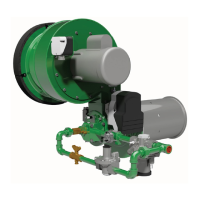
Eclipse RatioMatic
Burners
RM Series
Version 5
12/3/2014
Installation Guide 110

Questions and Answers

  • L
    Leslie RiversAug 18, 2025
    Why I cannot initiate a start sequence on my Eclipse RatioMatic RM Burner?
    • M
      Matthew DeckerAug 19, 2025
      If you cannot initiate a start sequence on your Eclipse Burner, there are several potential causes: * The air pressure switch may not have made contact. In this case, you should check the air pressure switch adjustment, air filter, blower rotation, and outlet pressure from the blower. * The high gas pressure switch may have activated. You should check the incoming gas pressure, adjust it if necessary, and check the pressure switch setting and operation. * The low gas pressure switch may have activated. You should check the incoming gas pressure, adjust it if necessary, and check the pressure switch setting and operation. * Ensure that the main power to the system is switched to the “on” position.
  • Z
    Zachary JensenAug 21, 2025
    What to do if the Eclipse RatioMatic RM goes out when it cycles to high fire?
    • S
      Sara KnoxAug 21, 2025
      If the Eclipse Burner goes out when it cycles to high fire, consider these possible causes: * Insufficient gas pressure into the ratio regulator: Check the start-up settings, measure gas pressures, and adjust as needed. Also, check for valve train pressure loss. * Leaking loading line to the ratio regulator: Repair the leak. * Pilot set too lean: Increase pressure into the pilot regulator. * Main gas adjusting valve not open enough: Increase valve opening. * Fluctuating suction or back pressure: Cross-connect pilot regulator vent to the combustion chamber, but not via the burner air pressure tap.
  • M
    Micheal MarksAug 26, 2025
    Why is my Eclipse RatioMatic RM unstable and producing soot, smoke, or excessive carbon monoxide?
    • J
      Joseph KimAug 26, 2025
      If the Eclipse Burner is unstable or produces soot, smoke, or excessive carbon monoxide, the issue is likely an air/gas ratio that is out of adjustment. To resolve this, measure all the gas pressures and air pressures, and compare them to the documented initial start-up settings, adjusting them where necessary.
  • F
    fgonzalesAug 28, 2025
    How to fix a weak or unstable low fire flame on an Eclipse RatioMatic RM Burner?
    • T
      Thomas HoffmanAug 28, 2025
      If the low fire flame on your Eclipse Burner is weak or unstable, consider the following potential causes: * Not enough gas flowing to the burner: Adjust the ratio regulator to increase the gas flow. * Not enough air: Check for proper blower rotation, check the air filter for blockage, and compensate for the chamber by opening the low fire air butterfly valve position. * Flamerod position: Swap the flamerod with the spark rod so that the flamerod is 180° from the combustion air inlet.
  • D
    dominicgloverAug 31, 2025
    Why the Eclipse RatioMatic RM Burner cannot achieve full capacity?
    • R
      reginagreenSep 1, 2025
      If the Eclipse Burner cannot achieve full capacity, it could be due to a blocked air filter. Clean or replace the air filter to resolve this. Another possible cause is that the gas pressure going into the ratio regulator is too low; in this case, adjust the gas pressure.
  • G
    ghaleSep 4, 2025
    Why is the main flame too long and yellow at high fire on my Eclipse RatioMatic RM?
    • G
      griffintrevorSep 4, 2025
      If the main flame of your Eclipse Burner is too long and yellow at high fire, it's likely that the gas flame is too high. This can be due to the gas butterfly valve being open too far, or the main gas regulator spring being screwed in too far.
  • G
    gallowaymatthewSep 8, 2025
    Why is the main flame too short at high fire on my Eclipse Burner?
    • S
      Sharon WrightSep 8, 2025
      If the main flame on your Eclipse Burner is too short at high fire, it indicates that the gas flow is too low. This could be because the gas butterfly valve is closed too far, or the main gas regulator spring is screwed out too far.
  • A
    Ariel BrockSep 12, 2025
    Why is low fire (pilot) flame too long, soft or yellow on my Eclipse RatioMatic RM?
    • T
      Tyler DawsonSep 12, 2025
      If the low fire (pilot) flame on your Eclipse Burner is too long, soft, or yellow, it could be due to too much gas flow. This can happen if the main gas proportionator spring is set for too much flow, or if the pilot gas cock adjustment is open too far.
  • J
    Jessica Woodward DDSNov 14, 2025
    What to do if Eclipse Burner start-up sequence runs but burner does not light?
    • P
      pjohnsonNov 14, 2025
      If the Eclipse Burner's start-up sequence runs but the burner doesn't light, several issues could be the cause. It might be due to a lack of ignition, which could stem from various reasons: * No power to the ignition transformer: Restore the power. * Open circuit between the ignition transformer and the igniter: Repair or replace the wiring. * Dirty igniter: Clean it. * Igniter not correctly grounded: Clean the threads (do not apply grease). * Broken igniter insulation: Inspect and replace if broken. Another potential reason is insufficient gas. This could be due to: * Low gas pressure: Check start-up settings and adjust pressures. * Leaking impulse line: Repair any leaks. * Improperly adjusted pilot adjusting valve or bypass valve: Adjust bypass or low fire gas. * Sta...

Summary

Introduction to Eclipse RatioMatic Burners

Product Description

Details the RatioMatic burner as a nozzle-mix type for direct and indirect air heating applications.

Target Audience

Identifies the intended readers as individuals familiar with nozzle-mix burner systems.

Related RatioMatic Documentation

Lists essential documents like Installation Guide, Datasheet, and Design Guide.

Manual Purpose

States the manual's objective is to ensure safe and effective combustion system installation.

Safety Information and Precautions

Critical Safety Warnings

Highlights dangers of fire/explosion if burners are improperly handled or maintained.

Burner Capabilities and Limitations

Outlines the burner's design purpose and limitations.

Operator Training Requirements

Emphasizes the importance of trained operators for safe equipment operation.

Guidelines for Replacement Parts

Specifies using only Eclipse-approved replacement parts for safety and performance.

Installation Procedures

Handling and Storage Guidelines

Provides instructions for safely handling and storing burner components.

Component Approval and Standards

Details compliance requirements for limit controls and safety equipment.

Electrical Wiring Standards

Specifies compliance with applicable local codes and standards for electrical wiring.

Gas Piping Standards

Outlines compliance with local codes and standards for gas piping.

Pre-Installation Checklist

Lists essential checks for air supply, exhaust, access, and environment before installation.

Flame Sensor and Spark Plug Installation

Instructions for correctly installing the flame sensor and spark plug.

Burner and Chamber Installation Details

Covers chamber opening requirements and burner mounting patterns.

Chamber Wall and Burner Mounting

Details on chamber wall support and burner mounting procedures.

Combustor Mounting Procedures

Specific instructions for mounting alloy and silicon carbide combustors.

Refractory Block Installation and Curing

Covers refractory block installation, large block handling, and curing schedules.

Burner and Supply Piping

Guidance on burner piping, supply piping, and ensuring proper gas flow.

Bypass Start Gas Piping

Instructions for optional bypass start gas piping for specific models.

Pilot Valve Train Installation (RM1000-RM3000)

Details on connecting pilot valve trains, including pipe connections and support.

Blower Motor Support (RM1000-RM3000)

Requirements for supporting the packaged blower motor on specific models.

Post-Installation Checklist and Ignitor Setting

Final checks after installation and setting the ignitor location.

Adjustment, Start, and Stop Procedures

Adjustment Procedure Overview

General steps for adjusting the burner system for initial startup.

Step 1: System Reset

Procedure for resetting gas pressure switches and limit interlocks.

Step 2: Setting Low Fire Air

Instructions for setting the low fire air position using the control motor.

Step 3: Igniting the Burner (RM0050-RM0700)

Procedures for igniting the burner, with variations based on turndown options.

Procedure A: Low Fire Start (No High Turndown)

Specific steps for low fire start without the high turndown option.

Procedure B: Low Fire Start (With High Turndown)

Specific steps for low fire start with the high turndown option.

Procedure C: Bypass Start Gas (No Fuel Orifice)

Steps for ignition using bypass gas without a fuel orifice meter.

Procedure D: Bypass Start Gas (With Fuel Orifice)

Steps for ignition using bypass gas with a fuel orifice meter.

Step 4: Setting Low Fire Gas (RM0050-RM0700)

Procedure for setting low fire gas flow, particularly for bypass start.

Bypass Start Gas with High Turndown

Specific instructions for bypass start gas with high turndown ratio regulators.

Step 5: Verifying Air Settings (RM0050-RM0700)

Process for verifying air settings against datasheet charts.

Step 3: Adjusting Pilot (RM1000-RM3000)

Procedure for adjusting the pilot flame for reliable ignition.

Step 4: Setting High Fire Gas (RM1000-RM3000)

Instructions for setting high fire gas flow and checking flame appearance.

Step 5: Adjusting Low Fire Flame (RM1000-RM3000)

Procedure for adjusting the low fire flame and verifying settings.

Maintenance and Troubleshooting Guide

Monthly Maintenance Checklist

Routine checks for flame sensors, pressures, alarms, igniters, and air control.

Yearly Maintenance Checklist

Periodic checks including leak tests, pressure switch settings, and component inspection.

Troubleshooting Common Issues

Identifies problems like no ignition, weak flame, and provides solutions.

Start-up Sequence Failures

Troubleshooting guide for when the burner does not ignite during startup.

Low Fire Flame Instability

Diagnosing and resolving issues with weak or unstable low fire flames.

Burner Cycling to High Fire Problems

Addresses issues where the burner shuts off or behaves erratically during high fire cycling.

Soot, Smoke, and Carbon Monoxide Issues

Troubleshooting causes for incomplete combustion, including air/gas ratio.

Full Capacity Attainment Issues

Diagnosing reasons why the burner cannot achieve its maximum output.

Start Sequence Initiation Failures

Resolving problems that prevent the burner from starting its sequence.

High Fire Flame Characteristics

Troubleshooting long, yellow, or short flames at high fire.

Low Fire Flame Characteristics

Diagnosing long, soft, or yellow low fire flames.

Appendix: Conversion Factors

Metric to English Conversions

Table of conversion factors for units from metric to imperial.

Metric to Metric Conversions

Table of conversion factors for various metric units.

English to Metric Conversions

Table of conversion factors for units from imperial to metric.

Eclipse RatioMatic RM Series Specifications

General IconGeneral
BrandEclipse
ModelRatioMatic RM Series
CategoryBurner
LanguageEnglish

Related product manuals