COPYRIGHT©EDECOA, ALL RIGHT RESERVED,PSW-USA-Rev2.71
5 / 17
3) One pair of DC input terminal ring (For backup ,Some models)
4) User manual ×1
5) Ground Cable×1
6) Battery cable
7) Remote controller and connecting cable
8) Spare fuse (Some models)
You need to choose the appropriate location to install the inverter to ensure that the inverter can work properly and
efficiently.
4.2Install carrier requirements
The inverter mounting carrier must be fire-resistant.
Do not install the inverter on flammable building materials.
Please ensure that the mounting surface is strong enough to meet the load requirements of the inverter.
In a residential area, do not install the inverter on a plasterboard wall or similar sound-poor wall to avoid
interference with the noise in the work area.
4.3Installation requirements:
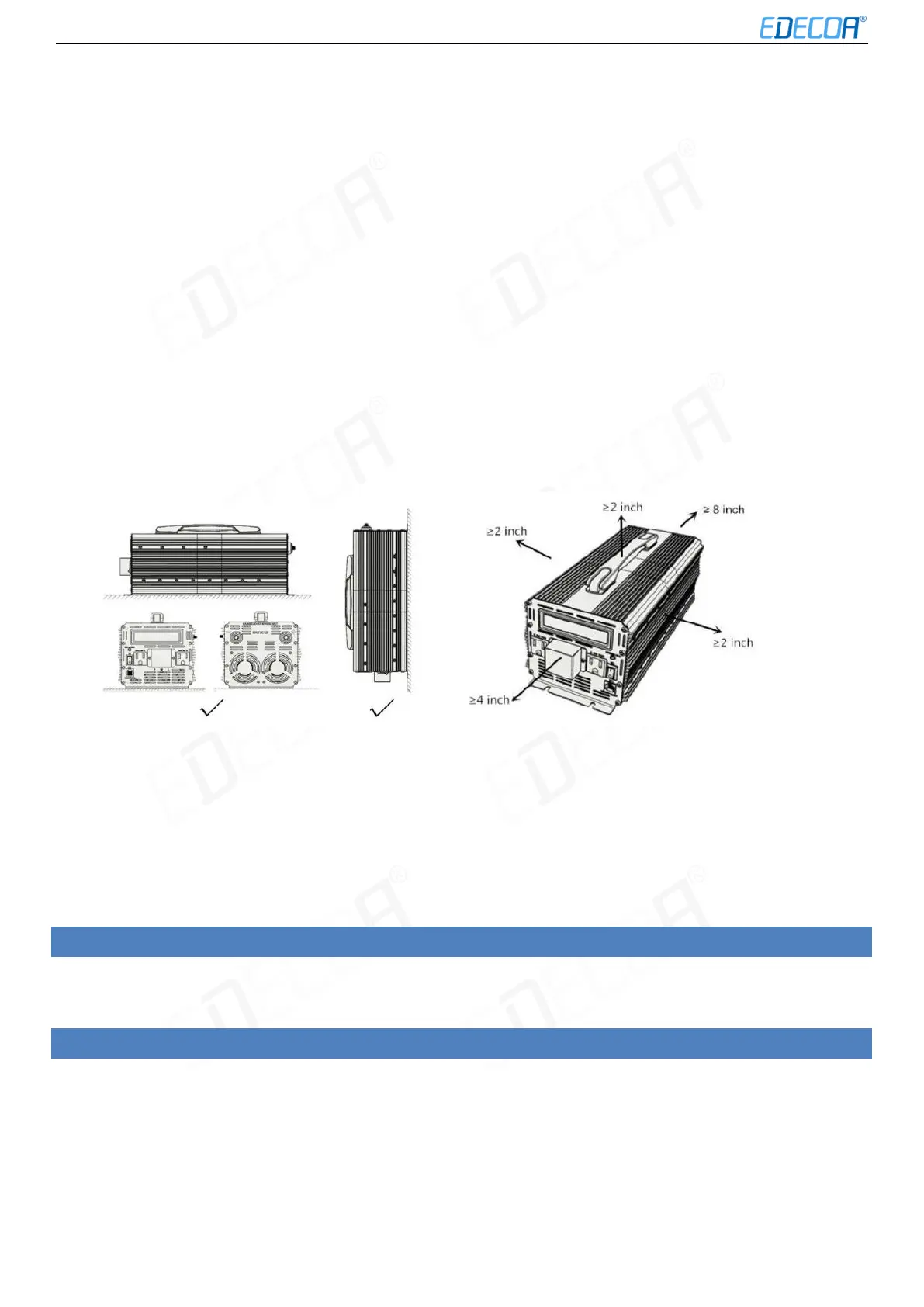
Install it vertically or tilt it back up to 15 ° to allow the fan to cool the machine.
Figure 3-1Proper installation Figure 3-2 Installation Space (Unit: inch)
Do not install the inverter in an inclined position (forward, backward, overturned), horizontally mounted or inverted.
4.4Installation space requirements
It is recommended that the inverter be mounted at an adequate height for easy operation and subsequent
maintenance.
When installing the inverter, make sure that there is enough space around the inverter to ensure adequate installation
and cooling space, as shown in Figure 3-2.
5.OPENING THE DEVIC E
Non-professional personnel must not open the inverter as there is high voltage inside. Before opening the device, please
remove cables of both DC and AC sides, turn on the switch and leave the inverter alone for 1 hour.
6.CONNECTION
6.1 Battery connection
1.Please read the manual carefully and install the inverter properly. If you have questions, please contact our service team.
It may cause damage to the inverter or cause injury if you do not act in accordance with the instructions from the
manual.
2.Set the switch to the "OFF" position when connecting the inverter to the power source. The energy source may be a
battery or other stable DC power supply.It must be ensured that the DC voltage of the power source is matched to the
rated DC voltage of the inverter. Higher voltages can cause damage the inverter.



 To Next Page