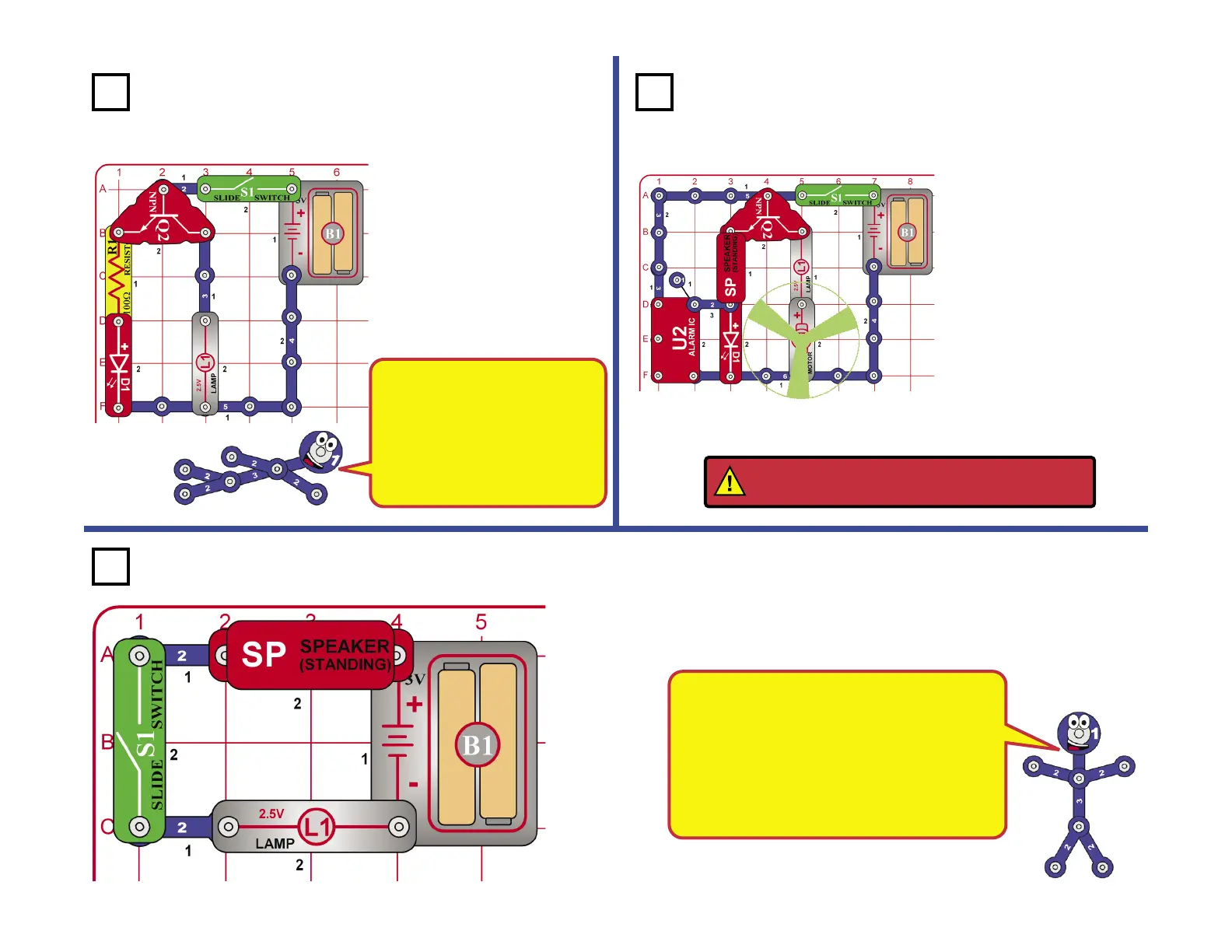
7
Transistors use a small current to
control a large current, and have three
connection points (the small current,
the larger current, and the combined
current). But they are actually
constructed using two diodes that are
connected together. These diodes
are similar to your LED (light emitting
diode) except that they don’t emit light.
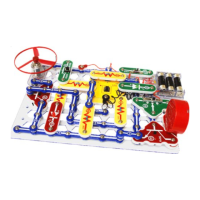
Turn on the switch (S1), the LED
(D1) and lamp (L1) are bright.
This is an unusual circuit which
uses the NPN transistor (Q2) as
two connected diodes to split the
current from the batteries into the
paths with the LED and lamp. If
the LED (D1) does not light, you
may have weak batteries in need
of replacement.
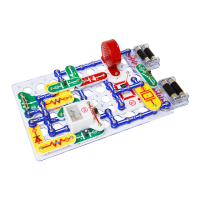
This circuit has four different
types of output. Flip the switch
(S1) several times. The LED (D1)
and lamp (L1) light up, the motor
(M1) spins, and the speaker
(SP) makes a siren sound. If
the LED does not light, you may
have weak batteries that need
replacement.
This is an unusual circuit which
uses the NPN transistor (Q2) as
two connected diodes, to split
the current from the batteries
(B1) into the paths with the LED
and lamp.
The speaker uses electromagnetism to create
changes in air pressure, which your ears feel
and interpret as sound. Think of the speaker
as creating pressure waves in the air just
like waves in a pool. You only see waves in
the pool when you disturb the water, so the
speaker only makes sound when the voltage
changes.
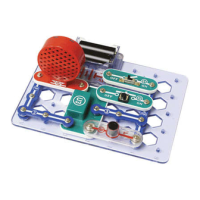
Pop On, Pop Off
Turn the slide switch (S1) on and off several times. You hear static
from the speaker (SP) when you turn off the switch.
Project 72 Project 73
Project 74
WARNING: Moving parts. Do not touch the fan
or motor during operation.
Current Splitter Light Up & Listen




 To Next Page