1. Purpose and Features
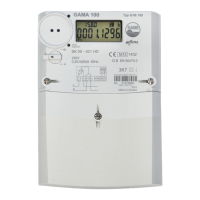
The EPQS meter is a multifunction device for measurement of electric energy. CT operated meters
comply with requirements of IEC 62053-22 standard, class 0,5 or 0,2s.
The meter data structure is compatible with DLMS standard. Each measured parameter has its OBIS
(OBject Identification System) code describing the parameter or value. OBIS codes together with
allocated parameters are transmitted through the communication interfaces and displayed on the
meter LCD display screen.
The meter measures, registers, and collects data on active energy of both directions (+A, -A), reactive
energy of both directions (+R, -R), reactive energy in four quadrants (R1, R2, R3, R4), and apparent
energy of both directions (+W, -W). The meter also registers maximums of average power, collects
load profiles and registers cumulative powers.
Besides the aforementioned values, the EPQS meter can display or transmit via its communication
interfaces the following profiles stored in any of 16 freely programmed channels: phase and line
voltages; currents; instantaneous active, reactive, and apparent power; frequency; power factor (cos
). It can also analyze power quality and generate weekly reports of power grid quality.
Up to eight of energy and the same number of power maximum tariffs can be activated for tariffication
of energy and power. The structure of tariff module lets adapt the meter for virtually any of existing
tariff program.
For remote data transmission, the meter has two independent electrical communication interfaces.
For local data readout, optical interface D0 is provided.
Several modifications of EPQS meter are manufactured. They may differ in nominal current, voltage,
connection type, and the meter hardware or software. The designation of different modifications of
EPQS meter is explained in Table 1-1.



 To Next Page