Sequential instructions allow access to the target device in a step-by-step fashion. For
example, a typical sequence of instructions used to read data from the target device would be to open
the target device, then read data and then close the target device. Sequential instruction have access
to the target device only when communication between target device and programming adapter is
initialized. This can be done when Open Target Device instruction is called. When communication
is established, then any number of sequential instruction can be called. When the process is finished,
then at the end Close Target Device instruction should be called. When communication is
terminated, then sequential instructions can not be executed.
Note: Inputs / outputs has been defined as INP_X, and LONG_X. Both of them are defined as 4
bytes long (see MSPPrg-Dll.h header file )
#define INP_X _int32
#define LONG_X _int32
Make sure that an application using the DLL file has the same length of desired data.
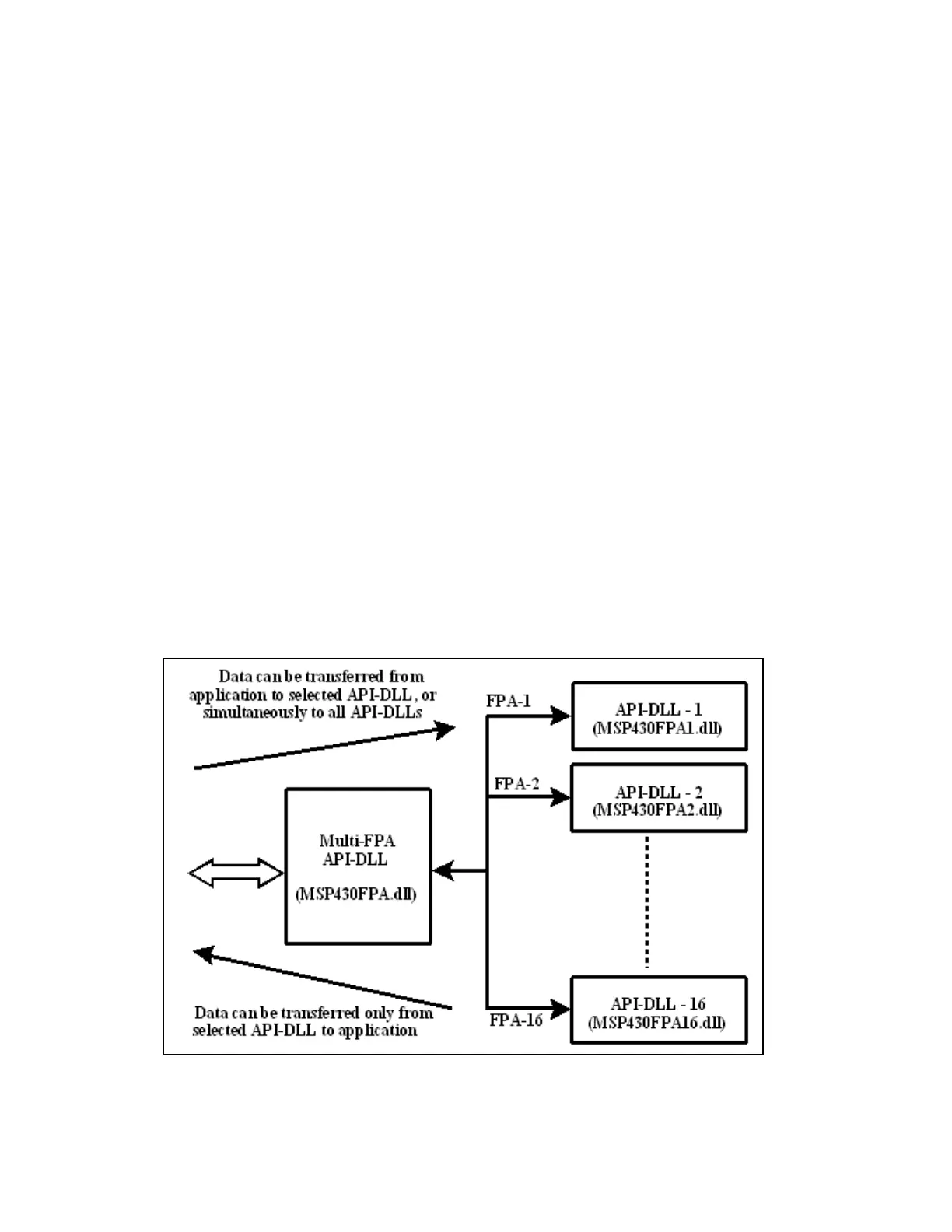
Figure 4.1 shows the structure of the Multi-FPA API-DLL. It shows that the Multi-FPA DLL is used
to communicate with the user application as well as the target devices. Each of the target devices is
accessed by a single DLL associated with it. When more then one FPA is needed, up to 64 DLLs can
be created to communicate with up to 64 devices at a time. Each instance of an FPA-DLL contains
its own copy of buffers, as shown in Figure 4.2
Figure 4.1 Multi-FPA API-DLL diagram.
34



 To Next Page