13
2.8 HYDRAULIC SAFETY
1. Make sure that all the components in the hy-
draulic system are kept in good condition and
are clean.
2. Before applying pressure to the system, make
sure all components are tight, and that lines,
hoses and couplings are not damaged.
3. Do not attempt any makeshift repairs to the
hydraulic lines, ttings or hoses by using
tapes, clamps or cements. The hydraulic sys-
tem operates under extremely high pressure.
Such repairs will fail suddenly and create a
hazardous and unsafe condition.
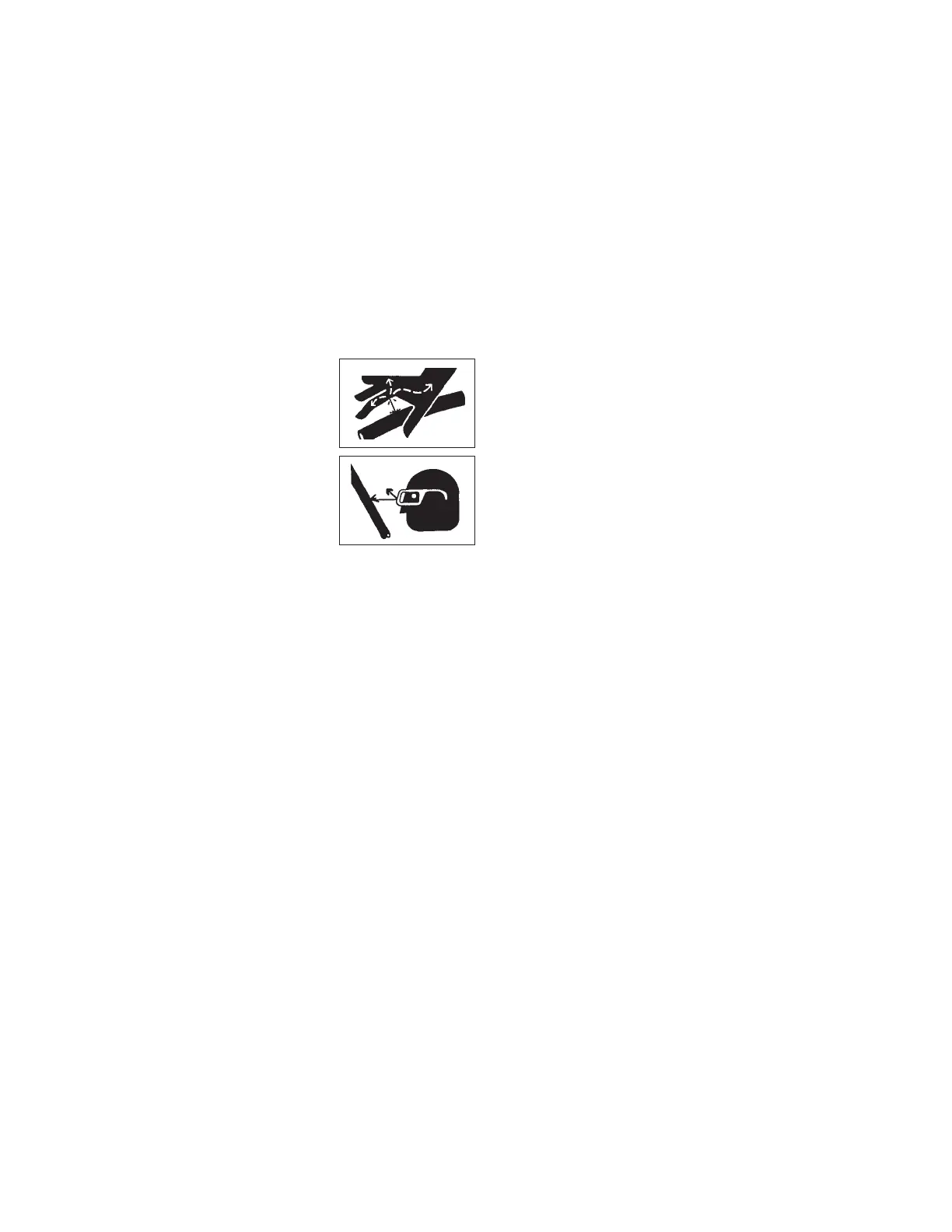
4. Wear proper hand and eye
protection when searching
for a high pressure hy-
draulic leak. Use a piece
of wood or cardboard as a
backstop instead of hands
to isolate and identify a
leak.
5. If injured by a concentrated high-pressure
stream of hydraulic uid, seek medical atten-
tion immediately. Serious infection or toxic
reaction can develop from hydraulic uid
piercing the skin surface.
6. Relieve pressure on hydraulic system before
maintaining or working on system.
2.9 STORAGE SAFETY
1. Store the unit in an area away from human
activity.
2. Do not allow children to play on or around the
stored machine.
3. Store the unit in a dry, level area. Support the
frame with planks if required.
2.10 TRANSPORT SAFETY
1. Comply with state and local laws governing
safety and transporting of machinery on public
roads.
2. Check that all the lights, reectors and other
lighting requirements are installed and in good
working condition.
3. Do not exceed a safe travel speed. Slow
down for rough terrain and cornering.
4. Fold up and secure feed hopper intake before
moving or transporting.
5. Be sure the trailer is hitched positively to the
towing vehicle and a retainer is used through
the hitch jaws. Always attach a safety chain
between the hitch and the towing vehicle.
6. Do not drink and drive.
7. Be a safe and courteous driver. Always yield
to oncoming trafc in all situations, including
narrow bridges, intersections, etc. Watch for
trafc when operating near or crossing road-
ways.
8. Never allow riders on the machine.


 To Next Page