EasyManua.ls Logo

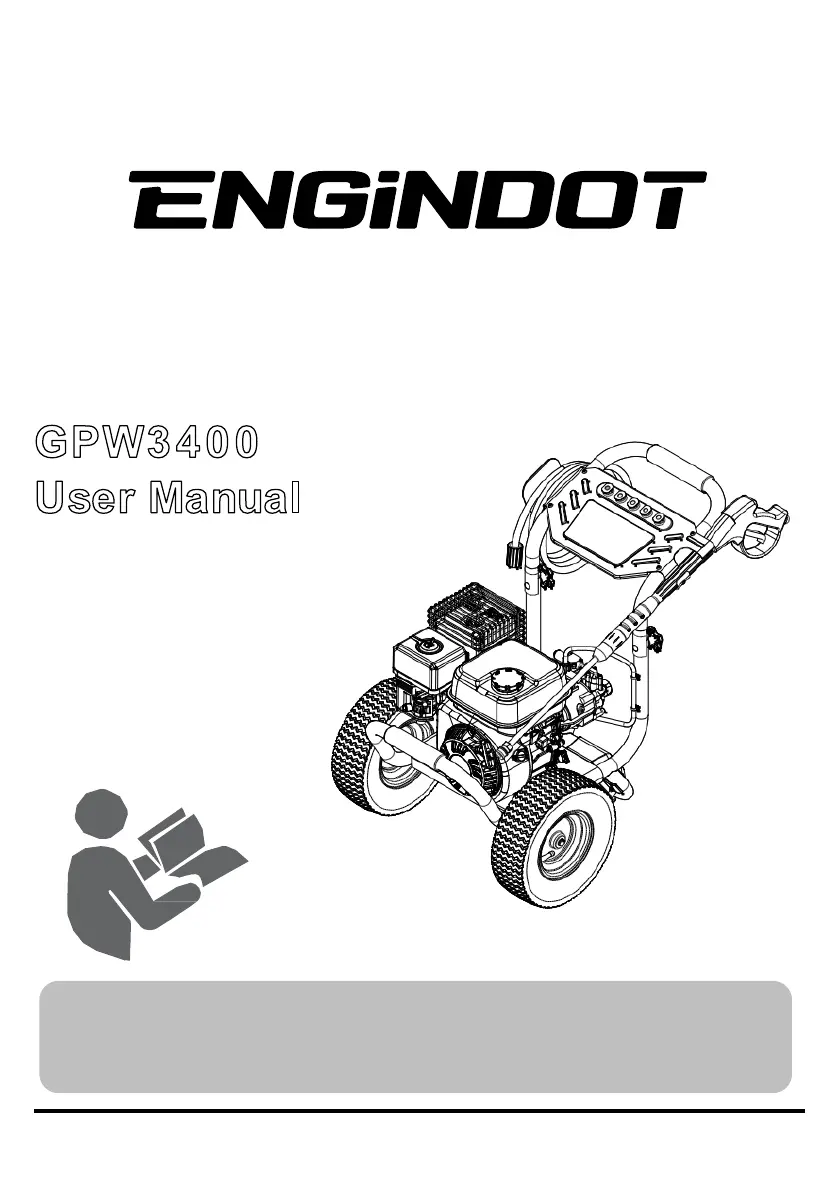
ENGINDOT GPW3400 - User Manual

ENGINDOT GPW3400
27 pages
Print Icon
To Next Page IconTo Next Page
Loading...
HIGH PRESSURE WASHER
G
PW3400
U
ser Manual
Congratulations on the purchase of your new pressure washer. In
order to ensure you have the best possible experience please read
through the following instructions.

Questions and Answers

  • D
    Debra GouldAug 18, 2025
    How to start my ENGINDOT Pressure Washer when it won't start?
    • M
      Michele PetersenAug 18, 2025
      If your ENGINDOT Pressure Washer engine doesn’t start, make sure the engine power switch is in the ON (I) position. Also, ensure the fuel tank is filled with regular gasoline and that the oil level reaches the minimum on the dipstick. Release any water pressure by squeezing the trigger on the gun. Check that the choke lever is in the correct position: CLOSE or OFF for cold starting, and OPEN or ON (or middle position) for warm starting. If these steps don't work, the carburetor or spark plug may be clogged; you may need to clean them. Also, ensure you are using the correct starting method.
  • T
    Teresa WilcoxAug 20, 2025
    What to do if my ENGINDOT Pressure Washer has no or low pressure?
    • C
      Courtney BanksAug 21, 2025
      If your ENGINDOT Pressure Washer has no or low pressure, first attach the required nozzle tip and ensure the water supply faucet is fully open without any kinks or blockages in the hose. Verify that the water supply pressure is a minimum of 30 psi, 4 GPM. Clean the water filter if it's clogged. Squeeze the trigger to release any air in the pump while the machine is running. If the issue persists, the check valve or pump may be damaged, requiring professional assistance.
  • A
    allison46Aug 23, 2025
    Why is my ENGINDOT GPW3400 Pressure Washer not taking in detergent?
    • S
      Stephen WalshAug 23, 2025
      If your ENGINDOT Pressure Washer isn't taking in detergent, ensure the detergent siphon tube is properly connected. If the tube is damaged, replace it. Make sure you are using the black nozzle for detergent application and that the detergent adjustment knob is in the correct position. Clean the nozzle if it's clogged. Also, detach the detergent siphon tube and clean the fitting with a tip cleaner. Use only detergent approved for pressure washers; thick detergent or a clogged detergent filter can cause issues.
  • T
    Tony SmithAug 26, 2025
    Why does my ENGINDOT Pressure Washer engine stop after starting?
    • A
      angela17Aug 26, 2025
      If your ENGINDOT Pressure Washer engine stops soon after starting, check the oil and fuel levels to ensure they are sufficient. Also, make sure the choke lever is moved to the Open position immediately after starting the engine.
  • R
    Robert BuchananAug 27, 2025
    How to fix an ENGINDOT GPW3400 Pressure Washer engine that lacks power?
    • T
      Timothy BurnsAug 28, 2025
      If your ENGINDOT Pressure Washer engine lacks power, the air filter or carburetor might be clogged. Clean or replace the air filter, and clean the carburetor following the instructions in the manual.
  • J
    Joanne CopelandAug 30, 2025
    What causes the pressure to be too high on my ENGINDOT GPW3400 Pressure Washer?
    • R
      Richard GomezAug 30, 2025
      If the pressure is too high on your ENGINDOT Pressure Washer, the nozzle may be clogged. Clean the nozzle with a tip cleaner.
  • A
    Alexander PetersonSep 1, 2025
    What should I do if the starter rope on my ENGINDOT Pressure Washer doesn't recoil?
    • K
      Kelly Sims IISep 1, 2025
      If the starter rope on your ENGINDOT Pressure Washer doesn't recoil, the recoil mechanism might be broken, or the pressure may be too high. Contact customer service for assistance.
  • N
    nmckaySep 3, 2025
    Why is my ENGINDOT Pressure Washer leaking water at the joints/connections?
    • W
      washingtonwilliamSep 3, 2025
      If your ENGINDOT Pressure Washer is leaking water at the joints/connections on the gun, hose, or pump, the seal ring may be damaged. Replace it with a back-up O-ring or purchase an accessory kit.
  • J
    Jeffrey GilesSep 6, 2025
    Why does my ENGINDOT GPW3400 engine stop when I move or tilt it?
    • S
      shannonblakeSep 6, 2025
      If your ENGINDOT Pressure Washer engine stops when moving or tilting it, the low oil shut down sensor may have tripped to protect the engine. Avoid tilting the machine past 15° during operation, and check the oil level to ensure it is above the minimum mark on the dipstick.
  • Z
    Zachary EdwardsSep 8, 2025
    What to do if the high pressure hose can’t be connected to my ENGINDOT GPW3400 pump or gun?
    • R
      robertberrySep 8, 2025
      If the high pressure hose can’t be connected to your ENGINDOT Pressure Washer pump or gun, the O rings may not be lubricated. Apply lubricating oil or water to the O rings.

Summary

Safety Advice and Definitions

Definitions and Hazard Levels

Defines safety alert symbols and hazard levels (Danger, Warning, Caution).

General Safety Warnings

Provides general safety warnings and important operational conditions to avoid.

Safety Warnings: Work Area and Personal Safety

Work Area and Exhaust Fumes Safety

Safety advice for work area, exhaust fumes, and hazardous atmospheres.

Ventilation and Heat Cautions

Warnings about inadequate ventilation and hot engine/muffler cautions.

Personal Safety Precautions

Personal safety precautions, including alertness, protective equipment, and clothing.

Safety Warnings: Materials and Engine

Flammable and Poisonous Materials Safety

Safety precautions for handling flammable and poisonous materials like gasoline.

Engine Safety Precautions

Engine safety advice, including oil levels, fuel, and maintenance.

Safety Warnings: Operation and Hazards

Specific Operating Safety Advice

Specific safety advice for operating conditions, product inspection, and water connections.

Injection Hazard and Spray Gun Use

Warning about spray penetration injury and advice on spray gun and detergent use.

Safety Warnings: Maintenance and Storage

Service and Pump Safety Guidance

Safety precautions before service and preventing pump damage.

Storage and Cold Weather Operation

Guidelines for storage, winterizing, and cold weather operation.

Intended Application Guidelines

Specifies the intended residential applications and warns against modification.

Parts List: Main Components

Main Components Identification

Identifies main parts like the frame, wheels, handle, and spray gun.

Parts List: Accessory Kit

Accessory Kit Components

Lists items in the accessory kit, such as nozzles, filter, and wrenches.

Assembled Model Diagram: Labeled Components

Labeled Components Diagram

Illustrates the pressure washer with numbered parts for identification.

Assembled Model Diagram: Reference Table

Component Reference Table

Provides a table linking reference numbers to component names and descriptions.

Assembly Instructions: Wheels and Frame

Wheel and Frame Assembly

Guides on installing wheels and assembling the main frame and handle.

Assembly Instructions: Pump Inlet and Gun

Pump Inlet and Gun Assembly

Instructions for connecting the pump inlet and assembling the spray gun with the wand.

Assembly Instructions: Hose Connection

Hose Connection Procedure

Details on how to connect the pressure hose to the pump and spray gun.

Operating Instructions: Nozzles and Starting

Using Spray Nozzles

Explains how to install and use the different spray nozzles for various cleaning tasks.

Water Supply and Starting Procedure

Covers water supply requirements and the procedure for starting the pressure washer.

Operating Instructions: Detergents and Shutdown

Cleaning with Detergents

Instructions and precautions for using detergents with the pressure washer.

Shutting Down and Cleaning Up

Procedures for safely shutting down the unit and cleaning it after use.

Engine Operation: Oil and Fuel

Adding and Checking Engine Oil

Step-by-step guide to checking and adding engine oil, emphasizing importance.

Adding Fuel Safely

Instructions for safely adding fuel, including fuel type and precautions.

Engine Operation: Starting and Stopping

Engine Starting Procedure

Detailed instructions for safely starting the engine, including pre-checks and choke usage.

Engine Stopping Procedure

Procedures for correctly stopping the engine and turning off the unit.

Cleaning and Maintenance: Filter and Oil

Water Inlet Filter and Engine Oil Maintenance

Instructions for cleaning the water inlet filter and draining engine oil.

Cleaning and Maintenance: Spark Plug and Carburetor

Spark Plug, Carburetor, and Spray Tip Care

Steps for maintaining spark plugs, cleaning carburetors, and cleaning spray tips.

Cleaning and Maintenance: Storage and Winterizing

Storage and Winterizing Procedure

Guidelines for storing the product and winterizing to prevent damage.

Technical Specifications

Troubleshooting: Engine Issues

Engine Problems and Solutions

Common problems and solutions for engine starting and stopping issues.

Pump and Pressure Issues

Troubleshooting low pressure, high pressure, and pump leaks.

Troubleshooting: Pump and Accessory Issues

Accessories and Connections Issues

Solutions for problems with accessories, connections, and trigger operation.

Limited Warranty Information

Service Card and Return Procedures

Service Inclusions and Return Process

Outlines service coverage, product return steps, and contact information.

Return Details Form

Form to fill out with purchase information for processing returns.

ENGINDOT GPW3400 Specifications

General IconGeneral
BrandENGINDOT
ModelGPW3400
CategoryPressure Washer
LanguageEnglish

Related product manuals