Need help?
Do you have a question about the Environmental Water Systems EWS-SPECTRUM and is the answer not in the manual?
A summary of the seven essential steps for installing the whole home water filtration system.
Detailed physical dimensions and specifications for EWS/CWL Spectrum and 1035 systems.
Detailed physical dimensions and specifications for EWS/CWL 1465 and 1865 systems.
Step-by-step instructions for assembling larger systems and loading filtration media.
Essential safety guidelines and warnings to follow before and during system installation.
Guide to unpacking, checking for damage, and selecting the optimal installation location.
Requirements for drain line setup and considerations for systems installed outdoors.
Steps for physically installing the system and assembling the valve components.
Procedure for filling the tank and running initial flush cycles for proper operation.
How to check the drain water during the rinse cycle to ensure it is clear.
Steps to place the system in service and perform a final checklist.
Guide to using vacation mode, diagnostics, settings, and manual cycles.
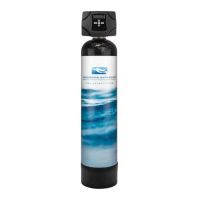
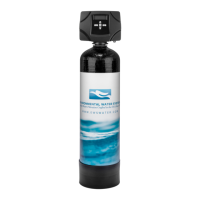
This document serves as a comprehensive product and installation manual for Whole Home Water Filtration Systems manufactured by Environmental Water Systems (EWS). The manual covers various models, including EWS-SPECTRUM, EWS-CC-1465, EWS-CC-1865, EWS-1035, CWL-SPECTRUM, CWL-CC-1465, CWL-CC-1865, and CWL-1035, offering detailed instructions for setup, installation, and ongoing maintenance. The primary function of these systems is to provide filtered water to an entire home, improving water quality by removing various contaminants.
The manual begins with a "Simple Steps for a Correct Installation and a Happy Customer" section, outlining seven key stages of installation. These steps emphasize proper system placement on the main water supply, the use of flexible piping for plumbing connections, and the installation of a proper drain line with an air gap. Electrical connection involves plugging a transformer into a standard outlet and setting the time of day on the system's touch screen. Initial startup procedures include slowly opening the bypass inlet to fill the tank and allowing the system to self-clean the filtration media. The final step involves opening the bypass outlet to put the system in service and flushing water throughout the home.
Installation dimensions are provided for different models, illustrating the overall height, tank height, and depth requirements. Smaller systems like EWS-SPECTRUM and EWS-1035 are typically delivered fully assembled, while larger systems such as EWS-CC-1465 and EWS-CC-1865 require on-site assembly due to shipping weight. The manual stresses the importance of using flexible connections like stainless steel corrugated water connectors, PEX, or PVC Sch 40 to prevent issues from slight measurement discrepancies, pressure surges, or back pressure. A drain line with an air gap is also a critical requirement, and a spring check valve is highly recommended to prevent backflow.
Safety information is prominently featured, advising users to read all instructions completely before beginning installation. It warns against dropping or dragging components and emphasizes the importance of proper setup to avoid voiding the warranty. Plumbing connections must comply with state and local codes, and only Teflon tape should be used as a sealant for threaded drain and adaptor connections. The manual also highlights the need to address pre-existing plumbing conditions, such as lime or iron buildup, which can affect system performance. Electrical connections require a 12-volt transformer plugged into a grounded, unswitched 110/115/120-volt outlet. For copper plumbing systems, a jumper may be necessary to maintain the plumbing system ground.
The ideal installation location is a protected area, away from direct sunlight, rain, wind, and freezing temperatures. The system should be connected to the main water supply before any water heaters. Water temperature is a critical factor; any water over 110°F or exposure to freezing temperatures voids the warranty. Inlet water pressure should be between 20 psi and 75 psi, with a pressure reducing valve (PRV) recommended if pressure exceeds 75 psi. The manual explicitly states that the system should not be used with microbiologically unsafe water or water of unknown quality without adequate disinfection, and well water should be tested thoroughly.
For outside installations, the system must be protected from elements and weather exposure, with suggestions like an inexpensive plastic shed or a solid covering. If burying the system, it must be placed in a heavy-duty culvert pipe to prevent crushing from ground movement. The drain location should be near a vented sewer drain with a "P" trap, and an air gap of at least 1 inch is required to prevent backflow of drain water or gases. The drain line should be at least 3/4 inch in diameter and free of restrictions. The manual also suggests reusing drain water for irrigation, as it is filtered water from the self-cleaning process.
The assembly instructions for larger systems detail the box contents and the step-by-step process of loading the tank with underbed material and filtration media. It emphasizes careful handling of the riser tube to prevent damage and ensuring it is centered within the tank. The valve installation involves connecting the valve screen to the bottom of the valve, ensuring the tank threads are clean, and carefully aligning the riser tube with the valve. The valve should be turned clockwise onto the tank, avoiding cross-threading.
The touch screen interface is user-friendly, similar to a smart phone. Upon plugging in the system, the screen lights up, and the upper right and left boxes blink until the time is set and the startup procedure is completed. Users can set the day, month, year, hour, and minute using arrows on the screen. The manual guides users through clearing plumbing lines before system startup, which involves turning off the main water supply, opening a hot and cold faucet to drain house pipes, and then running water through the plumbing system to clear any debris.
The startup procedure involves slowly filling the tank by opening the bypass inlet slightly to prevent rapid flow and high initial pressure. The system then undergoes a series of self-cleaning cycles, including backwash, pause, and rapid rinse. These cycles purge air, fill the tank, saturate the filtration media, and flush dust and fines. The manual provides a detailed breakdown of each cycle's duration and function. During the final rapid rinse cycle, users are instructed to observe the drain water to ensure it runs clear. If the water remains grey, the flushing sequence should be repeated.
Once the system completes its self-cleaning cycles and the drain water is clear, it returns to the home page and is ready for service. The upper right box on the touch screen will display 4000 G, indicating the metered valve will self-clean after 4,000 gallons of water usage or on the 10th day at midnight, whichever comes first. To put the system in final service, both the inlet and outlet on the bypass are opened. The manual then provides a checklist for flushing water throughout the home, including opening hot and cold faucets, removing aerators, running tubs, flushing toilets, and disposing of old ice. It also recommends flushing water heaters and cleaning dishwashers and other water appliances in older homes to remove existing residue.
Additional touch screen features include Vacation Mode, which prevents backwash until reactivated, and buttons for Contact, Diagnostics, Settings, and Cycle. The Diagnostics screen displays current and peak flow rates and total gallons passed, which can help identify leaks. The Settings screen allows users to adjust the default backwash frequency and time. The Cycle button enables manual backwashing. These features provide users with control and information to optimize system performance and longevity.
The warranty information emphasizes that EWS, Inc. warrants products to be free from defects in material and workmanship for specified periods, with different durations for various components and systems. Filtration media, resins, cartridges, UV lamps, and membranes are not covered by warranty, as they are wear and tear parts requiring periodic replacement. The warranty is void for damages due to improper product or plumbing specification, misuse, abuse, neglect, accidents, acts of nature, or failure to follow instructions. Purchasers are required to register their system to ensure proper warranty service. The manual also advises consumers to "Know Your Water" by testing municipal or well water to ensure proper system application.
 General
| Flow Rate | 15 GPM |
|---|---|
| Operating Temperature | 40-100°F |
| Contaminant Reduction | Sediment, Chlorine, Taste & Odor |
| Connection Type | 1" NPT |
| Type | Whole House Water Filtration System |

 To Next Page