8
After reading the notes opposite about the burning process, you will understand that means less
pollution in the form of smoke and less creosote condensation in your chimney.
The denser hardwoods tend to smoulder more easily when the fire is lit first, so their flue gas
temperature will be much cooler.
Because softwoods like pine and larch contain a lot of resins and pitch, a popular misconception is that
they will fur up the chimney with creosote more easily than a hardwood like oak. This is not necessarily
true at all. It is not the pitch that is the problem, it's the water IN the pitch. Once the water in the wood
has evapo-rated, that pitch becomes high octane fuel! When dry, softwoods burn extremely hot!
There is also the matter of seasoning to be considered. When you buy wood, it will usually have been cut
in the winter of the year you buy it. Hard woods tend to take longer than softwoods to fully dry out.
Softwoods cut in the previous winter should, with proper storage, be ready to burn the next autumn,
where-as many hardwoods may take a bit longer than that. Oak, for example, is very slow to dry out and
ideally left for two years. It is also possible to purchase pre seasoned wood.
Summarising we can say that it is always sensible to buy this year for next years fuel supply and that it is
very handy to have both soft and hardwoods. You can use the softwoods to start a good fire and you
will have additional control over the fire (in addition to the cookers controls) by adding slower burning
wood to fast ones if you want to leave the cooker without tending it for a while. Alternatively you can
add some fast burning softwood logs to the slower hardwood logs to instantly revive a fire, which has
been neglected.
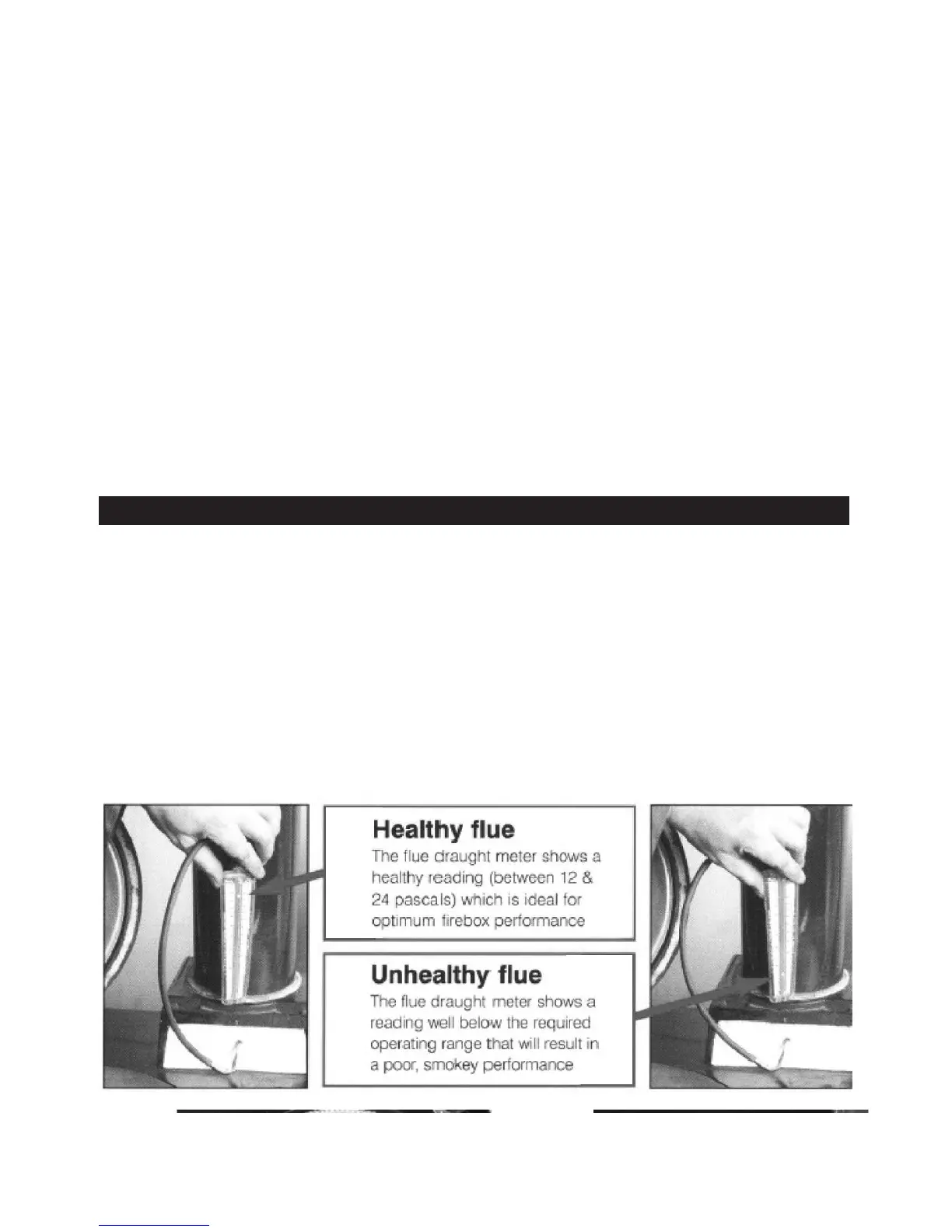
THE IMPORTANCE OF A HEALTHY FLUE
The successful operation of your range cooker is entirely dependent on the adequate performance (pull) of
the chimney or flue to which it is connected. The following maintenance guidelines will be pointless unless
the flue is also maintained and cleaned regularly. How often it needs cleaning will depend on the quality
and moisture content of the wood you burn but an annual clean is recommended. A partially blocked or
dirty flue can have disastrous implications for an otherwise perfectly installed cooker as can be seen below.
Cooker A has been used regularly for over a year following these maintenance guidelines and with a clean
flue drawing correctly. Cooker B was just 6 weeks old when the picture was taken and shows how quickly
tar deposits will build up if the flue performance is poor and clogged with old soot as it was in this case.
(N.B. Cooker shown for illustration is not a 990 CH)
Fig.3


 To Next Page