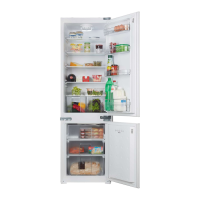
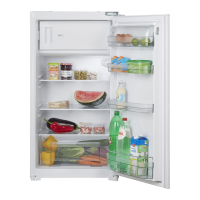
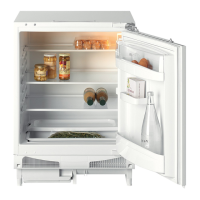
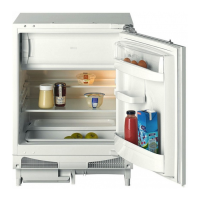
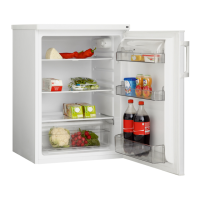
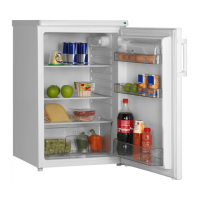
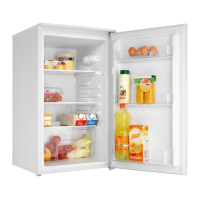
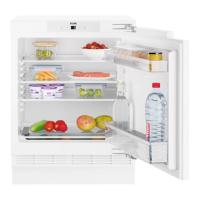
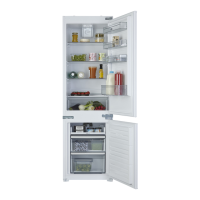
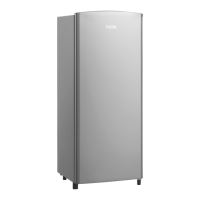
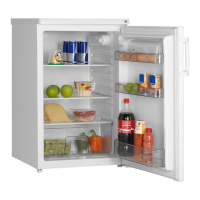
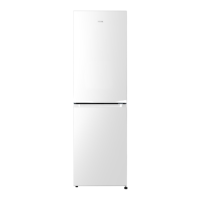
This document provides instructions for use of the ETNA Upright Refrigerator-Freezer models EEK263VA, AK2378DC, KCS50178, and KCD50178. The appliance is designed for household use, with the top section functioning as a refrigerator for storing fresh food above 0°C, and the bottom section as an upright freezer for freezing fresh food and storing frozen food for up to one year.
Function Description
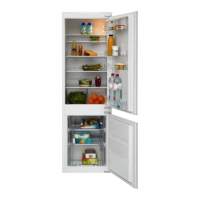
The appliance is a combined refrigerator-freezer unit. The refrigerator section is equipped with an interior light, control panel, adjustable glass shelves (including a pull-out glass shelf with adjustable height), a FreshZone pan, a vegetable crisp pan, refrigerator door pans (available in deep, shallow, covered, or uncovered options), and a door bottle rack. The freezer section includes storage compartments and freezing compartments.
The appliance features mechanical temperature regulation. To turn on the appliance, the thermostat knob is rotated clockwise towards position 7. To turn it off, the knob is rotated back to position STOP (0). Higher settings (towards 7) correspond to cooler temperatures. A medium setting is recommended for normal ambient temperatures. The appliance's cooling system will not operate when the knob is at STOP (0), but the interior light will still function when the door is opened.
The freezer includes a "super freeze" function, activated by setting the dial between positions 4 and 6, 24 hours before freezing fresh food. This helps to freeze food quickly. For smaller quantities (1-2 kg), this function is not always necessary.
Important Technical Specifications
The appliance operates best within specific ambient temperature ranges, categorized by class:
- SN (subnormal): from +10°C to +32°C
- N (normal): from +16°C to +32°C
- ST (subtropical): from +16°C to +38°C
- T (tropical): from +16°C to +43°C
The nominal voltage and frequency are indicated on the rating plate. The appliance can accommodate minor temporary voltage tolerances of -6% to +6%.
The maximum amount of fresh food that can be loaded into the freezer as a single load is specified on the rating plate. Overloading can reduce freezing quality.
Usage Features
Installation:
The appliance should be placed in a dry, well-aired room, away from direct sunlight or heat sources. If proximity to a heat source is unavoidable, an insulation plate should be installed. Sufficient space (200 cm² opening) for condenser cooling is required behind the appliance, and at least 5 cm above it if incorporated into a kitchen cabinet. The mains plug must be accessible after installation. Spacers installed on door corners or housing should be removed and replaced with attached spacer-plugs. After transport, the appliance should be left in an upright position for about 2 hours before connecting to the mains to prevent cooling system malfunctions.
Food Storage:
- Refrigerator: Food should be properly packed to prevent moisture and odor exchange. Inflammable, volatile, or explosive substances should never be stored. High-alcohol beverages should be stored in tightly sealed, vertical bottles. Certain organic solutions (e.g., volatile oils in lemon/orange peel, acids in butter) can damage plastic surfaces over time. Unpleasant odors indicate a need for cleaning or spoiled food.
- Recommended storage periods: Eggs, marinades, smoked meat, cheese (up to 10 days); carrots (up to 8 days); butter (up to 7 days); cake, fruit, TV-dinner dishes, raw meat chunks (up to 2 days); fish, raw minced meat, seafood (up to 1 day).
- FreshZone Compartment: This drawer is designed to keep fresh food longer by retaining flavor and nutrients, slowing decay and mass loss. For optimal performance, the drawer should be fully closed. Food should be fresh when purchased and stored in closed containers. Food sensitive to low temperatures (e.g., pineapple, avocado, bananas, potatoes, eggplant, cucumbers, melons, pumpkins) should not be stored here.
- Freezer: Only food suitable for freezing should be stored. Food should be of adequate quality and fresh, packed in airtight, well-sealed containers to prevent vitamin loss and dehydration. Packages should be marked with food type, amount, and loading date. Food should be frozen as quickly as possible, preferably cooled before loading.
- Recommended storage periods for frozen food: Fruit, beef (10-12 months); vegetables, veal, poultry (8-10 months); venison (6-8 months); pork (4-6 months); chopped meat (4 months); bread, pastry, TV-dinners, fat-free fish (3 months); intestines (2 months); smoked sausages, fat fish (1 month).
- Partially thawed or defrosted foods should be used immediately as cold air only preserves, it does not destroy microorganisms.
Energy Saving Tips:
- Observe installation instructions.
- Avoid frequent door opening.
- Ensure free air circulation behind the appliance.
- Keep the condenser unit clean.
- Replace damaged or loose door seals.
- Store food in closed containers.
- Cool food to room temperature before refrigerating.
- Defrost frozen food in the refrigerator compartment.
- Remove freezer drawers for maximum capacity when needed.
- Defrost conventional freezers when frost is 3-5 mm thick.
- Ensure shelves are evenly distributed and food arrangement allows air circulation.
- Do not block fan slots in appliances with a fan.
Maintenance Features
Defrosting:
- Refrigerator (Automatic Defrosting): Ice on the inner back wall defrosts automatically. Condensed water drains into a pan above the compressor and evaporates. If excessive ice (3-5 mm thick) forms, switch off the appliance and thaw manually.
- Classical Freezer: Defrost when the frost layer reaches 3-5 mm. 24 hours before defrosting, activate the fast freeze function to additionally freeze food. Remove food and protect it from thawing. Switch off the appliance, unplug it, and place an absorbent cloth to collect defrost water. Never use powered appliances (e.g., hair dryer) or defrosting sprays. Clean and dry the interior before reloading food.
- NO FROST Freezer: Defrosting is automatic. Ice/frost buildup may occur due to abnormal use (frequent/long door opening, improper closing). In such cases, unplug the appliance, remove food, clean and dry the interior, then switch on and select desired settings before returning food.
Cleaning:
- Always disconnect the appliance from the mains before cleaning or replacing the light bulb.
- Exterior: Clean with water and liquid detergent. Do not use abrasive or aggressive agents on plastic or coated surfaces. Clean coated/aluminum surfaces with a soft cloth and alcohol-based cleaner (e.g., glass cleaner).
- Interior: Wash with liquid detergent, lukewarm water, and a little vinegar.
- Containers, shelves, drawers with metallic appearance: Not dishwasher safe; clean with dissolved liquid detergent and a soft cloth without rubbing.
- Drain Outlet: The groove and drain outlet under the cooling panel must be kept clear of food particles. Inspect and clean periodically (use a plastic straw for the outlet hole).
- Condenser: The condenser on the rear wall must be kept clean and free of dust. Clean periodically with a non-metallic brush or vacuum cleaner.
- Drip Pan: Clean the drip pan above the compressor. Ensure it is replaced in a completely horizontal position.
- Remove ice/frost deposits exceeding 3-5 mm (except for NO FROST models) as they increase energy consumption. Do not use sharp objects, solvents, or sprays.
- After cleaning, switch on the appliance and reload food.
Bulb Replacement:
- Disconnect the appliance from the power supply.
- Insert a screwdriver into the cover slot, lift, and remove the cover.
- Replace the bulb with an equivalent new bulb (original replacement from the supplier).
- Replace the cover.
- Note: Light bulbs are consumption material and not covered by warranty. Lamps used are special purpose lamps for household appliances only, not suitable for room illumination.
Troubleshooting:
A troubleshooting guide is provided for common issues such as the appliance not operating, continuous cooling, excessive ice formation, water dripping, and difficult door opening. If issues persist, contact a service center with the appliance's type, model, and serial number.
Noise Level:
The refrigeration system with a compressor (and fan in some models) produces noise. This noise level depends on location, correct use, and appliance age. Initial operation may be louder but should subside. Unusual or stronger noise can result from inadequate positioning (not level, touching walls/cabinets) or improperly placed interior accessories (bottles, tins rattling). Ensure the appliance is placed firmly and level, and accessories are correctly positioned.
The manufacturer reserves the right to alter specifications without impacting functional operation. The product complies with applicable European Directives, Decisions, and Regulations.


 To Next Page
 General