1
1.0 FOREWORD
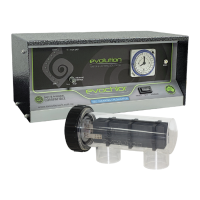
1.1 Congratulations on purchasing an Evolution Evochlor Saltwater Chlorinator for your
swimming pool. This system is designed for robust reliability and easy operation to provide
many years of trouble-free service. Please read the instructions thoroughly before operating
the unit. If you have any concerns or require further assistance, please do not hesitate to
contact our friendly staff or any of our Evolution distributors.
2.0 POOL CHEMISTRY
2.1 It is important to note that the Evochlor Chlorinator does not maintain the water chemistry
of the swimming pool water; it simply produces chlorine from a mild salt solution. To ensure
that the water is chemically balanced within the guidelines listed below, the pool water
should be tested regularly at a pool shop to maintain a sparkling and healthy pool.
pH 7.2 – 7.6
Total Alkalinity 90 – 150ppm
Cyanuric Acid 40 – 65ppm
Salt 4,000ppm
Chlorine 1.5 – 2.0ppm
2.2 The Evochlor Chlorinator is designed to operate on a salt level of 4,000 parts per million
(ppm). This is easily achieved by using the formula below, or approximately 20kg of salt for
every 5,000 litres.
For example:
Pool volume = Length x Width x Average Depth x 1000
= 9m x 4m x 1.5m x 1000
= 54000 litres
Salt required = Pool Volume x 4 (salt level required, 4000ppm)
1000
= 54000 x 4
1000
= 216kg
Or 11 x 20kg bags of pool salt
2.3 NB: Before adding salt to the swimming pool, please ensure the Evochlor Chlorinator is
switched off to avoid overload damage. FAILURE TO DO SO MAY VOID WARRANTY.
2.4 It is recommended to manually add chlorine to the swimming pool on initial startup as a
saltwater chlorinator is designed to maintain chlorine levels and not run for unnecessary
long hours to try to build an acceptable chlorine level. The manual addition of chlorine may
also be required for unforeseen situations where the swimming pool has a high chlorine
demand, for example, after a large bather load.


 To Next Page
 Loading...