Max300-LG : Description - Specifications - Installation Guide
Extrel
Core Mass Spectrometers
Page 20
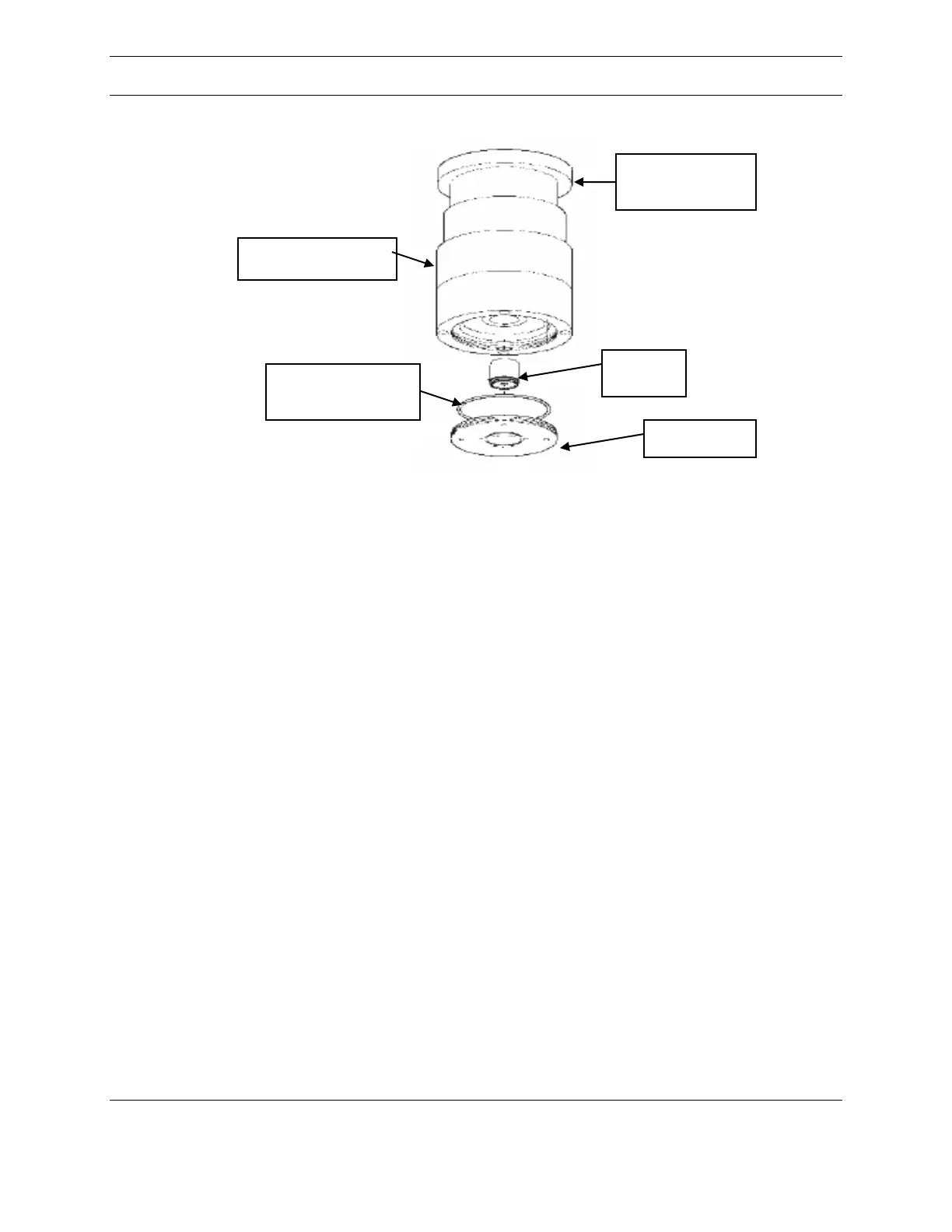
Figure 11: Turbo Pump
The lubricating oil for the pump is contained in an absorbent felt cup oil wick mounted in
a plastic housing fitted into the bottom of the pump. The housing has a groove near the
exposed end that can be used to pry it out of its recess. A small screwdriver is most often
used for this procedure. When removing the oil wick, do not touch anything inside the
turbo pump. Once the old oil reservoir is removed, wipe the old lubricant from the pump
with a lint free cloth.
When inserting the new oil wick, take extreme care to not push it too far into the pump.
This can result in pump failure. Insert the new oil wick into the bottom of the pump by
seating it on the plastic plate until it is held in place by its O-ring. The lubricant reservoir
is pre filled with the correct type and amount of oil. Do not add additional lubricant.
Screw the plastic plate back into the pump bottom. To avoid crossed threads, initially
rotate this plate counter clockwise until a click is felt, and then reverse direction. If the
plastic bottom is not properly seated, a leak could occur and result in pump failure.
For additional information or recommendations, please contact Pfeiffer directly.
The chamber is held in position by two captive spring loaded pins that engage the inner
side of the right and left chamber flanges. Pulling these ~3/8 inch (10mm) towards the
center of the chamber will allow the turbo pump to be rotated forward and upward. When
the turbo pump is in the horizontal position the spring loaded pins will latch it in position.



 To Next Page