021519
MCS30 Rev B
5
4.0 Installaon and Use
4.1 General Rescue Requirements: The equipment specied in this manual is designed to work as part of a system to help facilitate non-entry
rescue and entry rescue from conned spaces.
Conned spaces vary in size, shape, conguraon, and hazard. The equipment/device(s) detailed in this manual may not be suitable
for use during some permit-required conned space entries. Hazards such as entanglement, electric arc, engulfment, and general li
obstrucons may interfere with safe rescue and cause greater harm to the entrant.
All conned space entries should be planned whenever possible in such a manner that any foreseeable hazard is migated and non-entry
rescue can be facilitated.
In the case that non-entry rescue is not feasible, a rescue plan must be in place that provides rescuers with knowledge about the specic
conned space hazards they may encounter during a rescue, training on appropriate rescue methods for the conned space they will be
entering, and the correct equipment and PPE to perform the entry rescue. Please reference OSHA code CFR 1926.1211 and ANSI
Z117.1-2016 for further details on employer responsibilies in preparing for both entry and non-entry rescue.
4.2 System Conguraons for Non-Entry Rescue Methods: When entering a permit-required conned space, non-entry rescue is required
unless retrieval equipment would increase the overall risk of entry or would not contribute to the rescue of the worker. Mechanical
devices must be available to retrieve personnel from vercal type permit spaces more than 5 feet deep. When using mechanical devices
for non-entry rescue, consideraon must be given to the means of entry/egress, the migaon of fall hazards and the method of
emergency retrieval.
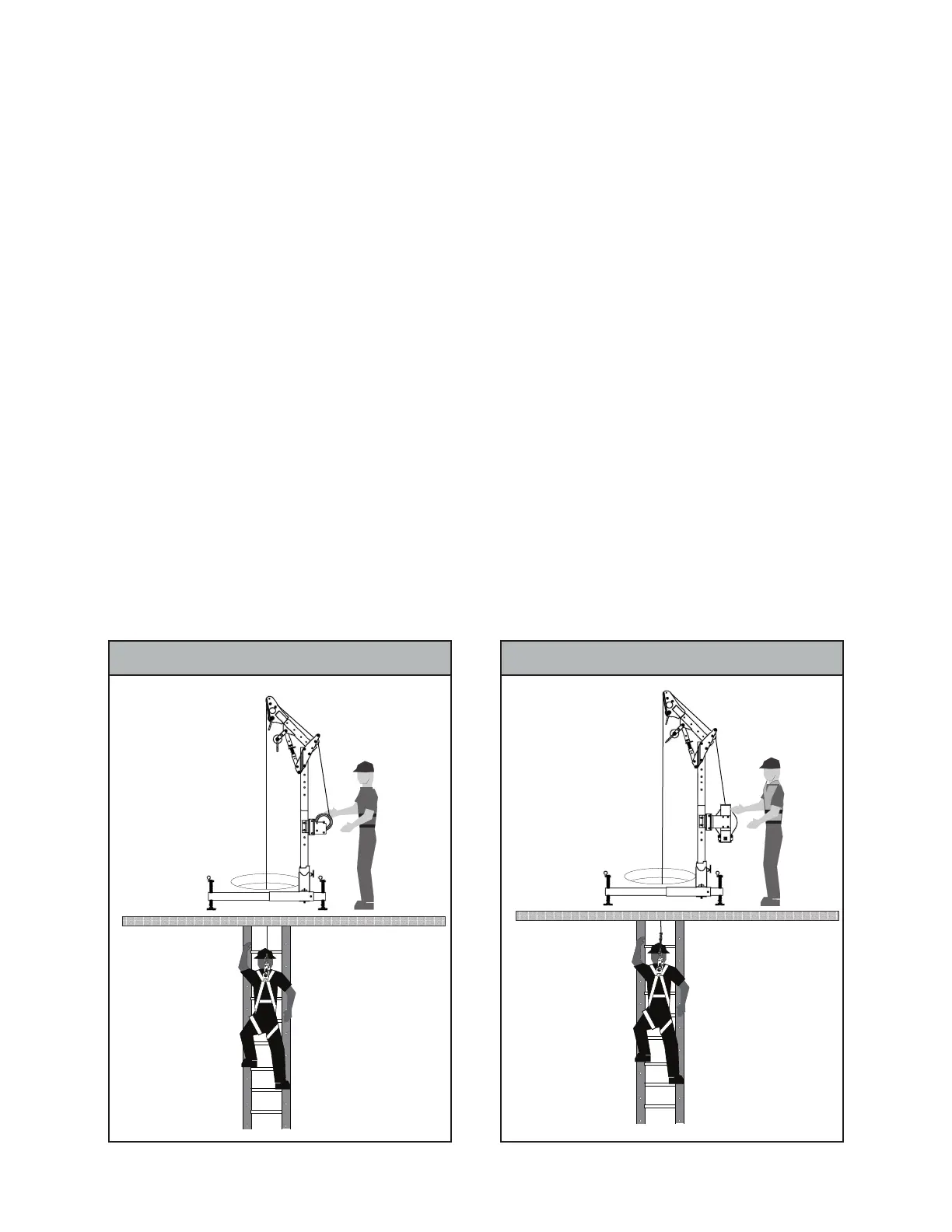
4.2.1 Single Line – Winch Only – Entry/Egress Using Ladder
When a single mechanical device is used for non-entry rescue into a conned space it serves only as backup to the worker’s primary
entry/egress method. In most cases the primary means of entry/egress into a vercal conned space is a ladder. When using only a
winch as the backup to the entrant’s primary means of entry and egress, the aendant should take care to keep the winch line taut to
avoid any potenal overload due to a fall event on the winch line. The winch is not a fall arrest device and must not be subjected to fall
forces. The winch is for emergency retrieval only. See Figure 2.
4.2.2 Single Line – 3-Way Only – Entry/Egress Using ladder
When a single mechanical device is used for non-entry rescue into a conned space it serves only as backup to the worker’s primary
entry/egress method. In most cases the primary means of entry/egress into a vercal conned space is a ladder. When using an SRL-R
only as a back up to the worker’s primary means of entry and egress the device cable will pay freely in and out of the housing as
the entrant moves into the vercal conned space. In the event the entrant falls the SRL-R will arrest the fall and reduce fall forces
applied to the body. The aendant may then engage the backup emergency retrieval winch to raise the entrant out of the conned
space. The emergency retrieval winch is not to be used for ordinary entry/egress in and out of the conned space. See Figure 3.
Figure 2 - Single Line Winch Only – Entry/Egress Using Ladder
Figure 3 - Single Line 3-Way Only – Entry/Egress using ladder


 To Next Page
 Loading...