18
MAINTENANCE
Before cleaning or carrying out maintenance operations, disconnect the equipment by removing the plug or switching o the
main switch.
Regular maintenance guarantees proper operation and good performance over time.
Special attention is to be paid to the metal anti-grease lters and active carbon lters. In fact, frequent cleaning of the lters and their supports
ensures that no grease is accumulated on the hood, which is dangerous and can cause res.
EXTERNAL CLEANING
You are advised to clean the external surfaces of the hood at least once every 15 days to prevent oily substances and grease from sticking to them.
To clean the brushed stainless steel hood, the Manufacturer recommends using "Magic Steel" wipes. Alternatively, it can be cleaned using a damp
cloth, slightly moistened with neutral, liquid detergent or denatured alcohol. Finish o cleaning by rinsing well and drying with soft cloths.
Do not use too much water next to the push button control panel and lighting devices in order to prevent humidity from reach-
ing electronic parts. You must not use detergents containing abrasive, acid or corrosive substances or abrasive cloths: a direct
consequence of not complying with these warnings will result in irreversible deterioration of the hood's surface.
The Manufacturer declines all responsibility for failure to comply with these instructions.
CLEANING OF INTERNAL PARTS
It is forbidden to clean electrical parts, or parts related to the motor inside the hood, with liquids or solvents.
Do not use abrasive products.
All these operations are to be carried out after having disconnected the equipment from the electrical mains power supply.
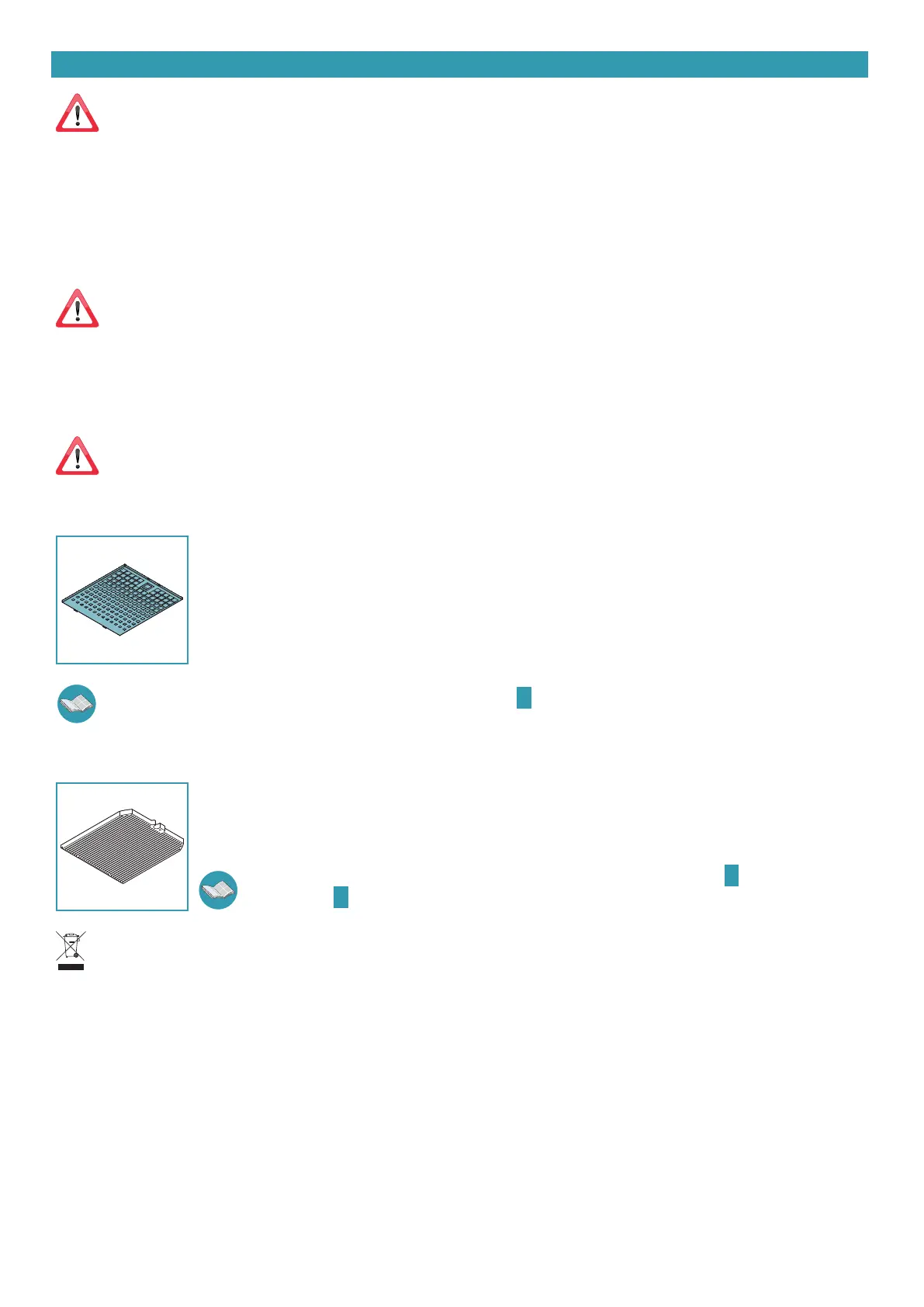
METAL ANTIGREASE FILTERS
The metal anti-grease lters are there to contain suspended grease particles: deposited on the lters, these feed on any
ames released when cooking, generate unpleasant odours, and compromise the passage of air, thus reducing suction
performance of the hood. For this reason, it is advised to frequently wash the metal lters (at least once a month) leav-
ing them to soak in boiling water and dish washing liquid for 1 hour, taking care not to bend them. Do not use corrosive,
acid or alkaline detergents. Rinse them well and wait for them to be completely dry before reassembling them.
Washing in a dishwasher is permitted, however, it may cause the lter material to darken: to reduce the possibility of this
problem from happening, use low-temperature washes (55°C max.).
Use the handle to take out the metal anti-grease lters (see instructions G on page 6). Carry out operations in reverse order to insert
them.
ACTIVE CARBON FILTERS
Active carbon lters have the function of retaining odours in the air ow passing through them. The air, puried by running
many times through the lter, is recirculated into the kitchen.
Active carbon lters cannot be washed and are to be immediately replaced every 3-4 months (depending on the fre-
quency of use of the hood).
Dispose of the active carbon lters in compliance with the regulations in force in the country of use.
To change active carbon lters, take out the metal anti-grease lters (see instructions G on page 6) and follow
the instructions
H on page 6.
DISPOSAL AFTER END OF USEFUL LIFE
The crossed-out wheeled bin symbol on the appliance means that the product is WEEE, i.e. "waste electrical and electronic equipment", according-
ly it must not be thrown out with unsorted waste (i.e. with "mixed household waste"), but it must be disposed of separately so that it can undergo
specic operations for its re-use, or a specic treatment, to remove and safely dispose of any substances that may be harmful to the environment
and remove the raw materials that can be recycled. Correct disposal of this product contributes to saving precious resources and avoiding potential
negative eects on human health and the environment, which could be caused by inappropriate waste disposal. You are kindly asked to contact
your local authorities for further information regarding the designated waste collection points nearest to you. Penalties for improper disposal of such
waste can be applied in compliance with national regulations.
INFORMATION ON DISPOSAL IN EUROPEAN UNION COUNTRIES
The EU WEEE Directive was implemented dierently in each country, accordingly, if you wish to dispose of this appliance we suggest contacting
your local authorities or dealer to nd out what the correct method of disposal is.
INFORMATION ON DISPOSAL IN NONEUROPEAN UNION COUNTRIES
The crossed-out wheeled bin symbol is only valid in the European Union: if you wish to dispose of this appliance in other countries, we suggest
contacting your local authorities or dealer to nd out what the correct method of disposal is.


 To Next Page