
 Need help?
Do you have a question about the Fender Deluxe 90 and is the answer not in the manual?
Details on part number, voltage, and power output.
Covers preamp input, fuse, speaker, footswitch, and dimensions.
Schematic diagram illustrating the combined PCB layout and signal flow.
Record of changes and updates made to the service manual.
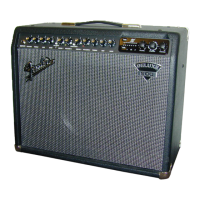
The Fender Deluxe 90 is a versatile amplifier designed for musicians seeking a powerful and feature-rich sound experience. This service manual provides comprehensive information for qualified technicians to maintain and repair the device, ensuring its longevity and optimal performance.
The Deluxe 90 is a guitar amplifier that processes and amplifies audio signals from an electric guitar or other instruments. It features both a preamp and a power amp section, allowing for a wide range of tonal shaping and volume control. The preamp section is responsible for shaping the instrument's tone, offering various controls to dial in desired sounds, from clean and crisp to overdriven and distorted. The power amp section then boosts this shaped signal to a level suitable for driving a speaker, producing the final audible output.
A key feature of the Deluxe 90 is its dual-channel design, which allows musicians to switch between different tonal settings instantly. This is particularly useful for live performances, where quick transitions between clean rhythms and distorted leads are often required. The amplifier also incorporates a reverb effect, adding depth and spaciousness to the sound, a common and highly valued effect in guitar amplification.
The amplifier's output is delivered through a single 12-inch Celestion G12T-100 speaker, known for its robust sound and ability to handle high power. This speaker is carefully chosen to complement the amplifier's tonal characteristics, providing a balanced and articulate sound reproduction.
The Deluxe 90 offers a user-friendly interface with clearly labeled controls for intuitive operation. The front panel includes dedicated controls for each channel, typically encompassing volume, treble, mid, and bass, allowing for precise equalization and tone sculpting. The presence of separate controls for "drive" and "more drive" suggests a progressive gain structure, enabling players to achieve subtle crunch or heavy distortion.
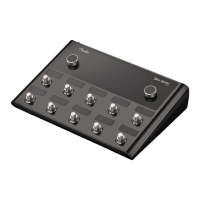
A two-button footswitch is included, enhancing the amplifier's usability during live performances. This footswitch allows for remote control of channel selection and the "drive/more drive" function, freeing the musician's hands to play. This hands-free operation is crucial for dynamic performances, enabling seamless transitions between different soundscapes.
The amplifier is designed for various power requirements, with different versions available for 100V, 120V, 230V, and 240V electrical systems, catering to a global audience. This ensures compatibility and safe operation regardless of the regional power supply. The inclusion of an IEC snap-in connector for the power cord further simplifies setup and ensures a secure connection.
The service manual emphasizes the importance of using Fender-specified part numbers for all repairs, both under warranty and for post-warranty maintenance. This ensures the reliability and safety of the amplifier, as substitute parts may compromise performance or introduce hazards. Parts marked with an asterisk (*) are particularly critical for reliability and safety, and their replacement with non-specified alternatives is strictly prohibited.
The manual provides a detailed parts list, including printed circuit board (PCB) assembly components, chassis assembly parts, and cabinet assembly components. This comprehensive listing, along with reference designations, allows technicians to identify and order the correct parts for any repair. The coded naming convention for capacitors and resistors, such as "CAP AE" for Aluminum Electrolytic and "RES CF" for Carbon Film, simplifies part identification and understanding of their characteristics.
Detailed service diagrams and assembly drawings are included, offering a visual guide for troubleshooting and repair. These diagrams illustrate the internal layout of the amplifier, the connections between various components, and the assembly process, making it easier for technicians to diagnose issues and perform accurate repairs. The manual also provides information on specific hardware, such as different types of screws and washers, ensuring that all components are correctly reassembled.
Special instructions, such as applying thermal grease to the heatsink during installation, highlight critical steps for proper assembly and long-term performance. The emphasis on proper wire/cable connections, referencing specific service diagrams, underscores the importance of correct wiring for the amplifier's functionality and safety. The manual also notes that samples of first parts must be approved by Fender R&D before production begins, indicating a commitment to quality control and design integrity.
 General
| Power Output | 90 Watts |
|---|---|
| Channels | 2 (Clean and Drive) |
| Reverb | Yes |
| Type | Solid State |
| Speaker | 1x12" Fender Special Design Speaker |
| Effects | Chorus |
| Inputs | 1 x 1/4" |
| Outputs | 1 x 1/4" (Headphone/Line Out) |
| Controls | Volume, Treble, Mid, Bass, Reverb |
| Footswitch | Optional (Channel Switching) |
| Weight | Approximately 40 lbs (18.1 kg) |




 To Next Page