27
© Ferno-Washington, Inc 234-3396-00 January 2011
KED® Pro Adapting the KED® Pro
6.3 Adapting the KED® Pro for a
Pediatric Patient
The patient’s size and condition determine how the KED
®
Pro can be adapted for a child.
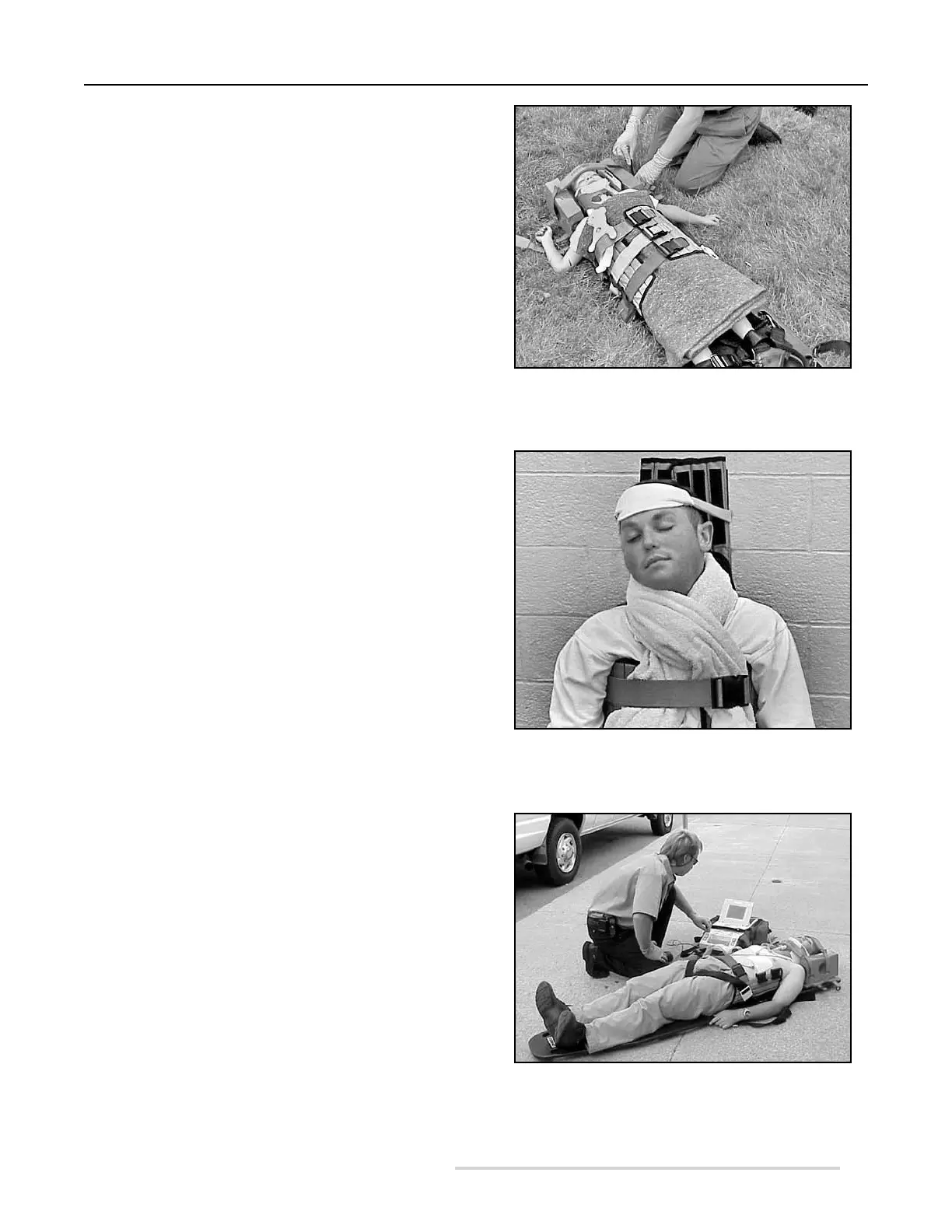
In this example of one possible method, the child’s legs are
longer than the KED
®
Pro so the KED
®
Pro and child are
placed on a long spine board.
Afoldedblanketisplacedonthechildtollthegapsothe
torsoapscanbewrappedandfastenednormally(Figure51).
6.4 Adapting KED® Pro for an
Angulated Neck
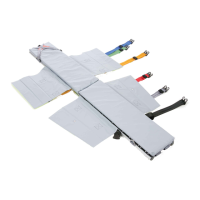
When it is not desirable to straighten the patient’s neck, fold
theheadapsinward.Positionarolledtowelasneeded,then
place a head strap across the patient’s forehead and secure
the strap to the KED® Pro fastening strips (Figure 52).
6.5 Adapting the KED® Pro for Use
With Monitoring Systems
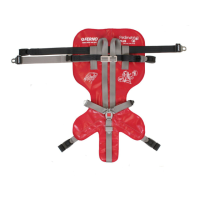
Foldingtwoslatsofeachtorsoapinwardprovidesmore
chest exposure when needed. Loosening two of the three
cheststrapsallowsdebrillationwithoutlosingimmobility
(Figure 53).
Figure 51 - Adapting for a Child
Figure 52 - Adapting for an Angulated Neck
Figure 53 - Adapting for
A Monitoring System


 To Next Page