Need help?
Do you have a question about the Fire-Lite Alarms MS-2 and is the answer not in the manual?
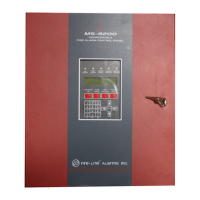
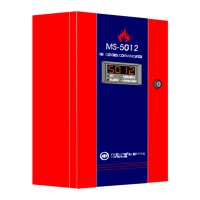
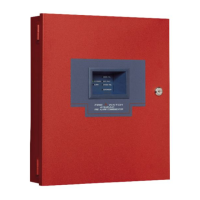
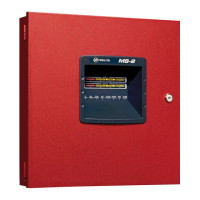
Details the Fire Lite MS-2 and MS-2E Fire Alarm Control Panels, highlighting microprocessor technology and compatibility.
Outlines core features including IDC/NAC configurations, voltage, and advanced j3TM technology for detector management.
Explains the panel's ability to synchronize audible signals and ADA compliant strobes as per NFPA 72 standards.
Lists programmable options for Notification Appliance Circuits (NACs), including silence inhibit, auto silence, and strobe synchronization.
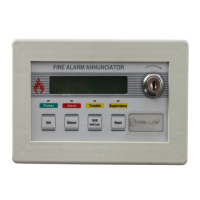
Lists and describes the function of control buttons on the FACP, such as ACK, Alarm Silence, Reset, and Walk Test.
Details the various LED indicators on the FACP for Fire Alarm, Supervisory, Trouble, Maintenance, AC Power, and NAC status.
Describes how initiating devices activate signaling devices, LEDs, and relays on the Fire Alarm Control Panel.
Provides AC power input requirements for the MS-2 and MS-2E models, including voltage, frequency, and current.
Details specifications for the sealed lead-acid battery, including charging circuit voltage, current, and capacity.
Specifies the characteristics of the initiating device circuits, including zones, power, operation, voltage, and current.
Outlines the specifications for Notification Appliance Circuits, including power, signaling current, and end-of-line resistors.
Details the specifications for Form-C Alarm and Trouble relays and the resettable power auxiliary output.
Provides the physical dimensions for the FACP door and backbox, and describes surface mounting procedures.
The Fire-Lite MS-2 and MS-2E Fire Alarm Control Panels represent a significant advancement in conventional fire control technology, integrating the latest microprocessor capabilities. These panels are designed to be compatible with System Sensor's i3™ smoke detectors, offering a suite of advanced features that enhance reliability and reduce false alarms.
The primary function of the MS-2 and MS-2E panels is to monitor initiating device circuits (IDCs) for fire conditions and activate notification appliance circuits (NACs) in response. When a compatible smoke detector or any normally-open fire alarm initiating device (such as a pull station, waterflow device, or tamper switch) activates, the panel initiates a series of responses. These include activating audible and visual signaling devices, illuminating an indicating LED on the panel, sounding an internal piezo sounder, and activating the FACP alarm relay. Additionally, the panel can operate an optional module to notify a remote station or initiate an auxiliary control function.
The MS-2 is equipped with two Style B (Class B) IDCs, allowing for the connection of various initiating devices. It also features one Style Y (Class B) NAC for connecting notification appliances. The panel operates on 24 VDC. For installations requiring 240 VAC operation, the MS-2E model is available.
A key feature of these panels is their advanced NAC synchronization capabilities. They provide synchronization for standard ANSI audible signals, as required by NFPA 72, and for ADA-compliant strobes. This ensures that all notification appliances operate in a coordinated manner. The panels offer selectable synchronization protocols for System Sensor, Wheelock, and Gentex devices, providing flexibility in system design. A unique "Selective Silence" feature allows for the manual silencing of horns while strobes continue to flash on the same NAC, using only a single pair of wires.
The MS-2 also includes "Silent or Audible Walk Test" operation mode, which can be commanded from the front keypad. This mode automatically returns to normal operation after one hour of inactivity, simplifying system testing. Alarm verification is selectable per zone, allowing for customization based on specific application requirements. Each zone can be programmed for either supervisory or fire conditions, with separate red and yellow LEDs to indicate their status. Disable switches are provided per zone, offering granular control over individual circuits.
The NACs are highly programmable, offering options such as Silence Inhibit, Auto Silence, Strobe Synchronization, Selective Silence (horn-strobe mute), Temporal or Steady signal, and selection between Silenceable or Nonsilenceable operation. The panel also includes Form-C Alarm and Trouble relays for external interfacing and a resettable power output for powering four-wire smoke detectors.
The MS-2 and MS-2E panels are designed for ease of use and flexibility in various conventional fire alarm applications. The front panel features a set of control buttons for common operations: ACK (Acknowledge), Alarm Silence, Reset, Walk Test, and Zone Enable/Disable (one per zone). These buttons provide intuitive control over the system's functions.
A comprehensive set of LED indicators on the front panel provides immediate visual feedback on the system's status. These include LEDs for Fire Alarm (one per zone), Supervisory (one per zone), Trouble (one per zone), Maintenance (one per zone), AC Power, NAC Disable, Zone Disable, NAC Fault, System Trouble, Power Trouble, Walk Test, Alarm Silence, Earth Fault (on circuit board), Battery Fault (on circuit board), and Charger Fault (on circuit board). This detailed status indication helps operators quickly identify and address any issues.
The internal piezo sounder provides audible alerts for alarm, trouble, supervisory, and maintenance conditions, ensuring that operators are promptly notified of any changes in system status.
The MS-2 and MS-2E panels incorporate advanced i3™ Technology features that significantly enhance system reliability and simplify maintenance. These features are primarily focused on the intelligent management of smoke detectors:
These maintenance-focused features collectively contribute to a more reliable fire alarm system with reduced operational costs and simplified upkeep, ensuring that the system remains in optimal working condition with minimal intervention.
 General
| Type | Conventional Fire Alarm Control Panel |
|---|---|
| Zones | 2 |
| NACs | 2 |
| Total System Current | 3.0 A |
| Operating Voltage | 24 VDC |
| Battery Charging Current | 1.0 A |
| Operating Temperature | 32°F to 120°F (0°C to 49°C) |
| Relative Humidity | 10% to 93% non-condensing |
| Power Supply | 120 VAC, 60 Hz |
| Dimensions | 3.5" |

 To Next Page