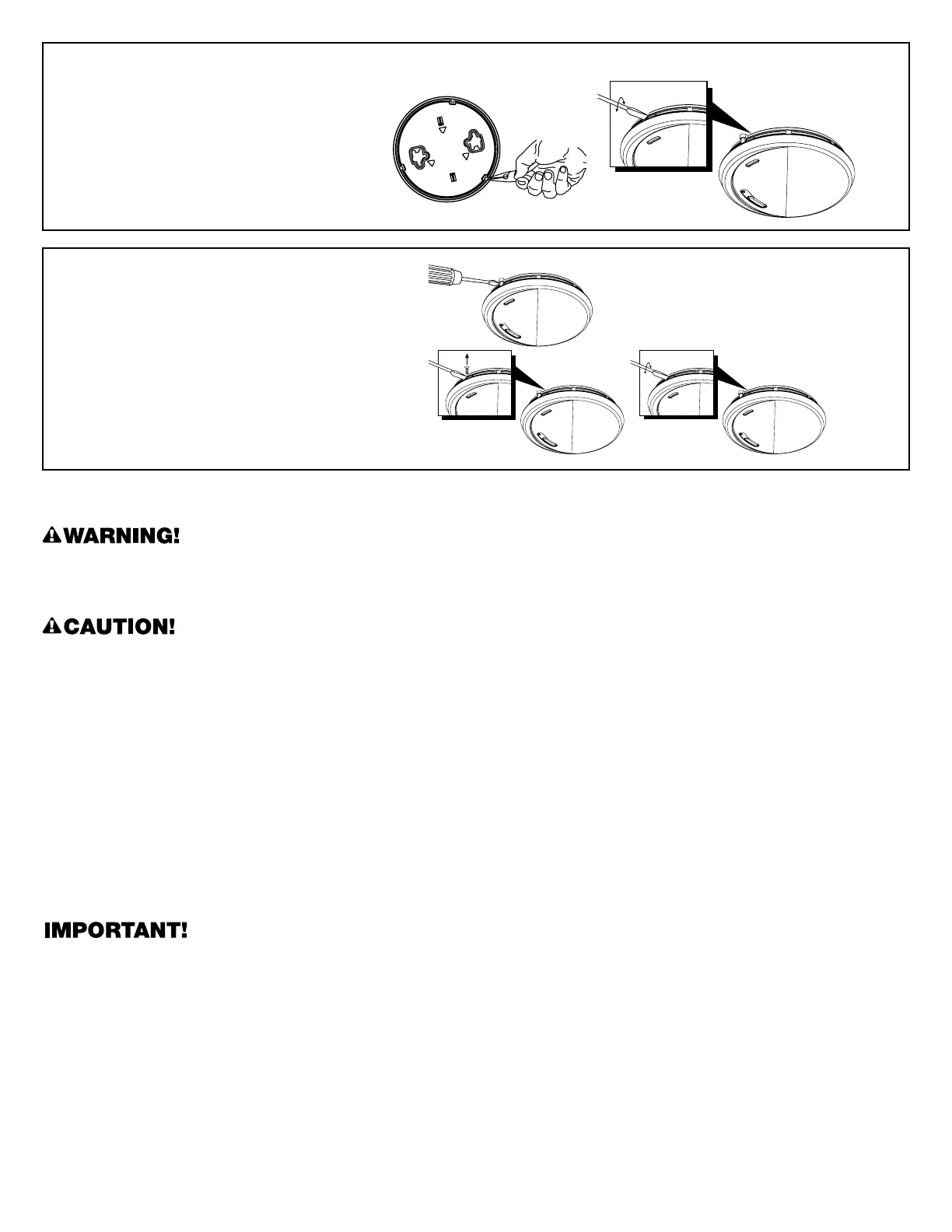
TO LOCK THE MOUNTING BRACKET
1.
Using needle-nose pliers, detach the
pin from the mounting bracket.
2.
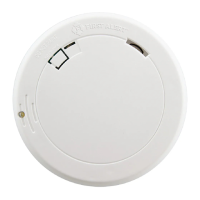
Insert the locking pin through the hole on the back
of the smoke alarm as shown in the diagram.
3.
When you attach the alarm to the mounting bracket the
locking pin’s head will fit into a notch on the bracket.
TO UNLOCK THE
MOUNTING BRACKET
1.
Insert a flathead screwdriver in between the
mounting bracket and the locking pin.
2.
Pry the alarm away from the bracket by pushing
up the screwdriver and turning the alarm
counterclockwise (left) at the same time.
WEEKLY TESTING
•
NEVER use an open flame of any kind to test this unit. You might accidentally damage or set fire to the unit or to your home. The built-in test switch accurately tests the
unit’s operation as required by Underwriters Laboratories, Inc. (UL). NEVER use vehicle exhaust! Exhaust may cause permanent damage and voids your warranty.
•
DO NOT stand close to the alarm when the horn is sounding. Exposure at close range may be harmful to your hearing. When testing, step away when horn starts sounding.
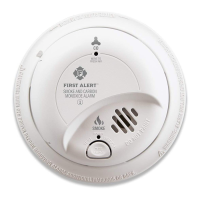
It is important to test this unit every week to make sure it is working properly. Using the test button is the recommended way to test this Smoke/CO Alarm.
You can test this Smoke/CO Alarm: Press and hold the Test/Silence button 3-5 seconds until unit starts to alarm. During testing, you will see and hear the following sequence:
•
The Horn will sound 3 beeps, pause, 3 beeps. The LED flashes Red.
•
Next the Horn will sound 4 beeps, pause, 4 beeps. The LED flashes Red.
If the unit does not alarm, make sure the batteries are correctly installed, and test again. If the unit still does not alarm, replace it immediately.
REGULAR MAINTENANCE
This unit has been designed to be as maintenance free as possible, but there are a few simple things you must do to keep it working properly.
•
Test it at least once a week.
•
Clean the Smoke/CO Alarm at least once a month; gently vacuum the outside of the Smoke/CO Alarm using your household vacuum’s
soft brush attachment. A can of clean compressed air (sold at computer or office supply stores) may also be used. Follow manufacturer
instructions for use. Test the Smoke/CO Alarm. Never use water, cleaners or solvents since they may damage the unit.
•
If the Smoke/CO Alarm becomes contaminated by excessive dirt, dust and/or grime, and cannot be cleaned to avoid unwanted alarms, replace the unit immediately.
•
Relocate the unit if it sounds frequent unwanted alarms. See “Where This Alarm Should Not Be Installed” for details.
Actual battery service life depends on the Smoke/CO Alarm and the environment in which it is installed. All the batteries specified above are acceptable replacement batteries for
this unit. Regardless of the manufacturer’s suggested battery life, you MUST replace the battery immediately once the unit starts “chirping” (the “low battery warning”).



 To Next Page