SECTION 3
Unit description & features
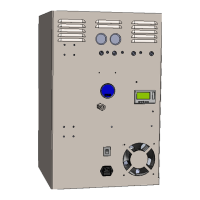
The Nitro-Draught blend gas dispense system extracts nitrogen (N
2
) from ambient air, blends it with
carbon dioxide (CO
2
) and supplies the mixed gas to a draught beer system. As a component of a
properly designed and maintained draught system, the Nitro-Draught assures brewery quality
beverage presentation while it eliminates excessive foaming and wasted beer.
The Nitro-Draught system uses proven Pressure Swing Adsorption (PSA) technology with Carbon
Molecular Sieve (CMS) to separate N
2
from the atmosphere and store it at a purity level of at least
99.8%. It uses a mechanical blender to combine the N
2
with CO
2
from another storage vessel into
CO
2
/ N
2
“beer gas” blend ratios, commonly two blends are used, 25% / 75% and 70% / 30%. Blends
can be customized for any application. Pure nitrogen can be withdrawn directly from the storage tank
to use in inert wine dispense equipment.
While in Production Mode, the internal air compressor will cycle on and off on approximately two
minute cycles. Each compression cycle will be followed by an exhaust cycle. At the start of the
exhaust cycle, an audible release of internal air pressure will occur. This compress-exhaust
alternating cycle will continue until the unit fully pressurizes the storage tank. At that point the unit will
move into Economy Mode, and power down all internal components after a few minutes. The Nitro-
Draught will enter into Economy Mode at “Switch Off” tank pressure and then return to Production
Mode when the tank pressure drops to “Switch On” pressure (see section 3.1 Technical
Specifications for settings), as nitrogen is used.
This manual contains the information necessary for the correct use of the Nitro-Draught. Should any
questions arise regarding safe and proper installation, operation or maintenance of the Nitro-Draught
system, contact the supplier before proceeding.
Warning: Ensure that all personnel involved in the installation,
operation and maintenance of the Nitro-Draught system, as well
as those persons who will act as supervisory personnel, have read
and fully understand the instructions before attempting to install,
operate or perform maintenance on the unit.


 To Next Page