— 35 —
Tent Camper Owner’s Manual
•Keeptheservicevalvesonanemptytankclosed.
•Iffreezingdoesoccur,haveyourLPdealerpurgetheLPtankbeforerelling.
•AddanhydrousmethanolorotherapprovedLPantifreezeorde-icingagenttotheLPtank.
•Keeptheregulatorcoveredatalltimes.
If freeze up does occur, NEVER attempt to thaw with an open ame. A small light bulb can sometimes be used to
provide heat and aid the thawing process. Once thawed, take proper steps to prevent a reoccurrence. Have the sys-
tem checked by your LP supplier to determine the source of moisture and correct the problem.
OTher COLd weaTher faCTOrs:
Since the colder liquid LP in the tank requires heat from the surrounding air to vaporize, remember that as outside
temperatures drop, the BTU value of the LP gas is lessened. e lowering of BTU value can signicantly aect the
performance of the system.
You can help ensure proper performance by keeping your LP tanks as full as possible in cold weather, and reviewing
the BTU/hr., rating plates on LP appliances for proper LP management.
Lp sysTem hOses and fiTTings
e LP hose provided with your camper is designed to withstand pressures far exceeding those of the LP system.
However, sunlight and ozone contribute to the deterioration of the hose, creating the need for frequent inspection
of the hose for wear.
e average life of an LP hose is approximately 2 to 3 years. Inspect the hose before each camping season, and when
having the tank lled. Look for signs of deterioration such as cracks or loss of exibility. Protect the hose from the
direct rays of the sun, if possible, to help slow down the aging process. When the hose is replaced, always replace it
with a hose of the same type and rating (check with your dealer).
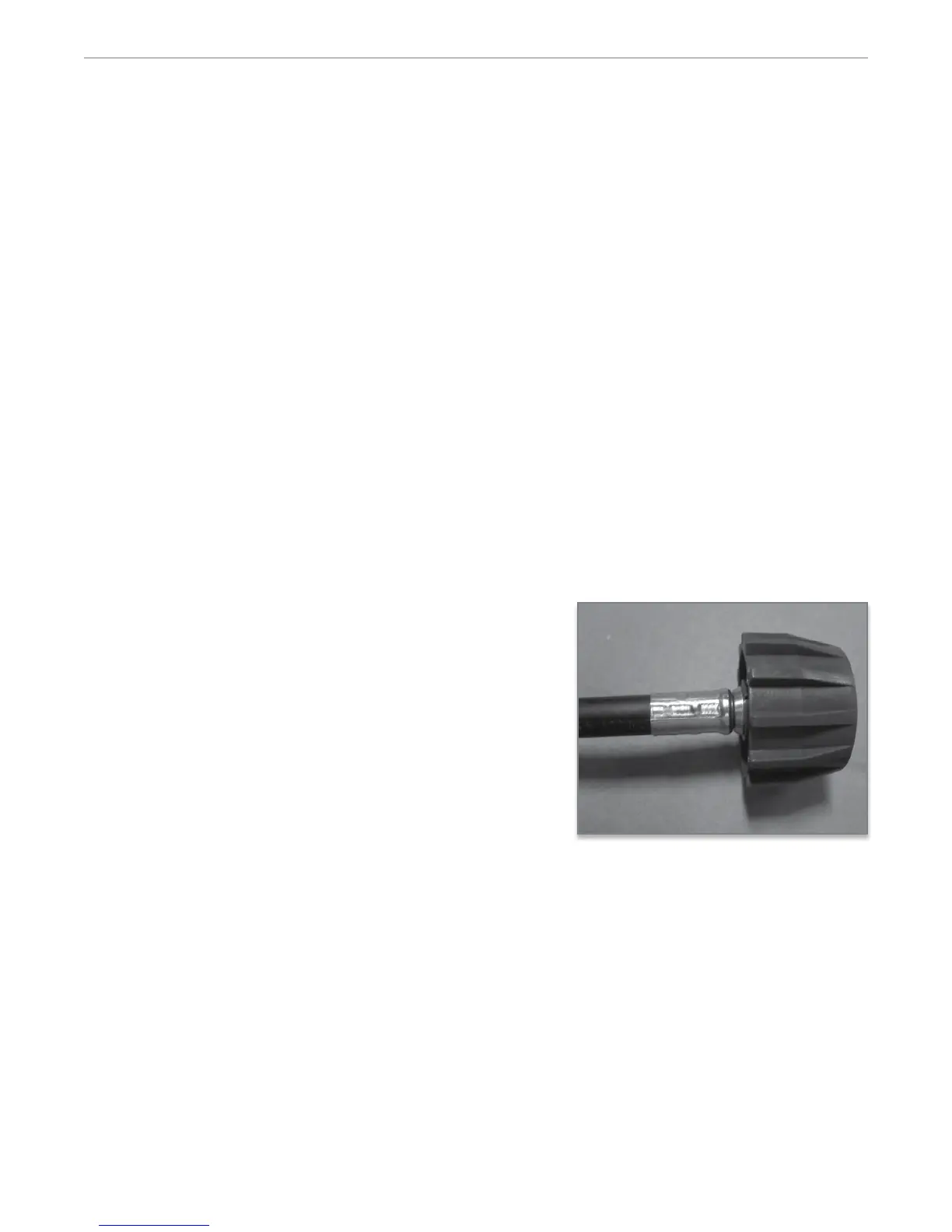
Fittings are used to connect the various hoses and system components
to each other. e QCC1 Acme connection at the end of each LP sup-
ply hose is the tting that you will be disconnecting when removing a
tank for relling. It is made of brass and pipe sealants are not neces-
sary to prevent leaking. It also has a le-handed thread, which means,
turn it clockwise to remove, and counter-clockwise to tighten.
If leakage is observed at the QCC1 Acme connection and normal tight-
ening of the tting does not correct the problem, it will be necessary to
replace the entire hose assembly.
e QCC1 Acme connection, was designed to help restrict the ow of
LP gas in the event of a regulator failure, or hose malfunction. Due to
the ow restricting device inside of the tting, it can sometimes restrict the ow of fuel to the various appliances
within the tent camper.
If it appears that gas ow to your appliances has been restricted, the following procedure should be used to help
eliminate the problem:
1. Be sure all the appliances have been turned o (including pilot lights if applicable), and that there is no gas ow-
ing into the system.
2. Be sure that the system is free of leaks .
3. Open the LP tank service valve slowly, (DO NOT SNAP IT OPEN). If opened too quickly, due to the sudden
pressure uctuation, the excess ow control valve may mistakenly sense that the system has been damaged, and
shut o the LP.
4. Wait for at least 15 seconds before lighting any pilot light or appliance.
Following this procedure should create a normal ow of LP gas by allowing the excess ow control to settle in
slowly. On models equipped with optional double tanks and optional automatic changeover, both hoses from the


 To Next Page