— 36 —
Tent Camper Owner’s Manual
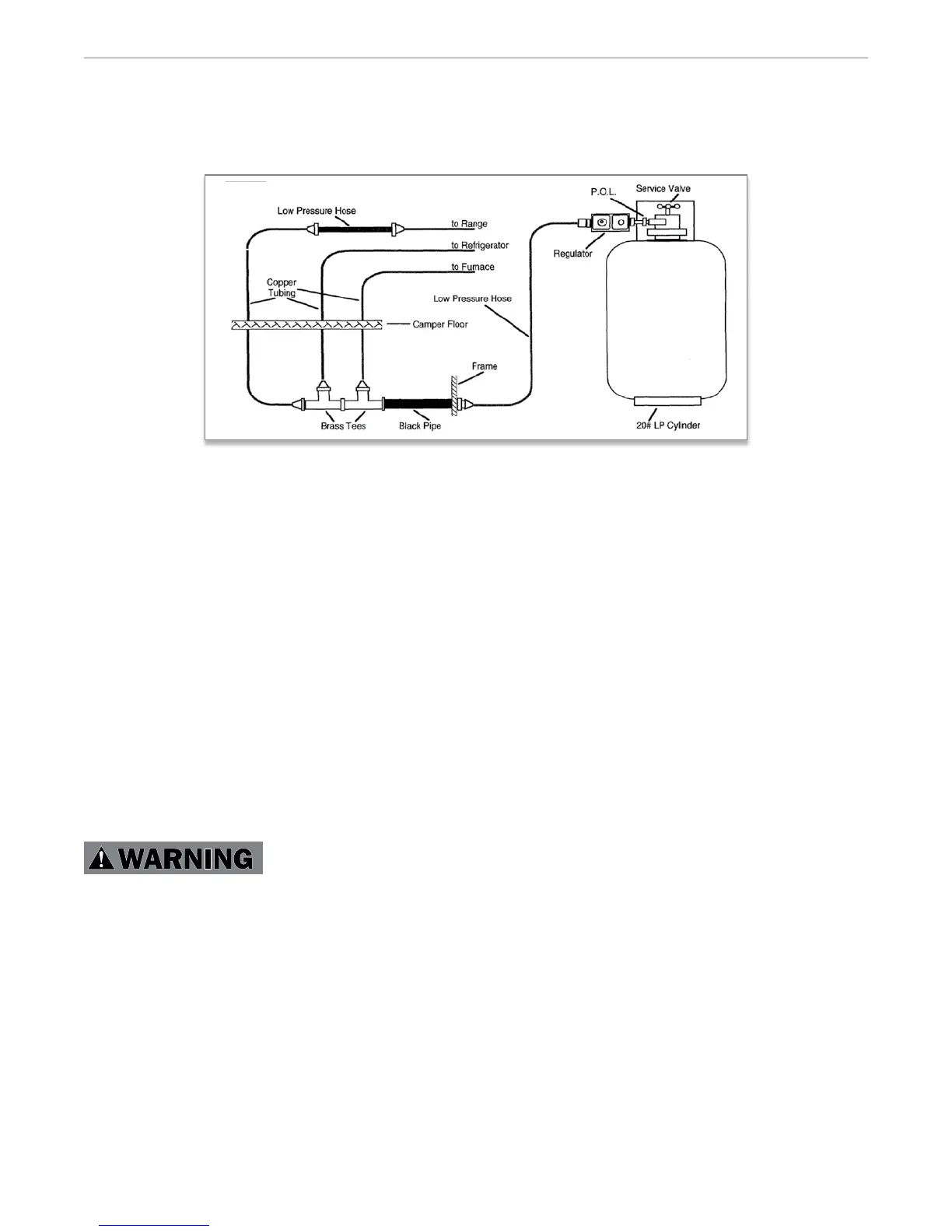
individual LP tanks are connected by a tee, to the regulator. is tee contains a disc check valve that prevents the
LP gas from escaping, when an empty tank is disconnected to be relled.
CheCking Lp sysTem fOr Leaks
Road vibration can loosen LP gas ttings and connections. It is important to check your LP system for leaks at least
every 5,000 towing miles, and whenever the tank is lled.
Making an inspection of LP components a regular part of your campsite set-up can help to identify potential prob-
lems before they occur. It’s a good idea to have your entire LP gas system checked annually by a qualied LP gas
service technician.
Use the following steps when checking the system for leaks:
1. Open all the windows and roof vent.
2. Open the gas tank service valve.
3. Use a non-ammonia, non-chlorinated soap solution, or an approved leak detection solution on all line connec-
tions (ammoniated soap solutions can cause cracking on copper or brass lines and ttings). Bubbles are formed
by escaping gas, indicating a leak.
4. If a leak is detected, tighten the connection with two open-end wrenches until bubbling stops. Do not over-
tighten, or use excessive force. If leak continues, contact your dealer, or a qualied LP gas service representative.
DO NOT use tools to tighten tank service valves.
5. Check LP piping where contact with the frame could cause cracking or damage due to vibration or road shocks.
NEVER CHECK FOR LEAKS WITH AN OPEN FLAME. ALSO, NEVER AT
TEMPT LP REPAIRS WITHOUT THE PROPER KNOWLEDGE AND TOOLS
TO ACCOMPLISH THE JOB.
NOTE: FOREST RIVER DOES NOT RECOMMEND, AND STRONGLY ADVISES AGAINST, ANYONE
OTHER THAN A CERTIFIED LP SERVICE TECHNICIAN, PERFORM LP REPAIRS.
NOTE: LP GAS IS NATURALLY ODORLESS. AN ADDITIVE, WHICH CREATES A GARLICLIKE
ODOR, IS ETHYL MERCAPTAN. THE ADDITION OF THIS CHEMICAL ODOR, ALLOWS THE
DETECTION OF THE PRESENCE OF A LEAK.
Lp gas safeTy preCauTiOns
Warning labels and decals used in your camper, are located in areas where the potential for a dangerous situation
is present. ey have been installed not only because of the requirement to do so, but also as a constant reminder to
occupants of the camper to exercise proper caution when using or being around LP gas appliances and equipment.


 To Next Page