MAINTENANCE
Troubleshooting
9
4. Insert the pin into the pump shaft.
5. Engage one half of the coupling to the motor shaft’s shoulder.
IMPORTANT: The coupling must remain in position once released.
6. Arrange the second coupling half to the motor shaft.
7. Tighten the coupling attachment screws to the appropriate torque, keeping the two coupling parts
symmetrical.
8. Ensure the impeller spins freely, spinning it by hand and listening for interference.
9. Assemble the coupling cover guards.
Troubleshooting
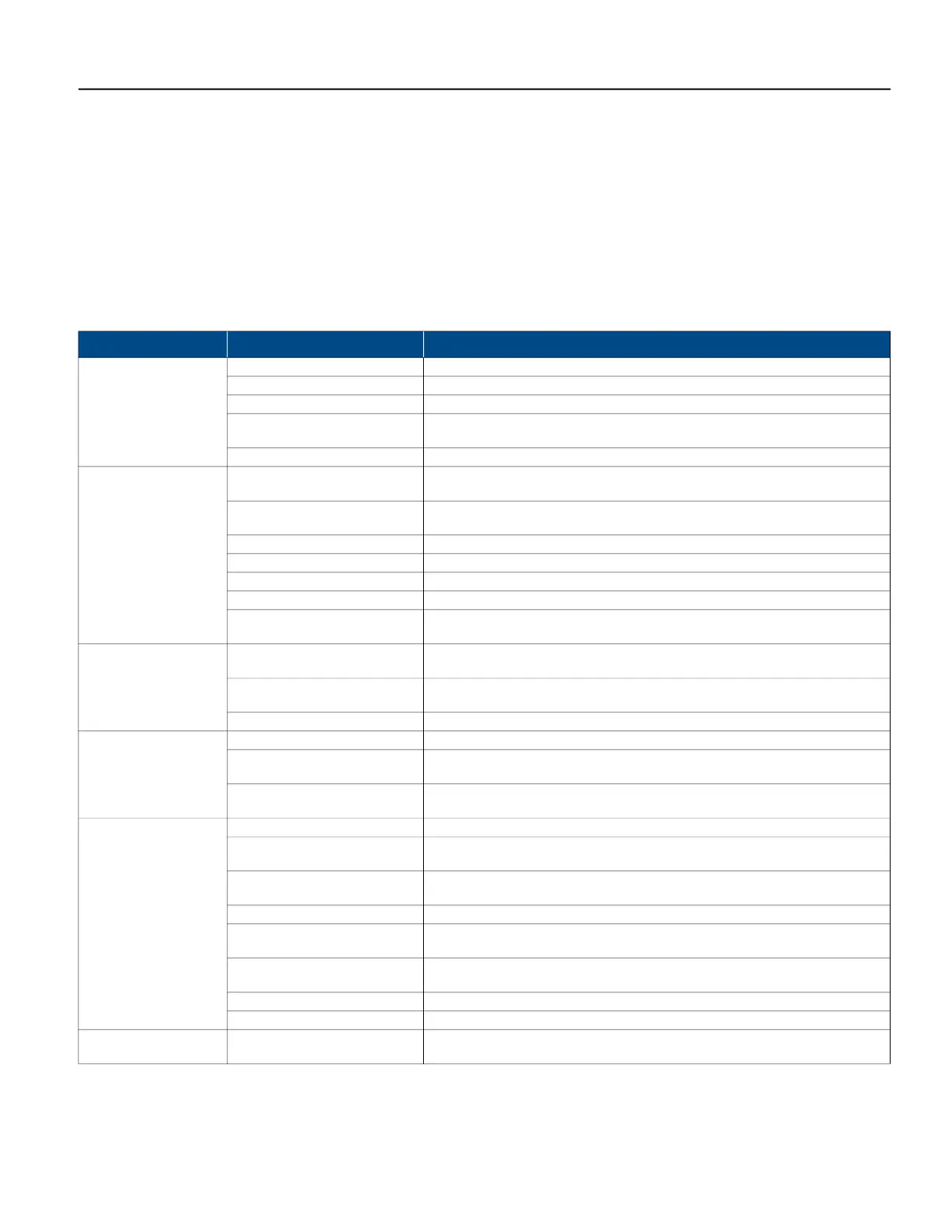
Problem Probable Causes Corrective Action
Motor fails to start or not
running
Motor thermal protector tripped Correct cause for high amperage, such as low voltage or excessive pumping.
Open circuit breaker or blown fuse Check electric wiring and motor for short circuits and correct.
Impeller binding Remove pump case and check for debris.
Motor improperly wired
Check complete suction line and all fittings for air leaks and verify foot valve has
adequate submergence.
Defective motor Take to an authorized motor shop for repair or replacement.
Little or no discharge
Pump is not primed: air or gases in
pumpage
Check suction line and foot valve for leaks. Make sure that water level has not
dropped to uncover suction inlet. Prime pump.
Discharge or suction plugged or
valve closed
Clear obstructions from suction and discharge lines.
Incorrect rotation (3 Phase only) Interchange any two of three wires either at the motor or starter.
Low voltage or phase loss Correct incoming power to match motor nameplate requirements.
Impeller worn or plugged Clean or replace impeller.
System head too high Reduce system head (back-pressure on pump) or resize pump.
Excessive suction lift or losses, or
NPSHA too low for the pump
Locate pump closer to the water source, increase pipe size or resize pump.
Low pump capacity or
pressure
Valves in suction or discharge lines
partially closed
Open valves to reduce possible restrictions.
Suction or discharge line partially
plugged
Clear obstructions from discharge line.
Wrong pump rotation Correct to proper rotation.
Excessive power
consumption
Impeller binding Remove pump case and check for debris.
Discharge head too low creating
excessive flow rate
Close down discharge valve to increase pressure and throttle back flow rate.
Fluid viscosity: specific gravity too
high
Modify fluid properties or resize pump.
Excessive noise and
vibration
Impeller binding Remove pump case and check for debris.
Pump is not primed: air or gases in
pumpage
Check complete suction line and all fittings for air leaks and verify foot valve has
adequate submergence.
Discharge or suction plugged or
valve closed
Clear obstructions from suction and discharge lines.
Impeller worn or plugged Clean or replace impeller.
Excessive suction lift or losses, or
NPSHA too low for the pump
Locate pump closer to the water source, increase pipe size or resize pump.
Discharge head too low, creating
excessive flow rate
Close down discharge valve to increase pressure and throttle back flow rate.
Worn bearing Check bearing for damage and replace if necessary.
Pump, motor, or piping loose Verify all connections and mountings are secure and piping supported.
Water leakage at pump
shaft
Defective seal assembly Replace seal.


 To Next Page