EasyManua.ls Logo

Franklin Electric E Series - User Manual

Franklin Electric E Series
8 pages
Print Icon
To Next Page IconTo Next Page
Loading...
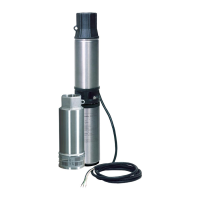
4" Environmental E-Series Pumps
OWNER'S MANUAL
English
EN
These pumps are used for filtered effluent service, aeration, and ornamental fountains or
waterfalls.
Please examine your item(s) carefully to ensure that no damage occurred during ship-
ment. If damage has occurred, please contact the place of purchase. They will assist you
in replacement or repair, if required.
This product is covered by a Limited Warranty for a period of 12 months from the date of
original purchase by the consumer. For complete warranty information, refer to
www.FranklinWater.com
.
SAFETY INSTRUCTIONS
Before Getting Started
This equipment should be installed and serviced by technically qualified personnel who
are familiar with the correct selection and use of appropriate tools, equipment, and
procedures. Failure to comply with national and local electrical and plumbing codes and within Franklin
Electric recommendations may result in electrical shock or fire hazard, unsatisfactory performance, or
equipment failure.
Know the product’s application, limitations, and potential hazards. Read and follow instructions carefully to
avoid injury and property damage. Do not disassemble or repair unit unless described in this manual.
Failure to follow installation or operation procedures and all applicable codes may result in the following
hazards:
Risk of severe injury or death by electrical shock.
Ground motor before connecting to power supply.
To reduce risk of electrical shock, disconnect power before working on or around the system. More than one disconnect switch
may be required to de-energize the equipment before servicing.
Wire pump system for correct voltage. Follow wiring instructions in this manual when connecting motor to power lines.
Check local electrical and building codes before installation. The installation must be in accordance with their regulations as well
as the most recent National Electrical Code (NEC) and the Occupational Safety and Health Act (OSHA).
Do not use motor in swimming areas.
Risk of bodily injury, electric shock, or equipment damage.
This equipment must not be used by children or persons with reduced physical, sensory or mental abilities, or lacking in experi-
ence and expertise, unless supervised or instructed. Children may not use the equipment, nor may they play with the unit or in
the immediate vicinity.
Operation of this equipment requires detailed installation and operation instructions provided in this manual for use with this
product. Read entire manual before starting installation and operation. End User should receive and retain manual for future use.
Keep safety labels clean and in good condition. Keep work area clean, well-lit, and uncluttered.

Questions and Answers

Summary

Owners Manual

Safety Instructions

Provides critical safety guidelines and warnings for installation and operation.

Before Getting Started

Details essential precautions and qualifications before commencing installation or use.

Installation Guide

Typical Installation Diagram

Illustrates a standard setup for pump installation, including key components and connections.

Electrical Connections

Covers proper wiring procedures, diagrams, and safety for connecting the pump's electrical system.

Physical Installation Steps

Outlines the physical steps for mounting the pump and connecting piping and safety cables.

Well Testing and Performance

Well Testing Procedures

Describes how to perform a well test to evaluate water clarity and flow rate.

Low-Yielding Well Solutions

Provides recommendations and solutions for wells with insufficient water yield.

Maintenance and Troubleshooting

Poppet Check Valve Maintenance

Details maintenance, troubleshooting, and repair for the poppet check valve assembly.

Summary

Owners Manual

Safety Instructions

Provides critical safety guidelines and warnings for installation and operation.

Before Getting Started

Details essential precautions and qualifications before commencing installation or use.

Installation Guide

Typical Installation Diagram

Illustrates a standard setup for pump installation, including key components and connections.

Electrical Connections

Covers proper wiring procedures, diagrams, and safety for connecting the pump's electrical system.

Physical Installation Steps

Outlines the physical steps for mounting the pump and connecting piping and safety cables.

Well Testing and Performance

Well Testing Procedures

Describes how to perform a well test to evaluate water clarity and flow rate.

Low-Yielding Well Solutions

Provides recommendations and solutions for wells with insufficient water yield.

Maintenance and Troubleshooting

Poppet Check Valve Maintenance

Details maintenance, troubleshooting, and repair for the poppet check valve assembly.

Overview

The Franklin Electric 4" Environmental E-Series Pumps are designed for filtered effluent service, aeration, and ornamental fountains or waterfalls. These submersible pumps are engineered for reliability and performance in specific environmental applications.

Function Description:

The primary function of these pumps is to move water in applications such as filtered effluent systems, where water has been treated to remove solids, or for creating water features like fountains and waterfalls. The "Environmental E-Series" designation suggests a focus on applications that may involve specific environmental conditions or requirements, possibly related to water quality or the nature of the fluid being pumped. The pumps are designed to be submerged, indicating their suitability for wells or sumps where the pump can be fully immersed in the fluid.

Important Technical Specifications:

While the manual does not provide a comprehensive list of technical specifications such as flow rates, head, or motor horsepower, it does offer crucial information regarding installation and electrical requirements.

  • Size: The "4-inch" designation refers to the pump's diameter, indicating it is designed to fit into a 4-inch or larger well casing.
  • Electrical Connections: The pumps are available in both 2-wire and 3-wire single-phase configurations.
    • 2-Wire, Single Phase: These pumps connect directly to a power source via a circuit breaker or fuse disconnect switch and a switch or timer.
    • 3-Wire, Single Phase: These pumps require a control box in addition to a circuit breaker or fuse disconnect switch. The control box typically houses starting components and thermal overload protection. The manual emphasizes checking the electrical rating of the control box for 3-wire pumps.
  • Voltage and Amperage: The manual stresses the importance of ensuring the power supply corresponds to the electrical rating of the motor and control box. Users are instructed to record the Amps, HP, Volts, and Phase (Ph) of the pump, as well as the HP and Volts of the control box, and the Volts and HZ of the power supply.
  • Pipe Connections: Schedule 40 galvanized pipes are recommended for installations up to 600 ft (180m). For deeper settings, schedule 40 pipe is used for the bottom 600 ft, and schedule 80 for the remainder. Plastic pipe can also be used, with reference to manufacturer's recommendations for depth and pressure.
  • Check Valves: The pumps include a spring-loaded removable poppet style check valve assembly at the pump discharge. Additional positive sealing check valves are recommended in the drop pipe at intervals of 100 ft (60m) for installations deeper than 100 ft. An inline check valve in the discharge line within 25 ft of the pump and below the drawdown level is also recommended.
  • Safety Cable: A 3/16” to 1/4” diameter steel safety cable is required to secure the pump.

Usage Features:

  • Installation: Installation requires technically qualified personnel familiar with electrical and plumbing codes. The pump should be installed in a properly developed well, at least 5 ft (1.5m) from the bottom of the well and above well screen or casing perforations to ensure adequate cooling and prevent damage from abrasives.
  • Electrical Safety: Grounding the pump and distribution panel with the motor's green conductor is mandatory. A fused disconnect switch or circuit breaker must be installed. For 3-wire pumps, the control box should be mounted in an area protected from rain, snow, and extreme temperatures (below 14 °F / -10 °C). A magnetic contactor may be needed if the pressure switch cannot handle the motor's electrical rating.
  • Well Test: Before full operation, a well test is crucial. This involves installing a partially opened gate valve, starting the pump, slowly opening the valve to full flow, and checking for clear discharge water within 30 minutes. The valve is then closed until the maximum required system flow rate is obtained, ensuring the pump output does not exceed the well's yield.
  • Low-Yielding Well Management: For wells with low yield, solutions include installing a smaller pump, adding drop pipe length, using a Franklin Pumptec or similar electronic run dry sensor, installing a floatless liquid level control, or a flow control valve in the discharge line. A low-pressure cut-off switch is also recommended.
  • Torque Arrestor: A torque arrestor should be installed just above the pump to prevent damage from starting torque.
  • Cable Management: The electrical cable must be fastened to the drop pipe with clamps or tape every 10 ft (3m), taking care not to scrape or pinch the cable against the well casing. Slack should be allowed in the cable when using plastic drop pipe to account for stretching.

Maintenance Features:

  • Poppet Check Valve: The pump includes a spring-loaded poppet check valve assembly. This valve can be removed for maintenance using a T-Handle Poppet Wrench (part no. 106964101) or standard needle nose pliers by turning clockwise. When reinstalling, it should be tightened to 15 inch-pounds. This maintenance is important to prevent fluid from draining back through the pump, which can cause backward rotation and potential damage if the pump starts during this time.
  • Troubleshooting: The manual provides a comprehensive troubleshooting guide for common issues:
    • Pump fails to start: Possible causes include electrical trouble, draw-down protection device activation, overload tripped, or incorrect rotation (for 3-phase). Corrective actions involve checking electrical connections, resetting protection devices, or interchanging leads.
    • Pump fails to deliver water or reduced output: Causes can be a clogged intake screen, insufficient well yield, worn pump, or low voltage. Solutions include cleaning the screen, referring to "Low-Yielding Well" procedures, replacing the pump, or checking power supply.
    • Pump cycles too frequently: This can be due to plumbing leaks, high "cut-in" or "cut-out" pressure, a waterlogged pressure tank, incorrect electrode spacing for floatless liquid level control, or a tank that is too small. Corrective actions involve fixing leaks, adjusting pressure switch settings, or installing a larger pressure tank with a bonded diaphragm.
    • Overloads trip: Often caused by electrical trouble, requiring a call to a dealer or electrician.
    • Pressure switch cycles rapidly: Can be due to the pressure switch being too far from the pressure tank, requiring adjustment of the tank's air charge.
    • Backspin/Upthrust: Caused by failed or no check valve, or a check valve drilled. Corrective action is to install new, non-swing type check valves or positive sealing check valves only.
    • Water Hammer: Caused by the lowest check valve leaking or being more than 30 ft above water, or a drilled check valve. Requires shutting down the system and contacting an installer, or installing positive sealing check valves.
  • Safety Labels: Users are instructed to keep safety labels clean and in good condition.
  • Work Area: Maintain a clean, well-lit, and uncluttered work area during installation and maintenance.

Warranty:

The product is covered by a Limited Warranty for a period of 12 months from the date of original purchase by the consumer. Full warranty information is available at www.FranklinWater.com. Any failure requires returning the motor to an authorized product reseller; disassembling or reviewing the product by any other party voids the warranty.

Franklin Electric E Series Specifications

General IconGeneral
BrandFranklin Electric
ModelE Series
CategoryWater Pump
LanguageEnglish

Related product manuals