6
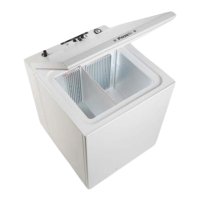
115G
Revised: September 1, 2006
LOADING THE FROSTEK-115G:
After 24 hours of operation, check the thermometer to see the inside temperature of the freezer. When it has
reached -10 degree Celsius or colder, you can start putting in the food, at a rate of 12 lbs every 24 hours. Note: The
is best suited for keeping frozen food frozen. It may take several days to totally freeze food that is
room temperature. But once partially filled with frozen food, up to 12 lbs (5Kg) of non-frozen food can be added per
12 hours. The freezer should never be loaded with warm food in one loading.
MAINTENANCE:
Periodically, the gas components should be checked for cleanliness. The flue system should be kept clean,
the gas orifice should be cleaned, and the freezer defrosted periodically.
The gas orifice is located inside the gas burner assembly. It can get dirty and reduce the propane flow. To
clean it, remove the burner from the bottom of the flue tube, then unscrew the gas entry screw using supplied wrench,
and clean the orifice (see diag. page 12) by rinsing it in alcohol, and by blowing it out with air to dry it. Never use a
pin or sharp object in cleaning the orifice to avoid enlarging and damaging it. The flue should be clean and free of
soot. Therefore, it is necessary to clean it periodically (every 3 months, or when the flame turns yellow). To clean,
extinguish the burner flame, and let the flue tube cool down. Remove the screw holding the burner to the bottom of
the flue tube (to avoid damaging the burner, always remove the burner assembly from the bottom of the flue
tube before doing work); remove the burner away from the bottom of the tube. Pull the wire deflector baffle up,
and remove. Using the cleaning brush supplied or a rag tied to a wire, push it through the flue tube to clean it.
Remove the dirt, which falls on the bottom metal plate, and then re-install both the baffle and the burner.
CLEANING INSTRUCTIONS:
All the refrigerators/freezers are checked and cleaned at the end of the production line, after the factory
testing is completed. At installation, the exterior protective transparent plastic should be removed. The interior
should be cleaned with a cloth soaked in soda bicarbonate solution (one teaspoonful for each litre of warm water)
after final installation, before putting any food in it. Do not use powdered soap or scouring powder on the interior,
and do not wash the plastic with hot water. Clean the outer parts with a moist cloth and soap. Dry well with a clean
and dry cloth. To clean the back and bottom of the chest freezer use a vacuum cleaner or a duster, repeat as often as
required, depending on the dust conditions of the installation area.
Should the freezer not be required for a period of time, it should be shut off, leaving the door a bit open. To
shut off a propane-operated freezer, make sure the propane valve is safely closed at the tank.
DEFROSTING:
The freezer must be defrosted periodically. Defrosting is needed when there is sufficient ice built-up on the
evaporator fins. Empty the freezer then extinguish the burner flame, and place a pan with hot water in the freezer in
order to speed up the defrosting. The melting ice should flow through the bottom drain, once the cap has been
removed. Make sure a container is placed under the front-positioned hole to catch the water.
Note that excessive ice accumulation on the evaporator fins reduces the performance of the freezer.


 To Next Page
 Loading...