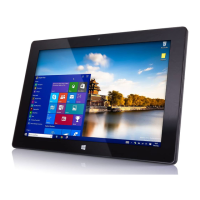
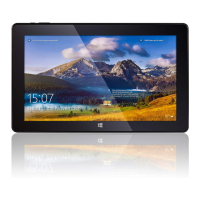
This document serves as a comprehensive user manual for the Fusion5 Windows tablet, Model: FWIN232 Plus, a portable device designed to offer a versatile computing experience. It functions as both a tablet and a laptop, adapting to various user needs for study and entertainment. The manual outlines the device's main functions, operational methods, and important safety and maintenance information.
The tablet's primary function is to provide a portable computing solution, leveraging micro-mobility and direct interaction through touch input, along with wireless connectivity via Wi-Fi and Bluetooth. This dual functionality allows it to be used as a tablet for casual tasks and as a laptop when more intensive work is required, particularly with the optional docking keyboard.
Usage Features:
The device comes with several usage features that enhance its versatility and user experience:
- Docking Keyboard (Optional): The manual provides clear instructions on how to set up and use the docking keyboard, transforming the tablet into a laptop. This involves opening the keyboard cover, aligning the tablet with the docking pin connector until a "snap" or "click" is heard, and then folding the cover to create a stand for the tablet. It emphasizes using the tablet and keyboard on a flat, horizontal surface to prevent damage.
- Power Management: The manual details how to turn the tablet on and off. To turn it on, users simply press and hold the Power button. To turn it off, there are two methods: pressing and holding the power button to shut down, or navigating through the Windows interface (Start > Power > Shut Down).
- Storage Card Installation and Removal: The tablet supports TF/Micro SD™ cards ranging from 128MB to 128GB. The manual guides users on how to install the card gently into its slot and how to remove it. For removal, it's crucial to first unmount the SD Card via the device settings (Menu > Settings > Storage > Unmount SD Card), then turn off the tablet, and finally push the card to eject it. A note advises removing the USB cable before turning off the tablet if the Micro USB port is connected to other devices.
- Bluetooth Connectivity: The device supports Bluetooth for connecting to other devices. The process involves turning on the Bluetooth device and making it discoverable, ensuring Bluetooth is enabled on the tablet, waiting for Windows to search for devices, and following on-screen instructions for pairing. If a pairing code is required, users are advised to check the device's information or the manufacturer's website.
- Account Setup and Management: The manual explains how to set up and manage user accounts, including Microsoft accounts and local user accounts. It describes how to switch from a local account to a Microsoft account, create new user accounts (Administrator, Standard User, or Child), and utilize Family Safety features. Family Safety allows parents to track and set limits on how children use the device, including websites, apps, and games.
- Password and Sign-in Options: Users can unlock and sign in to the device by pressing a key or the Power button, then swiping up from the lock screen. The manual also covers creating or changing passwords, picture passwords, and PINs, accessible via Settings > Account > Sign-In Options. Users can also choose when a password is required for sign-in.
- Wi-Fi Connectivity: The tablet has built-in Wi-Fi for wireless network connections. The manual provides guidance on finding wireless network passwords, both on the router hardware (looking for terms like Security Key, Wireless Key, WPA Key, WPA2 Key, WEP Key) and on a Windows PC already connected to the network. The steps for finding the password on a Windows 10 PC are detailed, involving navigating through Settings to Network Connections and viewing wireless properties.
- Apps and Programs: The device supports both Windows Store apps (e.g., Music, Mail, Weather) and Desktop apps (e.g., Notepad, Office). Users can find and open apps from the Start screen by swiping up to view all apps or using the Search charm. If an app isn't found, users are directed to the Windows Store. Desktop apps can also be launched from the desktop, and shortcuts can be pinned to the taskbar.
- Gestures: The manual provides a comprehensive glossary of touch gestures for interacting with the tablet:
- Tap: Opens, selects, or activates items, similar to a mouse click.
- Tap and hold: Shows information or opens a context-specific menu, similar to right-clicking.
- Pinch or stretch: Zooms in or out on content like websites, maps, or pictures.
- Rotate: Rotates items by turning two or more fingers on the screen (only for supported items).
- Slide to scroll: Drags a finger across the screen to scroll through content.
- Slide to rearrange: Briefly drags an item in the opposite direction of page scrolling, then moves it to a new location.
- Swipe to select: Uses a short, quick swipe in the opposite direction of page scrolling to select an item and often brings up app commands.
- Swipe from edge: This gesture is particularly versatile:
- Swiping in from the right edge opens charms (Search, Share, Start, Devices, Settings).
- Swiping in from the left edge opens a recently used app and allows switching between open apps by continuous swiping.
- Sliding in from the left edge without lifting the finger and dragging the app until a divider appears allows opening another app at the same time and adjusting app size.
- Pushing an app back toward the left edge after sliding in from the left shows a list of recently used apps.
- Swiping in from the top or bottom edge shows commands for the current app (e.g., New, Refresh).
- Sliding down from the top edge without lifting the finger and dragging the app to the bottom closes it.
Maintenance Features:
The manual also includes important information regarding troubleshooting and cleaning to ensure the longevity and proper functioning of the device:
- Troubleshooting:
- Device unable to start up: Suggestions include checking if the device is plugged into an AC outlet and if the outlet provides adequate power. If using an external power source other than an AC outlet, users are advised to plug the device into an AC outlet using the AC adapter and ensure power cord and adapter connections are secure.
- Device unresponsive: If the device is on but not responding to software or keyboard commands, emergency shutdown procedures are suggested, starting with holding the power button for at least 5 seconds.
- Device unusually warm: It's noted that the device may feel warm during use. If overheating is suspected, users should allow it to cool to room temperature. A warning advises against placing the device directly on the lap and recommends using it on a hard, flat surface to prevent heat-related injuries. The AC adapter should also not contact skin or soft surfaces during operation.
- Blank screen: If the screen is blank but the computer isn't off, it might be in Sleep state. Briefly pressing the power button exits Sleep. Users can adjust power settings by right-clicking the Battery icon on the Windows desktop.
- Software functioning abnormally: If software is unresponsive, restarting the computer is recommended by accessing charms (point/touch to the right side of the screen), clicking Settings, Power icon, and then Shut down. If this fails, users are referred to the "device unresponsive" section.
- External device not functioning: Suggestions include turning on the external device, ensuring secure connections, verifying electrical power, checking compatibility with the operating system, and ensuring correct drivers are installed and updated.
- Wireless network connection not working: Users are advised to enable/disable wireless devices via the Network Connection icon, ensure the wireless device is turned on, check for obstructions to antennas, verify cable/DSL modem connections and lights, ensure wireless router/access point connections and lights are on, and finally, disconnect and reconnect all cables, then power off and on.
- Cleaning Procedures:
- Cleaning products: Recommended products include dimethyl benzyl ammonium chloride 0.3 percent maximum concentration (germicidal disposable wipes), water with mild soap solution, dry microfiber cleaning cloth or chamois (static-free cloth without oil), and static-free cloth wipes.
- Safety precautions: A warning emphasizes not attempting to clean the computer while it's turned on to prevent electric shock or damage. Users must turn off the device and disconnect external power. A caution advises against spraying cleaning agents or liquids directly on any device surface to avoid permanent damage to internal components.
- Cleaning the display: Gently wipe the display with a soft, lint-free cloth moistened with an alcohol-free glass cleaner, ensuring it's dry before closing.
- Cleaning the sides and cover: Use a soft microfiber cloth or chamois moistened with one of the recommended cleaning solutions or an acceptable germicidal disposable wipe.
Safety Notice:
The manual includes critical safety notices:
- Avoid storing the device in extreme hot, cold, dusty, dry, or humid environments.
- Handle the device with care; avoid dropping, burning, puncturing, crushing, or contact with liquid. Do not place heavy objects on it.
- Do not attempt self-repair; contact Vulcan Electronics or an authorized service provider to avoid data loss or injury.
- The actual storage capacity will be less than specified due to the operating system's space requirements.
- New batteries achieve best performance after two or three full charge/discharge cycles. Initial charging should be for 8-10 hours.
- Charge the battery when the icon shows low level, device powers off automatically, or it's unresponsive.
- Do not dispose of the device in municipal waste; follow local regulations for electronic product disposal.
- The device contains a flammable lithium-polymer battery; do not throw it in fire or short circuit contacts.

 Need help?
 General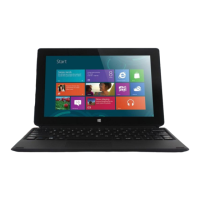

 To Next Page