EasyManua.ls Logo

Garmin GC 100 - User Manual

Garmin GC 100
4 pages
Print Icon
To Next Page IconTo Next Page
Loading...
GC
100
INSTALLATION INSTRUCTIONS
Getting Started
WARNING
See the Important Safety and Product Information guide in the product box for product warnings and other
important information.
Mounting Considerations
You must mount the camera in a location where it is not submerged.
You should mount the camera within76m (250ft.) of a chartplotter. The range depends on your installation
location and obstacles between the camera and the chartplotter. If the camera is out of range of the
chartplotter due to obstacles or distance, you must reposition the camera.
You should test the camera in your desired location before you permanently mount the camera.
You should mount the camera so that the cable can be connected easily.
You should mount the camera in a location where it cannot be damaged by docks, pilings, or other pieces of
equipment.
You should mount the camera so it does not present a hazard in doorways or walkways.
You should mount the camera in a location where you can remove the camera.
GUID-954A35F6-710F-4D78-93CD-48DD69D26558
v6
May 2024
Question and Answer IconNeed help?

Do you have a question about the Garmin GC 100 and is the answer not in the manual?

Summary

Getting Started

Mounting Considerations

Guidelines for camera placement, including range, visibility, and protection from damage.

Mounting the Camera

Connecting to Power

Instructions for routing and connecting the camera's power cable to the battery terminal.

Pairing GC 100 Camera with Chartplotter

Steps to wirelessly connect the GC 100 camera to a Garmin chartplotter via Wi-Fi.

Turning the Camera Off

Specifications

GC 100 Blink Codes

Description of LED color and blink sequences indicating camera operational status.

Summary

Getting Started

Mounting Considerations

Guidelines for camera placement, including range, visibility, and protection from damage.

Mounting the Camera

Connecting to Power

Instructions for routing and connecting the camera's power cable to the battery terminal.

Pairing GC 100 Camera with Chartplotter

Steps to wirelessly connect the GC 100 camera to a Garmin chartplotter via Wi-Fi.

Turning the Camera Off

Specifications

GC 100 Blink Codes

Description of LED color and blink sequences indicating camera operational status.

Overview

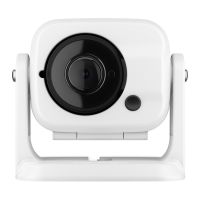
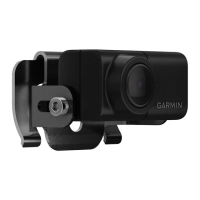
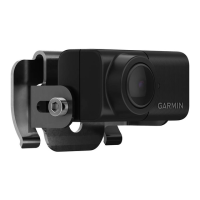
The Garmin GC™ 100 is a wireless camera designed for marine use, intended to be paired with a Garmin chartplotter to provide video streaming. This device is built to withstand marine environments and offers a range of features for easy installation and operation.

Function Description:

The GC 100 camera captures video and wirelessly transmits it to a compatible Garmin chartplotter. It integrates into the chartplotter's wireless network, allowing users to view camera feeds directly on their display. The camera is designed for flexible mounting, enabling users to monitor various areas around their vessel. It features an internal battery that can be charged via its powered mount or a Micro-USB cable, providing operational flexibility. The camera's status is indicated by an LED light, which uses different colors and blink sequences to communicate its operational status, such as turning on/off, attempting to connect, or indicating a low battery.

Important Technical Specifications:

  • Water Rating: IEC 60529 IPX6/IPX7. This means the device is protected against powerful water jets and can withstand incidental exposure to water of up to 1 meter for up to 30 minutes.
  • Operating Temperature Range: From -20°C to 60°C (from -4°F to 140°F).
  • Charging Temperature Range: From 0°C to 45°C (from 32°F to 113°F).
  • Storage Temperature Range: From -40°C to 85°C (from -40°F to 185°F).
  • Input Voltage: 10 to 30 Vdc, 1.5 A max.
  • Compass-Safe Distance: 10 cm (4 in.).
  • Wireless Frequency and Protocol: 2.4 GHz @ 17 dBm nominal.
  • Mounting Hole Size: Requires a 3.2 mm (1/8 in.) drill bit for pilot holes.
  • Wireless Range: Up to 76 m (250 ft.) from the chartplotter, depending on installation location and obstacles.

Usage Features:

  • Mounting: The camera is mounted using a two-part housing. A pilot hole is drilled, the camera mount is fastened, and then the camera is inserted into the housing, which is secured with tamper-proof side screws. It is recommended to test the camera in the desired location before permanent mounting.
  • Power Connection: The camera connects to a power source via a power cable. The red wire connects to the positive (+) battery terminal, and the black wire connects to the negative (-) battery terminal. An in-line fuse holder must remain in place to prevent damage and voiding the warranty.
  • Pairing with Chartplotter: To pair the GC 100 with a Garmin chartplotter, the chartplotter's Wi-Fi® network must first be configured. The camera is placed within 76 m (250 ft.) of the chartplotter, and the power button is pressed three times. The LED will flash blue, indicating it's ready for pairing. On the chartplotter, navigate to Settings > Communications > Wireless Devices > Garmin Camera > Start. A notification will confirm successful pairing.
  • Camera On/Off: The camera automatically turns on when the chartplotter is turned on after pairing. To turn the camera off, hold the power button for 3 seconds. Holding it for more than 10 seconds will reset the camera.
  • LED Blink Codes:
    • Green (Three blinks): Camera is turning on.
    • Red (Three blinks): Camera is turning off.
    • Blue (One blink per second for up to two minutes, or until connected): Camera is attempting to connect to a chartplotter using Wi-Fi.
    • Amber (One blink per second until powered down or charged): Camera battery is not sufficiently charged to stream video.
  • Charging: The camera's internal battery can be charged through its powered mount or by connecting a Micro-USB cable (not included) to the Micro-USB port located behind a protective cap on the front of the camera.

Maintenance Features:

  • Installation Considerations: When mounting on fiberglass, a countersink bit should be used to drill a clearance counterbore through the top gelcoat layer only, to prevent cracking when screws are tightened.
  • Cable Management: The camera should be mounted in a location that allows for easy connection of the power cable and where the cable can be routed effectively.
  • Environmental Protection: The camera must not be submerged. It should be mounted in a location where it cannot be damaged by docks, pilings, or other equipment, and where it does not obstruct doorways or walkways.
  • Accessibility: The camera should be mounted in a location that allows for easy removal if needed.
  • Fuse Protection: The in-line fuse holder on the power cable is critical for product safety and warranty validity; it must not be removed.

Garmin GC 100 Specifications

General IconGeneral
BrandGarmin
ModelGC 100
CategoryDigital Camera
LanguageEnglish

Related product manuals