Need help?
Do you have a question about the Gaspardo CHRONO 500 and is the answer not in the manual?
This document is a use and maintenance manual for the MASCHIO GASPARDO CHRONO 500 precision seeder. It provides detailed instructions for operation, safety, technical specifications, and maintenance procedures.
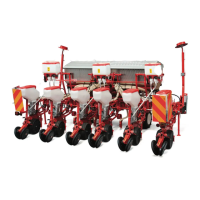
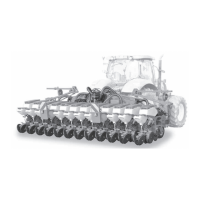
The CHRONO 500 is a precision seeder designed for multi-purpose uses, suitable for seeding various types of seeds in both worked and minimally tilled soil, even in the presence of crop residues. It operates pneumatically, allowing for precise seed selection and distribution. The machine can also be configured for soil fertilization and parasite prevention treatment. Its frame is designed with side ends that can be folded hydraulically to reduce road width.
The CHRONO system allows for independent control of suction within the distributor to select seeds on the disc holes, and the airflow required to transport seeds to the ground. This airflow can be adjusted based on soil conditions and forward speed, ensuring optimal seeding quality. For instance, high airflow is recommended for uneven soil to minimize drop errors due to vibrations, while lower airflow can be used with high working speeds on smoother terrain. The system also allows airflow adjustment based on seed size, ensuring correct seeding for both light, small seeds and large, irregular seeds. This enables quick seeding, taking advantage of "work windows" that might be insufficient for traditional planters, without sacrificing precision.
The seeder is suitable for professional use and must be operated by preliminarily educated, trained, and authorized operators holding a regular driving license. It is designed exclusively for seeding in the ground and for the indicated uses.
The CHRONO 500 is available in different configurations:
The indicated working speed represents the theoretical maximum speed. The actual working speed must be adjusted based on soil conditions and seed type, as it affects seeding quality.
Attachment to Tractor: The seeder is attached to the tractor using a three-point linkage. Proper positioning ensures the cardan joint is extended by 5-10 cm from its maximum closing position. The lifter bars and third upper point are hooked to the tractor, and the seeder is kept perpendicular to the ground using an adjusting tierod. Tractor parallels are blocked to prevent side swaying. Hydraulic hoses and electrical connectors must be properly connected, ensuring the drain hose is connected first and disconnected last. The cardan shaft must be securely connected to the PTO, with its guard turning freely.
Frame Movement: The frame's side wings can be folded hydraulically for transport and opened for work. This is controlled by an electric control system acting on a solenoid valve. Before moving the wings, the machine must be fully lifted off the ground, and the area of operation must be clear of people, children, animals, or objects. The hydraulic folding parts are floating, allowing the planting units to follow uneven ground contours.
Seed Selection System: The system uses a vacuum pump to create suction, adhering seeds to holes in the seed plate. An electric motor rotates the disc, moving seeds from the selection chamber to the release area where suction is interrupted, dropping seeds into the delivery tube. An air ejector, powered by a lobe compressor, creates a vacuum in the delivery tube to facilitate seed expulsion into the furrow. A rubber seed press wheel retains seeds in the furrow, ensuring precise depth. A photocell checks seeding quality, adapting sensitivity to different seed types and environments.
Distribution of Chemical Products (Microgranulator and Fertilizer): The microgranulator (accessory) distributes microgranular products (fertilizers and insecticides) from hoppers. It is volumetric, actuated by an electric motor controlled by the seeding management system. A bulkhead regulates product passage from the hopper to the dispenser, adjustable in four positions (closed, minimum, medium, maximum opening). Calibration is required to determine the "calibration factor" (grams/rev) for accurate distribution. The fertilizer distribution system (accessory) uses a front hopper and interring hoes that operate parallel to the sowing row, at a standard distance of 7 or 5 cm. The depth of fertilizer interment is also adjustable.
Row Marker: The row marker traces a reference line parallel to the tractor tracks. It uses a hydraulic system with a valve to alternately operate two arms, requiring only one hydraulic tractor distributor. A tap lever allows for excluding the row marker's operation during road transport. The outer segment of the row marker arm has a safety pin that breaks off upon accidental impact, protecting the structure.
General Maintenance: All maintenance operations must be performed with the machine cold, stationary, and switched off, with the parking brake engaged and the ignition key removed. Operators must wear appropriate personal protective equipment.
Hydraulic System Maintenance:
Electric System Maintenance:
Seed Distributor Maintenance:
Lobe Compressor Maintenance:
Other Components:
End of Season / Long Rest Periods:
Demolition and Disposal: Demolition must be carried out by the customer, ensuring compliance with environmental protection laws. Before demolition, check the structure for potential collapse or breakage. Skilled personnel, equipped with protective clothing and auxiliary tools, must perform disassembly with the machine stopped and detached from the tractor. Harmful parts should be rendered safe. Electrical apparatus, oils, and greases must be removed and disposed of separately by specialized firms according to regulations. The CE mark must be destroyed with the manual upon demolition.
 General
| Brand | Gaspardo |
|---|---|
| Model | CHRONO 500 |
| Category | Farm Equipment |
| Language | English |

 To Next Page