Need help?
Do you have a question about the GE AK-2-50 and is the answer not in the manual?
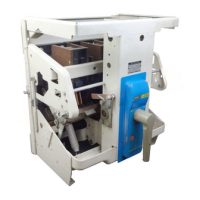
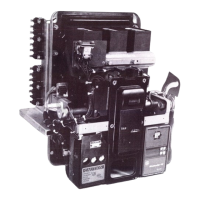
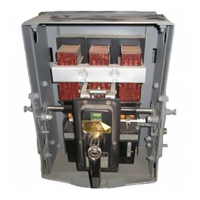
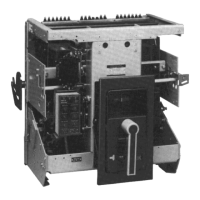
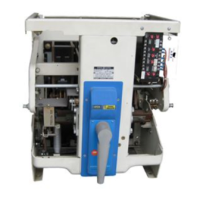
This document describes the General Electric Low-Voltage Power Circuit Breakers, including models AK-2/3/2A/3A-15, AK-2/3/2A/3A-25, AK-2/3/4/5/2A/3A/4A/5A-50/50S, AK-2/3/2A/3A-75/75S, AK-2/3/2A/3A-100/100S, AKT-2/3/50/50S, AKU-2/3/2A/3A-25, AKU-2/3/4/5/2A/3A/4A/5A-50/50S, AKF-2/2A-25, and AKF-2C/2D/2E. It serves as an installation and operation manual, providing essential information for proper handling, setup, and ongoing care of these circuit breakers.
The primary function of these devices is to protect electrical circuits from overcurrents, short circuits, and other faults. They are designed to safely interrupt the flow of electricity when abnormal conditions are detected, thereby preventing damage to equipment and ensuring the safety of personnel. The manual emphasizes the importance of reading relevant sections before installation or operation to ensure correct procedures are followed.
Upon receipt, it is crucial to immediately inspect the circuit breaker for any damage or loss sustained during shipment. Any injury, loss, or evidence of rough handling should prompt a damage claim with the transportation company and notification to the nearest General Electric Sales Office. Unpacking should be done with care to avoid damage to parts, and any loose parts or packaging material remaining on or in the breaker should be removed. If the breaker is not to be placed in service immediately, it should be stored in a clean, dry, upright position, supported to prevent bending of studs or damage. It should not be covered with moisture-absorbing materials, but rather with non-absorbent paper to prevent dust accumulation.
The selection of a location for installation is critical, considering both the breaker's performance and maintenance convenience. A clean, dry, dust-free, and well-ventilated area is ideal for better performance and longer life. The breaker should be easily accessible for operation and maintenance, with sufficient space for necessary work.
These AK Circuit Breakers are designed for three primary mounting methods: dead front mounting, individual mounting with an enclosure, and drawout mounting.
The manual details specific insertion and withdrawal procedures for different AK breaker models (AK-15, AK-25, AK-50, AK-75, AK-100, AK-4A/5A). For drawout breakers, a "Test Position" is available where primary power contacts are disengaged, but secondary control contacts remain engaged. This allows for testing or operation without energizing the main power circuit. The use of D50H47 lubricant on disconnect terminals is recommended to reduce insertion force.
Breakers are tripped open by the displacement of a mechanism latch, causing toggle linkage to collapse. This latch is connected to a trip shaft, which rotates counterclockwise (from the right) to trip the breaker. Manual trip buttons, overload devices, shunt trips, undervoltage tripping devices, and reverse current trips all operate through this mechanism. Positive tripping is indicated by striker arm movement of 1/32 to 1/16 inch beyond the tripping point. Before adjusting trip device settings, the breaker must be in the open position with control power removed.
Most AK-2 and AK-4 air circuit breakers have dual magnetic (instantaneous and time delay) or instantaneous overcurrent trip devices. They are designed to carry up to 100% of their continuous current rating. AK-3 and AK-5 type breakers are equipped with Power Sensor overcurrent trip devices, which have adjustable time current bands and pickup settings via a single captive thumb screw. If nuisance tripping occurs, the Power Sensor settings should be checked and thumb screws tightened.
This device, available with certain breaker types, consists of three separately operated devices (one per pole) wired in parallel to corresponding breaker fuses. When a fuse blows, the device's coil is energized, causing its armature to engage the trip paddle and trip the breaker. The armature latches in a closed air gap position, extending a reset button to indicate the blown fuse and holding the breaker trip-free until the armature is released by the manual reset button.
Regular maintenance is crucial for the longevity and reliable operation of these circuit breakers.
The manual also provides references to specific maintenance manuals and renewal parts bulletins for various breaker types, ensuring comprehensive support for upkeep and repair.
 General
| Amperage | 50 A |
|---|---|
| Poles | 2 |
| Rated Current | 50 A |
| Number of Poles | 2 |
| Trip Type | Thermal Magnetic |
| Interrupting Rating | 10kA |
| Voltage | 240V |

 To Next Page